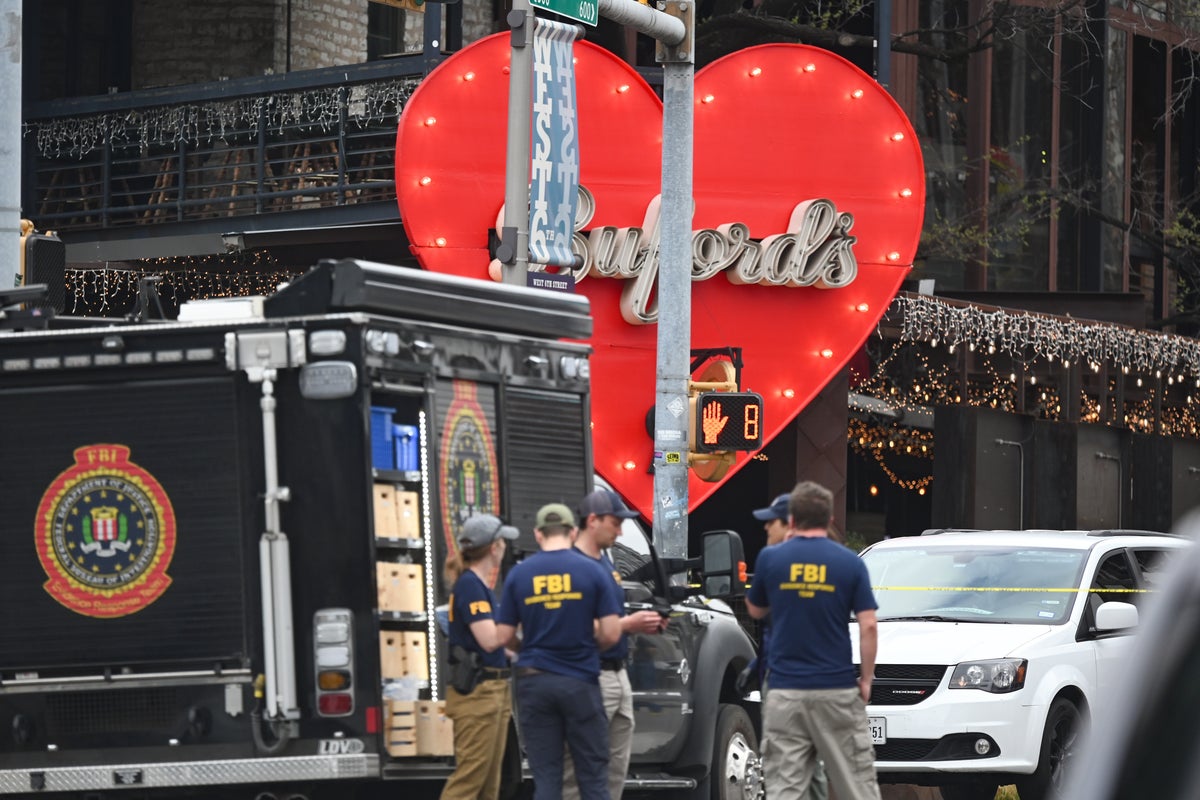
The chaos at Buford’s Backyard Beer Garden in downtown Austin did not begin with the first pull of a trigger. It began decades ago in the slow-burn radicalization of a man the system failed to flag, and it culminated in a weekend of blood that has left Texas reeling. On March 1, 2026, a 53-year-old naturalized citizen named Ndiaga Diagne turned a popular nightlife district into a combat zone, killing two people and wounding 14 others. While the initial headlines focused on the immediate horror, the emerging reality is far more complex than a simple act of random violence. This was a calculated strike occurring in the shadow of a massive geopolitical shift—the U.S. and Israeli airstrikes that claimed the life of Iranian Supreme Leader Ali Khamenei just 24 hours prior.
Diagne was not a ghost, but he was invisible to the people paid to watch for him. A Senegalese national who gained U.S. citizenship in 2013, he lived a life that, on the surface, appeared to be the standard immigrant success story. Beneath that veneer was a man consumed by pro-regime sentiment and a documented history of mental health episodes that never quite crossed the threshold into a "red flag" status. When he rolled past the patio of the bar on Sixth Street in his SUV, he wasn't just looking for targets; he was making a statement. He wore a "Property of Allah" hoodie over a T-shirt emblazoned with the Iranian flag. This was theater as much as it was terrorism.
The Failure of the Lone Actor Narrative
Law enforcement agencies often lean on the "lone actor" label because it offers a sense of containment. If there is no cell, there is no wider conspiracy to dismantle. However, this designation ignores the digital ecosystem that sustains men like Diagne. Investigating officers found a Quran in his vehicle and photos of Iranian leaders in his Pflugerville home. More telling are his Facebook posts dating back to 2017, where he expressed a deep-seated hatred for American and Israeli leadership.
The FBI’s Joint Terrorism Task Force is currently scouring his digital footprint to determine if his "lone" status was a matter of choice or a lack of opportunity. The timing of the attack—coming so soon after the death of Khamenei—suggests a "trigger event" response. For years, intelligence analysts have warned that decentralized, self-radicalized individuals are the most difficult to stop because they do not communicate with known entities. They absorb the rhetoric of the state and wait for a signal. In this case, the signal was the sound of U.S. ordnance falling on Tehran.
Tactical Evolution on Sixth Street
The mechanics of the shooting reveal a chilling level of preparation. Diagne did not just walk up and start firing. According to Austin Police Chief Lisa Davis, he drove past Buford’s several times, essentially "casing" the density of the crowd. He initially used a pistol from his window, striking patrons on the patio. Only after the initial panic did he park, exit the vehicle with a rifle, and begin a more methodical sweep of the area.
This two-stage attack—the drive-by followed by the foot-mobile assault—is designed to maximize confusion and keep first responders guessing about the number of shooters. It was only the rapid response of Austin police officers, who are stationed heavily in the entertainment district on weekends, that prevented the death toll from reaching double digits. Three officers engaged Diagne within sixty seconds of the first shot, ending his life before he could reload or move to a second location.
The Victims and the University Connection
The tragedy struck the heart of the University of Texas community. Among the dead was 19-year-old Ryder Harrington, a Texas Tech student whose presence in Austin that weekend was meant to be a celebration of youth. Savitha Shan, 21, was also killed. The names of the 14 wounded remain largely shielded by privacy laws, though at least three are fighting for their lives in local intensive care units.
For the students of UT Austin, the shooting has shattered the illusion of Sixth Street as a safe haven for weekend revelry. The proximity of the University to the state’s most active nightlife hub has always created a friction point, but never one this deadly. There is a growing sense of frustration among the student body that the political rhetoric regarding foreign policy has concrete, violent consequences on the streets they walk every day.
Geopolitical Retaliation in the Heartland
Governor Greg Abbott has responded with a show of force, activating the Texas Military Department and the Texas National Guard to secure "critical infrastructure." While this may soothe some political bases, it does little to address the threat of a man with a rifle and a grudge in a crowded city center. The FBI’s San Antonio field office is currently treating the case as a "potential nexus to terrorism," a cautious phrase that masks the gravity of what happened.
If Diagne was indeed motivated by the strikes in Iran, then the "War on Terror" has entered a phase where the front lines are anywhere there is a wifi signal and a grievance. The fact that Diagne was not on any watch list despite his social media history and mental health background points to a systemic gap in domestic surveillance. We are looking for organizations when we should be looking for the ideological sediment that settles in the minds of the isolated.
The Border and the Buffer
There is a political dimension to the investigation that cannot be ignored. Abbott’s decision to increase patrols at the Mexico border in response to an Austin shooting carried out by a naturalized citizen from Senegal is a non-sequitur that highlights the tension in the state’s leadership. The shooter did not sneak across a river; he flew into the country on a tourist visa twenty-six years ago. He was a product of the American system for more than a decade.
Focusing on the border in the wake of an internal failure is a distraction from the real questions. Why was his documented mental health history not enough to prevent his legal or illegal acquisition of the firearms used? How did his 2017 social media posts go unnoticed by the algorithms designed to flag extremist rhetoric? These are the questions the FBI will have to answer as they sift through the wreckage of his life in Pflugerville.
A Community in Transition
Austin is now a city on edge. Vigils are being held, but the mood is less about mourning and more about an uneasy realization that the global conflict has arrived at the doorstep. The "Property of Allah" hoodie and the Iranian flag shirt were not just clothing; they were a uniform for a war that Diagne decided to join on his own terms.
The investigation continues, with the ATF and local detectives tracing the origins of the weapons. Whether Diagne was truly a "lone actor" or part of a broader, more subtle network of sympathizers will determine the security posture of Texas for the remainder of the year. The reality is that as long as the Middle East remains a powderkeg, the sparks will continue to fly, and sometimes they will land in places like a beer garden on a Saturday night.