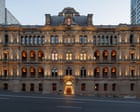
Sydney is a graveyard of architectural intent. For decades, the city’s mid-century civic masterpieces suffered a slow, bureaucratic strangulation, choked by cheap drywall partitions and the beige indignity of government "functionalism." The recent restoration of the Sydney MLC Centre and the renewed vigor surrounding the city's modernist commercial hubs represent more than a simple renovation project. This is a high-stakes salvage operation of Australia’s urban identity. To understand why these spaces are suddenly becoming "haute couture" hosts for the elite, we have to look at the decades of neglect that nearly saw them demolished.
The core of the issue wasn't just age; it was a fundamental misunderstanding of what a city owes its citizens. Modernism in Sydney was built on the promise of light, air, and public flow. Yet, by the 1990s, the vision of architects like Harry Seidler had been buried under miles of cubicle carpet and fluorescent lighting that drained the soul out of the concrete. The "rescue" of these buildings isn't just about aesthetics. It is a desperate, multi-billion-dollar play to keep the central business district relevant in an era where the office is no longer a requirement, but a choice.
The Concrete Jungle Reclaimed
When you walk into a restored mid-century lobby today, you aren't seeing a preservation of the past. You are seeing a strategic re-engineering. The original designers intended for these spaces to be porous—places where the street and the structure bled into one another. Somewhere in the 1980s, security paranoia and corporate hoarding took over. We walled off the plazas. We turned grand entrance halls into narrow security checkpoints.
The current trend of "un-skinning" these buildings reveals a hard truth. The bones were always good; the management was the problem. Developers are now spending hundreds of millions to strip back the "drab partitions" mentioned in local lore, but they aren't doing it for the sake of art. They are doing it because a generic glass box has no personality, and in the current market, personality is the only thing that commands a premium rent.
The Cost of Neglect
Wait long enough and any building becomes a liability. In Sydney, the gap between "outdated" and "heritage" is where most great architecture goes to die. The city has a habit of waiting until a building is literally crumbling before deciding it might be worth saving.
Consider the logistical nightmare of retrofitting a 1970s concrete tower. You aren't just painting walls. You are fighting against:
- Asbestos insulation that requires specialized hazmat teams.
- Low ceiling heights that make modern HVAC systems almost impossible to install.
- Rigid structural loads that prevent the open-plan layouts modern tech companies crave.
Yet, despite these hurdles, the results are staggering. By reclaiming the voids and the grand staircases, these buildings are regaining their status as "civic masterpieces." They offer a sense of permanence that a brand-new skyscraper simply cannot replicate.
Why the Private Sector Finally Cares
For years, the push to save Sydney’s modernist heritage came from fringe groups of architects and historians. They were ignored by boards of directors who only saw the bottom line. The shift occurred when the "war for talent" became a real estate problem.
High-end law firms and global tech giants realized that their employees were tired of soul-crushing glass towers. They wanted history. They wanted the "haute couture" feel of a space that has lived through multiple eras. This isn't about being trendy; it’s about signaling stability and taste.
The Economics of the Facade
Refurbishing a landmark is often more expensive than knocking it down and starting over. So, why do it?
- Planning Perks: Local councils are much more likely to grant additional floor space or faster approvals if a developer agrees to restore a heritage-listed facade.
- Tax Incentives: Long-term depreciation on restored assets can be more favorable than new builds in specific jurisdictions.
- Brand Equity: You can’t buy the prestige of an address that has been a city staple for 50 years.
The "rescue" of these buildings is a calculated business move. It transforms a depreciating asset into a luxury product. When you see a once-grey plaza now filled with high-end bars and boutique retail, you are seeing the monetization of nostalgia.
The Architect vs The Bureaucrat
The real drama of these restorations happens in the basement. I’ve spoken to engineers who describe the process of peeling back layers of "renovations" from the 80s and 90s like performing surgery on a patient who has been misdiagnosed for years.
They find original marble hidden behind plasterboard. They find custom-made light fixtures that were simply disconnected and left in the ceiling. The bureaucracy of the past few decades prioritized "efficiency" above all else, which resulted in spaces that were efficient at making people miserable.
"The tragedy of Sydney’s mid-century boom wasn't the concrete; it was the lack of maintenance. We built for the future and then forgot to live in it."
The Engineering Gap
To make an old building feel like "haute couture," you have to hide the grit. This involves:
- Acoustic dampening: Concrete is loud. Modern luxury requires silence. This means installing invisible acoustic panels that don't ruin the lines of the original design.
- Thermal efficiency: Single-pane glass from 1965 is a disaster for energy ratings. Replacing it without changing the "look" of the building is a feat of modern material science.
- Digital integration: Wiring a 50-year-old slab for 10G fiber optics requires a level of patience most contractors simply don't have.
The Ghost of Harry Seidler
You cannot talk about Sydney’s architectural rescue without talking about Harry Seidler. His influence is everywhere, and for a long time, he was the man everyone loved to hate. His "brutalist" tendencies were seen as cold and alien.
Now, the tide has turned. The very things people hated—the raw concrete, the geometric rigor, the uncompromising scale—are now the hallmarks of "cool." The rescue of his masterpieces, such as the MLC Centre, is a vindication. But it’s a bittersweet one. These buildings are being saved, but they are also being sanitized.
The Gentrification of the Plaza
The original dream of the modernist plaza was a democratic space. It was meant for everyone. As these buildings are rescued and turned into luxury hubs, that democracy is fading. The "haute couture" host isn't necessarily welcoming to the average passerby.
The security guards are more polite now, but they are still there. The benches are designed to be "uncomfortable" for anyone staying too long. We are saving the architecture, but we might be losing the civic spirit that made the architecture necessary in the first place.
The Sustainability Lie
Every developer currently refurbishing a 1960s tower will tell you they are doing it for the planet. They talk about "embodied carbon"—the energy already spent to create the original concrete. While it is true that keeping a building stands is better than crushing it into gravel, we should be wary of the greenwashing.
The amount of energy required to strip, gut, and rebuild the interior of a 40-story tower is astronomical. Is it better than a new build? Usually. Is it "green"? Hardly. The real sustainability comes from the fact that these buildings were built to last 100 years, whereas modern "disposable" towers are lucky to hit 30 without major structural failure.
Comparing the Eras
| Feature | 1960s Original | 1990s "Update" | 2020s Restoration |
|---|---|---|---|
| Material | Raw Concrete/Stone | Gyprock/Carpet Tiles | Polished Terrazzo/Brass |
| Light | Natural/Atriums | Fluorescent Tubes | Smart LED/Light Wells |
| Focus | Civic Pride | Corporate Density | Wellness/Experience |
| Public Space | Open Plaza | Retail Mall | Curated "Dining Precinct" |
A City Caught Between Two Minds
Sydney is currently a schizophrenic landscape. On one block, you have the meticulous restoration of a modernist icon. On the next, you have a developer trying to tear down a perfectly functional heritage building to put up a cheap apartment block.
The success of these "haute couture" rescues provides a roadmap, but it’s an expensive one. Not every building has the pedigree of a Seidler or a Grouse. The danger is that we only save the "masterpieces" and let the fabric of the rest of the city unravel.
The Hidden Risks
Investors looking to jump on the "restoration" bandwagon need to be careful. The "drab to fab" narrative is easy to sell, but the structural risks are immense.
- Concrete Cancer: Spalling concrete can stay hidden for years behind a nice coat of paint until the rebar rusts through.
- Compliance Creep: Once you start a major renovation, you are often forced to bring the entire building up to current fire and accessibility codes, which can double the budget overnight.
- Market Saturation: How many "luxury" dining precincts can one city support?
The End of the Drab Era
The partitions are coming down, but what stays up is more important. The rescue of Sydney's civic architecture is a victory for those who believe that a city should have a memory. It proves that we don't have to erase our past to have a functional future.
However, the "haute couture" label is a double-edged sword. It suggests that these buildings are now fashion items, subject to the whims of the elite. To truly rescue a masterpiece, it needs to be more than just a backdrop for an expensive lunch. It needs to be a functioning part of the city's pulse.
The scaffolding across Sydney’s skyline isn't just a sign of construction; it’s a sign of a city finally coming to terms with its own reflection. We are no longer ashamed of our concrete heritage. We are just trying to figure out how to afford it.
The next time you walk through a soaring concrete lobby that feels more like a gallery than an office, remember that every inch of that space was once a battleground between a vision of the future and a budget for the present. The vision finally won, but it took fifty years and a total collapse of the traditional office market to make it happen.
Demand more from the buildings you inhabit. Look past the fresh paint and the brass fittings. If the space doesn't make you feel like a citizen of a grand city, it’s just another partition, no matter how much they spent on the couture.