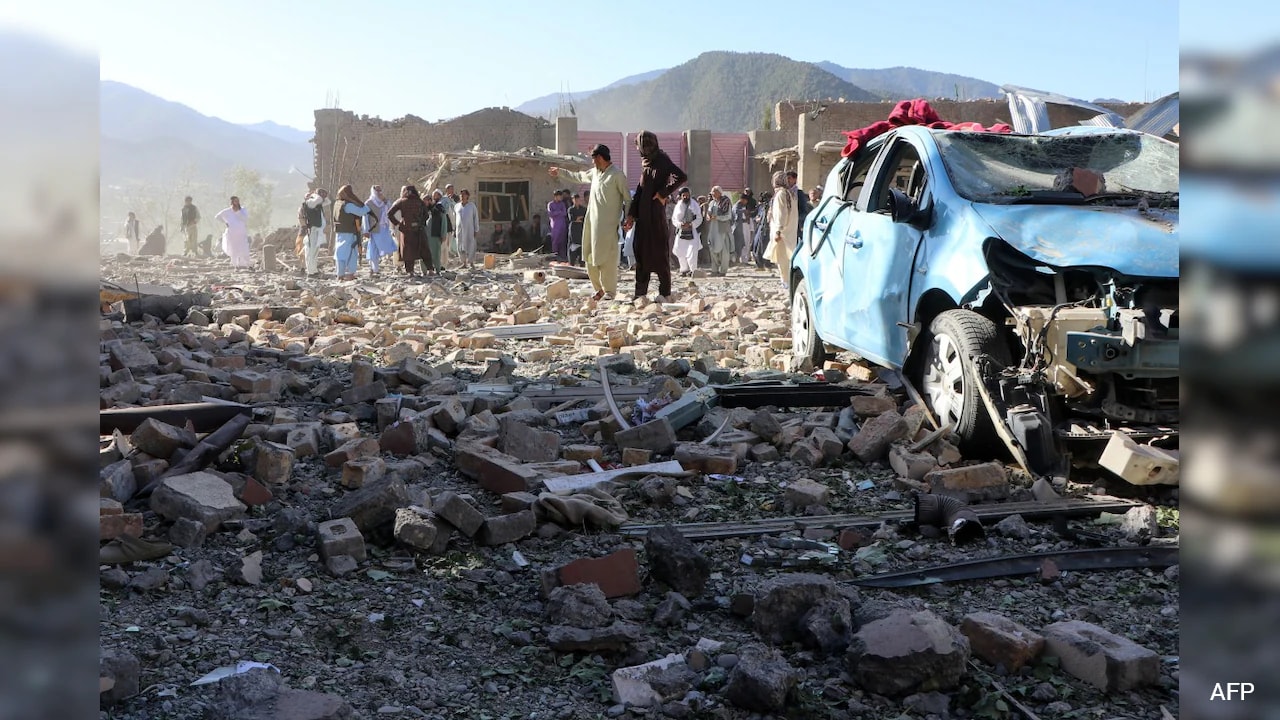
On June 29, 2026, the diplomatic architecture of South Asia shifted when India issued a remarkably fierce condemnation of Pakistani military airstrikes inside Afghanistan, characterizing the cross-border operations as a blatant act of aggression. The overnight air raids, which struck deep within the eastern Afghan provinces of Paktia, Paktika, and Kunar, resulted in the deaths of at least 36 civilians and left over 160 others wounded. New Delhi did not merely voice standard diplomatic disapproval. Instead, the Indian Ministry of External Affairs explicitly accused Islamabad of attempting to externalize its catastrophic domestic failures through desperate acts of cross-border violence.
The standard news cycle treated this as a brief rhetorical spat between two nuclear-armed neighbors over a third, highly volatile state. The reality is far more dangerous. This escalation exposes the complete collapse of Pakistan’s decades-old security doctrine along its western border and highlights an unprecedented convergence of interests between democratic India and the Taliban administration in Kabul.
Inside the Zero Line Firefight
The air operations launched by the Pakistani military were not clean, surgical strikes against hidden insurgent bases. Field reports and statements from regional administrators in Afghanistan reveal a chaotic, high-casualty intervention that heavily impacted civilian infrastructure.
In the Chamkani district of Paktia province, Pakistani fighter aircraft targeted a residential structure in Mandokhail village. According to local witnesses and deputy Taliban government spokesperson Hamdullah Fitrat, the initial blast killed an elderly man and a child inside the home. The true horror emerged minutes later. As villagers from surrounding areas rushed to the debris to pull survivors from the wreckage, the aircraft returned for a second pass. This double-tap strike tactic killed 28 rescuers on the spot and left scores of others with severe shrapnel wounds and blast injuries.
Simultaneously, air assets struck the Giyan district of Paktika province, destroying another home and killing six civilians, primarily women and children. In Kunar province, secondary strikes obliterated livestock and farming infrastructure. The United Nations Assistance Mission in Afghanistan independently confirmed dozens of immediate civilian casualties, warning that the initial numbers would likely rise as regional hospitals struggled to manage the sudden influx of critically injured patients.
Islamabad’s official narrative stood in stark contrast to the destruction on the ground. Information Minister Attaullah Tarar announced that security forces had executed an intelligence-based ground and air operation along the frontier zone. The state claimed its forces killed 29 active militants belonging to extremist factions responsible for a lethal assault on a military facility in Karachi days earlier. However, the Pakistani state provided no verifiable evidence linking the residential properties in Paktia or Paktika to the Karachi attackers, choosing instead to utilize heavy aerial bombardment in a desperate bid to show domestic audiences that it was taking decisive action.
The Strategy of Externalizing Domestic Chaos
To understand why Islamabad chose this moment to launch its deadliest cross-border raid in months, one must look at the internal decay consuming the Pakistani state. The country is dealing with an unmanageable combination of structural economic ruin, near-total political alienation among its populace, and a domestic security apparatus that is losing control of its borderlands.
The attack on the Karachi military installation, which resulted in the deaths of four Pakistani soldiers, was a profound embarrassment for the security establishment. For years, the military leadership maintained that its domestic counter-insurgency campaigns had brought stability to urban centers and critical installations. The breach in Karachi proved that domestic insurgent networks can strike deep within the state's financial capital at will.
Faced with intense domestic criticism and a collapse of public confidence, the Pakistani establishment resorted to a classic geopolitical maneuver. It looked for an external scapegoat. Hours before launching the jets into Afghanistan, Pakistani officials attempted to tie the Karachi incident to Indian intelligence, claiming that New Delhi was funding and directing regional militant networks from sanctuaries inside Afghan territory.
The Indian Ministry of External Affairs rejected these allegations. Ministry spokesperson Randhir Jaiswal noted that instead of pointing fingers at foreign nations, Pakistan needed to inspect its own internal structural decay and dismantle the terror infrastructure it spent decades building. The airstrikes were a physical extension of this blame-shifting policy. By bombing Afghan soil, the military command could project power to its domestic audience, pretending to hit the root cause of its insecurity while ignoring the homegrown nature of its militant problem.
The New Alignment in Kabul
The most striking element of this crisis is the explicit solidarity shown by India toward the Taliban administration. Historically, New Delhi viewed the Taliban as a direct proxy of Pakistan’s Inter-Services Intelligence. During the 1990s, India backed the Northern Alliance against the regime in Kabul. Yet, the realities of 2026 show a complete inversion of that historical alignment.
India’s current diplomatic strategy relies on a cold, pragmatic assessment of the region. New Delhi recognizes that the Taliban administration is fiercely nationalistic and deeply resentful of Pakistani interference. By defending Afghan sovereignty on the international stage, India is exploiting a growing rift between Kabul and Islamabad.
This is not a sudden development. Over the past two years, India has quietly re-established a diplomatic presence in Kabul, focusing on technical assistance, humanitarian aid, and small-scale infrastructure repair. The Taliban have welcomed this engagement, eager for financial support and diplomatic recognition that does not come with the heavy-handed oversight historically demanded by Pakistan. When India issued its statement supporting Afghanistan’s territorial integrity, it was validating the Taliban’s status as a legitimate sovereign government under attack by an irresponsible neighbor.
This leaves Pakistan completely isolated on its western flank. For forty years, the guiding principle of Pakistani military strategy was the pursuit of strategic depth. The goal was to ensure that any government in Kabul would be completely subservient to Islamabad, providing a secure rear guard in the event of a conflict with India. Today, that policy lies in ruins. The western border has become an active, hostile front line.
The Durability of the Durand Line Dispute
The conflict between Pakistan and Afghanistan is structural, rooted in a border dispute that predates both the Taliban and the modern Pakistani state. The Durand Line, drawn by British colonial administrators in 1893, divides the traditional Pashtun tribal homelands. No government in Kabul, including the previous Western-backed republics and the current Taliban regime, has ever formally recognized this line as an international border.
The Taliban have actively torn down Pakistani border fencing and engaged in regular skirmishes with Pakistani border guards since reclaiming power. They view the fence as an illegal attempt to divide their people. Pakistan, conversely, views the completion of the border fence as vital to its national security. This mismatch in core perceptions means that every local tribal dispute or cross-border smuggling incident carries the potential to escalate into a conventional military engagement.
Consider the baseline numbers that define this border conflict over the last few months.
| Province Targeted | Reported Civilian Casualties | Key Infrastructure Destroyed |
|---|---|---|
| Paktia | 30 killed, 158 injured | Residential home, community rescue gathering |
| Paktika | 6 killed, 5 injured | Rural residential property |
| Kunar | Minimal civilian injuries | Agricultural assets, livestock populations |
These numbers do not reflect a stabilized border run by an effective regional power. They show an unstable border zone where conventional military actions are used to treat symptoms rather than the underlying disease.
The Taliban's Ministry of Defense has already warned that its forces will respond to these actions in due time. The mobilization of heavy artillery and additional fighters to the border areas indicates that Kabul is prepared to escalate the conventional military cost for Pakistan if these air raids continue.
The Limits of Kinetic Containment
Pakistan's reliance on airstrikes demonstrates the limits of its military options. It cannot launch a sustained ground invasion of eastern Afghanistan without triggering an all-out war that its fragile economy cannot sustain. Aerial bombardment allows the military to look aggressive on television news broadcasts in Islamabad, but it fails to alter the tactical reality on the ground.
Every civilian casualty caused by a Pakistani bomb inside Afghanistan strengthens the anti-Pakistan narrative within the Taliban ranks. It hardens the resolve of cross-border insurgent groups and makes it politically impossible for the Kabul administration to cooperate with Islamabad on counter-terrorism initiatives. The strategy is self-defeating. It generates the exact hostility it claims to combat.
India's strategy is to let Pakistan exhaust itself in this multi-front dilemma. By maintaining a calm, authoritative diplomatic posture, New Delhi highlights its role as a stable economic anchor while positioning Pakistan as the primary driver of regional volatility. This approach isolates Islamabad internationally, convincing global powers that Pakistan's internal crises are spilling over its borders in ways that threaten broader Central and South Asian stability.
The diplomatic notes exchanged by senior diplomats summoned in Islamabad and Kabul will not resolve this crisis. The underlying friction is too deep, the political survival of Pakistan's leadership is too dependent on finding external distractions, and the Taliban's commitment to their sovereignty is too absolute to allow for an easy compromise. The regional security framework has cracked, and the old assumptions regarding who controls the western side of the Indus River no longer apply.