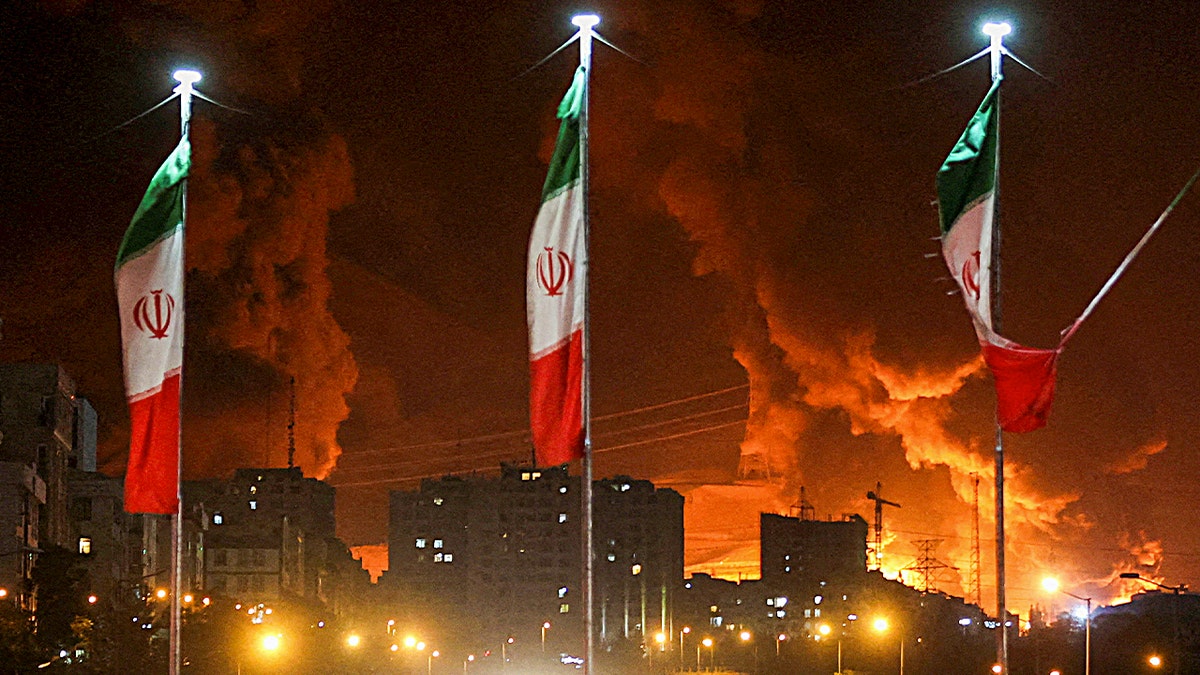
The siren began in the middle of a Tuesday work session, a low, mechanical moan that has become the metronome of life in Kyiv. For months, the pattern was predictable: Russian forces launched swarms of Iranian-designed Shahed drones under the cover of 2:00 AM darkness to drain Ukrainian air defense stocks and shatter sleep cycles. But the strategy has shifted. Russia is now executing massive, coordinated drone blitzes in broad daylight, a tactical pivot designed to exploit specific gaps in Western-supplied defense systems while maximizing the psychological toll on a civilian population that can no longer find refuge in the sun.
This is not a random escalation. It is a calculated industrial squeeze. By launching hundreds of low-cost loitering munitions during peak hours, Moscow is forcing Ukraine to make impossible choices between protecting critical energy infrastructure and shielding high-density residential areas. Each $20,000 drone destroyed by a $2 million interceptor missile represents a net win for the Kremlin’s war of attrition. The daytime timing adds a layer of visibility that night raids lack; when citizens can see the black triangles buzzing over their rooftops before the inevitable explosion, the terror becomes tangible, cinematic, and constant.
The Strategy of Forced Visibility
Military analysts often focus on the kinetic damage of a strike, but the recent daytime surges serve a secondary, more insidious purpose. When a drone strikes at 11:00 AM, the footage is immediate. Social media feeds fill with high-definition video of the impact, captured by thousands of smartphones. This creates an immediate feedback loop for Russian intelligence, allowing them to assess the effectiveness of their flight paths and the reaction time of mobile fire groups in real-time.
Daylight also complicates the work of Ukraine’s "drone hunters." These are the mobile units equipped with heavy machine guns and searchlights mounted on pickup trucks. While daytime visibility helps these crews spot targets with the naked eye, it also exposes them to Russian reconnaissance drones hovering at higher altitudes. The hunters become the hunted. By pushing the "drone blitz" into the light, Russia is testing the limits of Ukraine's man-portable air-defense systems (MANPADS) and the stamina of the personnel who operate them.
The Logistics of the Swarm
The volume of these attacks suggests a significant ramp-up in domestic Russian production. While the initial waves of the invasion relied heavily on direct shipments from Tehran, the Alabuga Special Economic Zone in Tatarstan has now transitioned into a high-capacity assembly hub. Intelligence reports indicate that Russia is no longer just "putting together kits" but is actively iterating on the airframe design to include carbon-fiber components that reduce radar cross-sections.
The sheer numbers tell the story.
- Saturation: Launching 80 to 100 drones simultaneously overwhelms the targeting computers of advanced systems like the IRIS-T or NASAMS.
- Diversion: Often, these swarms include "decoy" drones—cheap, plywood frames with no warhead but a metallic coating that mimics the radar signature of a lethal threat.
- Pathfinding: The drones are programmed with complex waypoints, circling cities and approaching from "blind" angles where radar coverage is thinned by local geography or urban density.
This is a war of numbers, not just ideology. Ukraine is currently burning through its interceptor inventory faster than the West can replenish it. Each daytime blitz is an interrogation of Western industrial capacity. If the US and Europe cannot produce enough small-caliber ammunition and short-range missiles to counter a $20,000 plastic drone, the defensive line will eventually snap.
The Infrastructure Trap
As winter fades and the heating season ends, the target list has shifted. Russia isn't just trying to freeze the population anymore; it is trying to decapitate the economic recovery. Daytime strikes are increasingly focused on substation hubs and logistics centers that are vital for the transport of both grain and military hardware.
By attacking during the day, Russia ensures that repair crews are already on-site or nearby. This leads to the "double-tap" phenomenon. A primary strike hits a transformer. As emergency services and technicians rush to the scene to stabilize the grid, a second wave of drones or a ballistic missile follows thirty minutes later. This tactic is a direct violation of international norms, but in the context of the current blitz, it is being used with ruthless efficiency to deplete Ukraine’s specialized labor force.
The Limits of the Iron Dome Comparison
Many observers ask why Ukraine cannot simply replicate Israel’s success in neutralizing drone swarms. The answer lies in the sheer scale of the geography. Ukraine is roughly 28 times larger than Israel. You cannot "bubble" a country of this size with expensive, high-altitude interceptors. It requires a layered defense that integrates everything from vintage Gepard anti-aircraft guns to sophisticated electronic warfare (EW) arrays.
Electronic warfare is the silent front of this drone blitz. Russia has successfully hardened the navigation systems on the latest Shahed iterations, making them more resistant to GPS jamming (often referred to as "spoofing"). When the EW fails, the only option left is a kinetic kill. This brings us back to the fundamental imbalance: using a Ferrari to stop a moped.
The Psychological Front
We must look at the impact on the Ukrainian psyche. A year ago, there was a sense of novelty and "trench humor" regarding the drones. Today, that has been replaced by a grim, exhausting realization that the threat is permanent. The daytime attacks are designed to prevent the normalization of life. You cannot go to a cafe, attend a school play, or conduct a business meeting without the looming threat of a drone "blitz" clearing the streets.
This is psychological warfare disguised as a tactical strike. The intent is to breed a sense of helplessness that eventually translates into pressure on the government in Kyiv to negotiate at any cost. However, history suggests that indiscriminate bombing of civilian centers often has the opposite effect, hardening resolve rather than shattering it.
The Supply Chain Reality Check
If the West wants to stop the "deadly drone blitz," it needs to stop looking at it as a military problem and start viewing it as a supply chain problem. The components found in downed Russian drones—microchips, flight controllers, and small engines—still largely originate from companies in the US, Switzerland, and Japan. These parts are rerouted through shell companies in third-party nations.
Strengthening export controls is less "exciting" than sending a battery of Patriot missiles, but it is far more effective in the long run. Until the flow of Western-designed semiconductors into Tatarstan is choked off, the swarms will continue to grow in size and frequency.
The Immediate Mandate
Ukraine needs a massive influx of "low-tech" solutions. We are talking about thousands of heavy machine guns, acoustic sensors that can detect the drone’s lawnmower-like engine sound from miles away, and localized EW "domes" for every city block. Relying on million-dollar missiles to fight thousand-dollar drones is a mathematical path to defeat.
The international community must also reckon with the fact that Russia's "daytime" strategy is a trial run. Other adversarial powers are watching. They are learning how to paralyze a modern European nation using cheap, disposable technology. The lessons being learned in the skies over Kyiv will dictate the nature of global conflict for the next fifty years.
Stop treating each strike as an isolated news event and start treating it as the opening salvo of a new era of industrial warfare. The response must be equally industrial. Build the factories, diversify the interceptor types, and close the sanctions loopholes that allow these drones to exist in the first place.