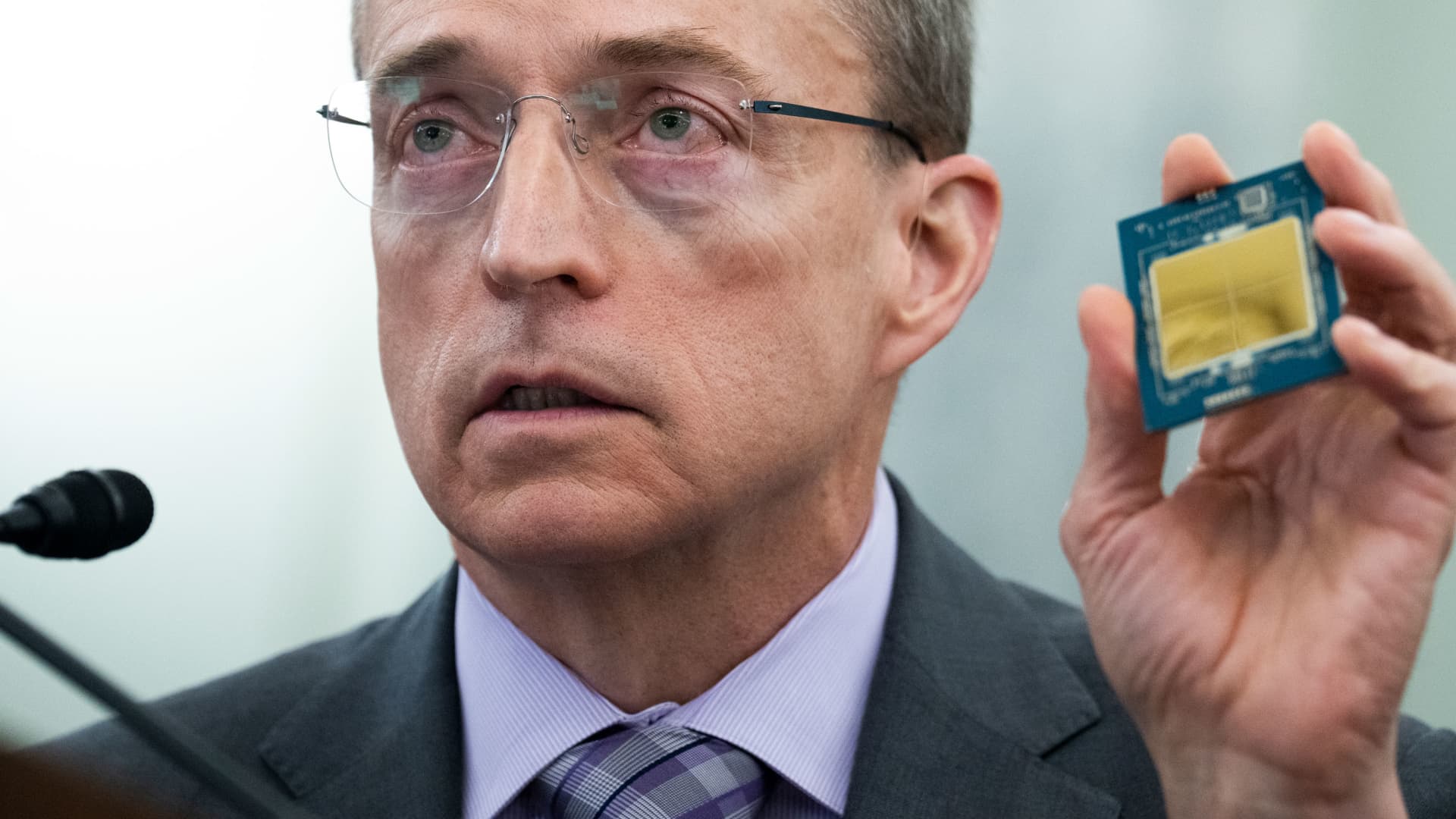
Intel is no longer the sovereign of its own empire. By offloading a 49% stake in its Fab 34 facility in Leixlip, Ireland, to Apollo Global Management for $11 billion, CEO Pat Gelsinger has effectively pawned the crown jewels to fund a desperate architectural overhaul. This isn't just a "joint venture" or a clever financial maneuver. It is a high-stakes emergency measure designed to stop the company’s balance sheet from hemorrhaging while it attempts to catch up to TSMC’s manufacturing lead.
The deal allows Intel to claw back billions in cash while keeping operational control of the site. However, the cost of this liquidity is a permanent slice of the profits from the world’s most advanced high-volume chip manufacturing process, Intel 4. To understand why a once-untouchable titan would invite a private equity shark into its most vital production hub, one must look at the brutal capital requirements of the "Five Nodes in Four Years" roadmap. Intel is trying to build a future it can no longer afford on its own. For a different perspective, see: this related article.
The High Price of Financial Engineering
The silicon industry has moved past the era where a single company’s cash flow could sustain the construction of leading-edge factories. Each new "fab" now carries a price tag exceeding $20 billion. While Intel once funded these through its dominant position in the PC and server markets, that well has run dry. Apple transitioned to its own silicon, Nvidia captured the AI surge, and AMD chipped away at the data center stronghold.
Apollo Global Management didn't step in out of a sense of corporate altruism. Private equity firms demand predictable, aggressive returns. By entering this agreement, Intel is essentially treating its Irish manufacturing capacity as a real estate asset rather than a proprietary technological advantage. Similar analysis on this matter has been shared by MarketWatch.
The structure of the deal mirrors the "Smart Capital" strategy Gelsinger introduced shortly after taking the helm. It is a method of bringing in external equity to offset the massive capital expenditure (CapEx) required for the transition to extreme ultraviolet (EUV) lithography. Without this $11 billion injection, Intel’s debt-to-equity ratio would have likely triggered a credit rating downgrade, making future borrowing prohibitively expensive.
Why Leixlip is the Front Line
The Irish plant, Fab 34, is not a legacy facility. It is the European beachhead for Intel’s most critical technology. This is where the company is proving it can mass-produce chips using EUV, a requirement for any processor hoping to compete with the latest offerings from ARM-based competitors.
- Intel 4 Process: This node is the first to utilize EUV lithography, significantly increasing transistor density while reducing power consumption.
- Meteor Lake Production: The Leixlip site is the engine room for the Core Ultra processors, which Intel hopes will reclaim the premium laptop market.
- Geopolitical Insurance: By maintaining a heavy presence in Ireland, Intel secures its status as the only major advanced manufacturer on European soil, a key factor in securing subsidies under the EU Chips Act.
By selling nearly half of this specific asset, Intel is admitting that its internal cash generation is insufficient to support the rapid-fire deployment of these technologies. It is a strategic retreat from total ownership in favor of survival.
The Hidden Risks of Private Equity Partnerships
Wall Street cheered the deal because it cleared the path for short-term dividends and stock buyback potential. But for an investigative analyst, the long-term implications are murkier. Private equity has a reputation for prioritizing immediate cash flows over long-term research and development.
When a 49% owner like Apollo sits at the table, the conversation changes. Their exit strategy is already planned. They are looking for a specific internal rate of return (IRR). If the Intel 4 process faces yield issues or if the global demand for PC chips softens further, the friction between Intel’s engineering needs and Apollo’s financial targets will become a localized crisis.
Intel is betting that the market for its "Foundry" services—making chips for other companies like Microsoft or AWS—will explode. If those customers don't materialize in the volume Intel expects, the company will be stuck paying out profit shares to Apollo from a diminishing pool of internal product revenue. It is a gamble on a scale that would have been unthinkable during the Grove or Barrett eras.
The Foundry Pipe Dream vs Reality
Gelsinger’s grand plan hinges on turning Intel into a "Western alternative" to TSMC. This requires a cultural shift that is currently incomplete. Being a foundry means putting the customer first, a trait Intel historically lacked when it only designed chips for itself.
The Apollo deal provides the "how" (the money), but it doesn't solve the "what" (the customers). To make the Leixlip investment pay off for both Intel and its new private equity partner, the factory must run at near-total capacity. Empty cleanrooms are the fastest way to burn through $11 billion.
Comparison of Leading Edge Capital Requirements
| Feature | 2010 (32nm Era) | 2024 (EUV Era) |
|---|---|---|
| Typical Fab Cost | $4 - $6 Billion | $20 - $28 Billion |
| R&D Per Node | $1.2 Billion | $5.5+ Billion |
| Primary Funding | Internal Revenue | Debt + Private Equity |
The table above illustrates the trap. As the nodes get smaller, the costs grow exponentially. Intel is running a race where the track gets steeper every mile, and they have just sold their oxygen tanks to keep their shoes tied.
The Geopolitical Safety Net
Governments in Washington and Brussels are terrified of a world where all advanced logic chips come from a single island in the Pacific. This fear is Intel’s greatest asset. The $11 billion from Apollo is supplemented by billions more in grants from the US CHIPS Act and European equivalents.
However, these subsidies come with strings. They require Intel to maintain high employment levels and keep technology within specific borders. Apollo, conversely, cares only about the bottom line. This creates a three-way tug-of-war between corporate strategy, national security interests, and private capital.
If Intel fails to achieve parity with TSMC by 2026, the Irish plant won't just be a financial burden; it will be a monument to over-extension. The company is currently running on a "fail-safe" mode where every move is dictated by the need to maintain a massive, aging infrastructure while trying to birth a new one.
The Cost of Regaining the Lead
To beat TSMC, Intel must master High-NA EUV, a technology even more expensive and complex than what is currently in Leixlip. The machines required for this next step cost roughly $350 million each.
Buying these machines requires a level of capital that Intel simply does not have in its current state. The Apollo deal is a bridge. But bridges only work if there is solid ground on the other side. If the "18A" process node—the one Intel claims will finally leapfrog the competition—stumbles in the lab, the bridge leads nowhere.
The Irish deal is a symptom of a company that stayed too long in its own shadow. For decades, Intel was the bank. It funded its own progress, dictated its own terms, and owned every square inch of its dirt. Now, it is a tenant in its own house, paying rent to Apollo Global Management for the privilege of staying in the game.
Intel’s survival now depends on its ability to execute with a precision it hasn't shown in over a decade. The margin for error has been sold off to the highest bidder. Every percentage point of yield in that Irish factory now belongs, in part, to a boardroom in New York that cares nothing for the history of Moore’s Law. This is the new reality of the semiconductor business: the physics are hard, but the math is harder.
Investors shouldn't look at the $11 billion as a windfall. They should see it as a mortgage on a future that Intel can no longer guarantee. If you want to see where the soul of the Silicon Valley pioneer went, look toward the rain-swept fields of Leixlip, where the ownership is now split and the pressure is absolute.