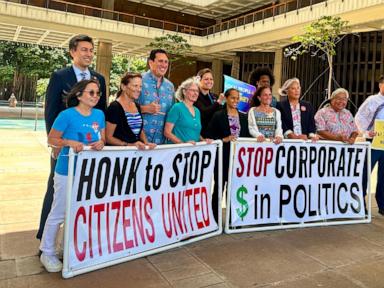
States across the country are currently locked in a messy, often contradictory struggle to muzzle corporate influence in local elections. While federal law prohibits corporations from making direct contributions to federal candidates, the rules at the state level are a patchwork of loopholes and aging statutes. Currently, 22 states ban direct corporate donations to candidates, while the rest allow them under varying limits. However, even in "ban" states, the money rarely stops flowing; it simply changes its shape, moving through political action committees, trade associations, and non-profit "dark money" groups that shield the original source from public view.
The real story isn't just that corporations want to buy influence. It is that the legal infrastructure meant to stop them is fundamentally ill-equipped to handle modern financial maneuvering.
The Illusion of the Corporate Ban
When a state legislature passes a law "banning" corporate contributions, the public often assumes the spigot has been turned off. That is a mistake. In states like Pennsylvania or Illinois, where the rules have historically been lax or nonexistent, the influence is overt. But look at states with strict prohibitions, like Minnesota or Massachusetts, and you find a much more sophisticated game of hide-and-seek.
Corporations do not need to write a check directly to a candidate’s campaign to get what they want. They use Political Action Committees (PACs). A company cannot give $5,000 to a governor, but it can certainly fund a PAC that then spends $500,000 on "issue ads" that just happen to air three weeks before the election. This creates a layer of separation that satisfies the letter of the law while violating its spirit. It is a shell game played with millions of dollars.
The Supreme Court’s 2010 Citizens United decision essentially stripped states of the power to limit "independent expenditures." This means as long as a corporation doesn't technically "coordinate" with a candidate, they can spend an unlimited amount of money to help that candidate win. The definition of coordination is notoriously difficult to enforce.
The Rise of the Dark Money Conduit
The most significant shift in state-level politics over the last decade is the migration of corporate cash into 501(c)(4) social welfare organizations. These entities are not required to disclose their donors. For a Fortune 500 company, this is the ultimate "get out of jail free" card for political spending.
If a pharmaceutical company wants to block a state bill on drug pricing, writing a direct check to a lawmaker is a public relations nightmare. Instead, they donate to a "Committee for Affordable Healthcare" (a fictional example of a 501(c)(4)). That committee then buys the television spots and digital ads attacking the bill's sponsors. The voters see a grassroots-sounding name. The company keeps its hands clean. The lawmaker knows exactly who paid for the help.
This lack of transparency makes it nearly impossible for voters to track who is actually funding the local representative's platform. We are seeing a massive surge in this "gray market" of political funding because it provides the one thing corporations crave more than access: Anonymity.
Why States Are Losing the Enforcement War
State ethics commissions and elections boards are usually the underfunded stepchildren of state government. They are tasked with monitoring thousands of filings with a fraction of the staff needed to actually audit them.
Most enforcement is "complaint-driven." This means that unless a political rival or a whistleblower flags an illegal donation, it likely goes unnoticed. Even when a violation is found, the fines are often treated as a mere cost of doing business. If a corporation is caught making an illegal $25,000 contribution, a $5,000 fine is not a deterrent. It is a rounding error.
Furthermore, the "revolving door" between state legislatures and lobbying firms ensures that the people writing the campaign finance laws are often the same people who will be hired to circumvent them six months later. This creates a legislative environment where loopholes are not accidents; they are features.
The Foreign National Loophole
A burgeoning crisis in state politics involves foreign-influenced corporations. While federal law prohibits foreign nationals from contributing to US elections, the FEC has been deadlocked on whether this applies to US-based corporations that are partially owned by foreign investors.
States like Minnesota and Maine have recently moved to ban "foreign-influenced" corporations—defined by a specific percentage of foreign ownership—from spending in state elections. This is a direct challenge to the Citizens United framework. The argument is simple: if a foreign entity cannot donate directly, it should not be able to use a US subsidiary as a puppet to influence state policy.
These laws are currently being tested in the courts. If they hold up, they could provide a blueprint for a broader crackdown on corporate spending. If they fail, it signals that the corporate veil is impenetrable.
The Strategy of Diversified Giving
Large corporations rarely bet on a single horse. Instead, they engage in "diversified giving," contributing to both parties or to leadership PACs that control the flow of money to individual rank-and-file members. This ensures that regardless of which party holds the majority, the corporation has a seat at the table.
In many states, the real power lies with the Caucus Committees. These are funds controlled by the Speaker of the House or the Senate President. By donating to these committees, a corporation avoids the optics of supporting a specific controversial candidate while still securing the gratitude of the state’s most powerful politicians. This top-down funding model makes individual lawmakers beholden to their party leadership, who in turn are beholden to the corporate donors funding the caucus.
The Failure of "Clean Election" Programs
Several states have tried to combat corporate influence by implementing public financing or "clean election" programs. The idea is to provide candidates with public funds if they agree to limit their private fundraising.
While noble in theory, these programs are struggling to keep pace with the sheer volume of outside corporate spending. A candidate using public funds might have $100,000 to spend on their race. An outside corporate PAC, unencumbered by the program's rules, can drop $300,000 in a single weekend to drown out that candidate's message.
Unless states can find a way to limit the "independent" spending that happens alongside these programs, public financing remains a David-and-Goliath battle where Goliath has a nuclear arsenal and David has a broken slingshot.
The Digital Frontier and Micro-Targeting
Corporate influence has moved beyond the television screen. The new battleground is digital micro-targeting. Corporations and their proxy groups are now using massive data sets to target specific voters with hyper-niche messaging on social media.
Because digital ad transparency laws at the state level are often non-existent or decades behind the technology, this spending is even harder to track than traditional TV ads. A corporation can fund a digital campaign that tells one neighborhood a candidate is too liberal and another neighborhood that the same candidate is too conservative. This fragmentation of the political discourse is funded by the same corporate interests that benefit from a confused and divided electorate.
Moving Toward a Disclosure-First Model
Since the courts have made it clear that "spending is speech" and therefore difficult to ban, the only viable path forward for reformers is radical transparency. Some states are pushing for "stand by your ad" laws that require the top three donors to a PAC to be listed in the advertisement itself.
Imagine a 30-second attack ad where the last five seconds are a voiceover saying: "Major funding for this ad provided by Big Oil Inc., Global Tobacco, and The Hedge Fund Alliance."
This is not a ban on spending, but it is a ban on the anonymity that makes corporate spending so effective. When voters know who is paying for the message, the message loses its objective veneer.
The Reality of Reform
The tension between corporate power and democratic integrity is not a bug in the American system; it is a permanent feature. As long as state governments have the power to regulate industries, those industries will have a financial incentive to capture state governments.
Meaningful change requires moving past the simplistic idea of "banning" donations. It requires a hard-nosed look at the mechanics of PACs, the secrecy of 501(c)(4)s, and the chronic underfunding of the agencies meant to police them. Without those structural changes, any new state law is just a new set of hurdles for corporate lawyers to jump over.
Check your own state’s transparency portal—if one even exists—and look for the "unitemized" or "other" categories in campaign filings. That is usually where the real story is buried.