The map on the wall of the diplomatic briefing room looks clean. Lines of crisp blue and sharp red divide nations, suggesting that peace is merely a matter of getting people to stay inside their designated borders. But maps lie. They hide the smell of coffee brewing in markets that have stood for three thousand years, and they erase the heavy, invisible gravity that certain nations exert over their neighbors, no matter how much the rest of the world wishes they would disappear.
Lately, there is a dangerous fantasy circulating in the corridors of global power. It is the belief that you can build a stable house while ignoring the massive boulder sitting right in the center of the living room.
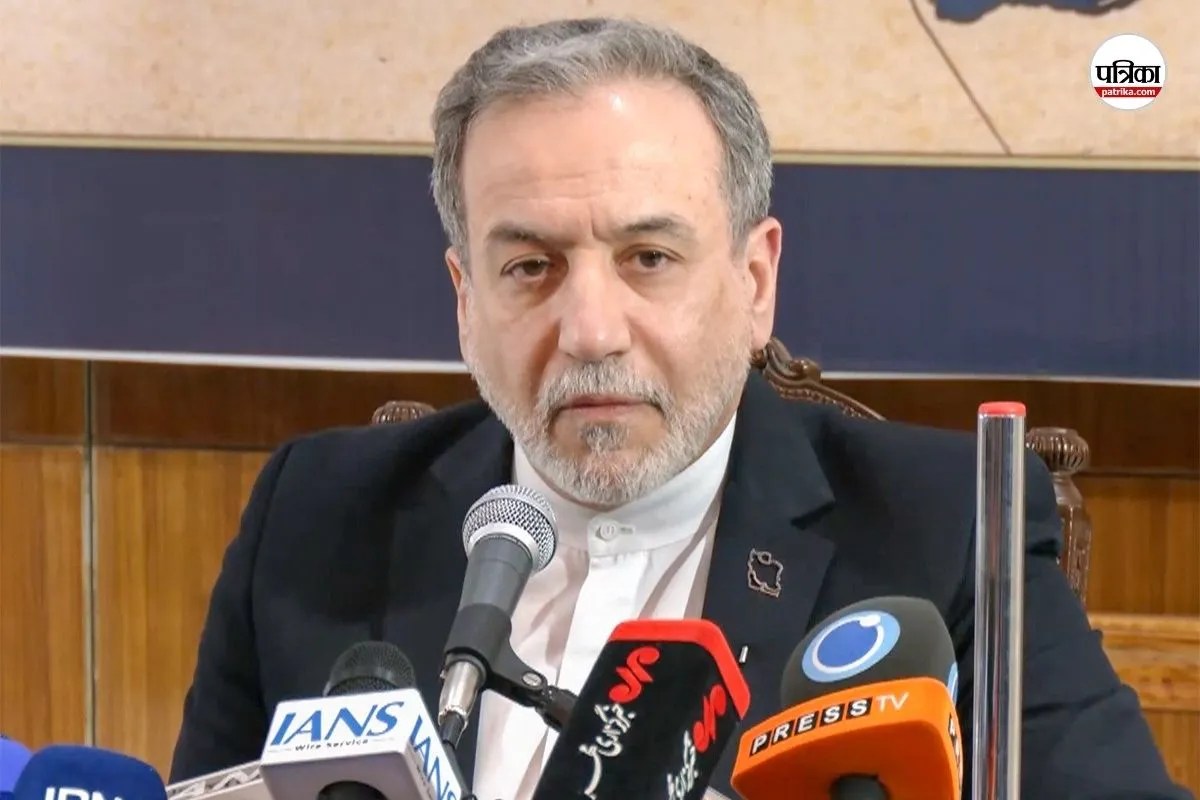
When Iranian Foreign Minister Abbas Araghchi stood before reporters recently, his words were stripped of the usual dense diplomatic jargon. He said something simple, something that should be obvious but has somehow become a radical statement in modern geopolitics: Tehran cannot be ignored if you want peace in the Middle East. It was not a threat. It was a statement of geographic and historical reality.
To understand why this matters, step away from the television screens and the shouting heads on cable news. Consider a small, ordinary teahouse in a city like Baghdad or Beirut.
Inside, a grandfather sits with his grandson. The electricity flickers, a daily reminder of a fragile infrastructure fractured by decades of conflict. When that grandfather looks at the future, he does not think about abstract treaties signed in grand European hotels. He thinks about the tangible forces that shape his daily life. The trade routes that bring food to his table. The security of the roads outside his door. The political currents that determine whether his grandson will go to school or to a frontline.
For better or for worse, Iran is woven into the fabric of those daily realities. You can draw lines on a map, but you cannot draw lines through history, culture, or economics.
The current strategy of many Western nations resembles an attempt to play a game of chess while pretending one of the opponent's rooks simply does not exist. It is an exercise in self-delusion. For decades, the dominant approach to Iranian diplomacy has been isolation. Sanctions, cold shoulders, and cut communication lines. The theory was simple: pressure them enough, lock them out of the room long enough, and they will either change or vanish.
But pressure changes things in unpredictable ways.
Think of a river. If you build a massive dam to stop its flow completely, the water does not just give up and go away. It accumulates. It finds cracks. It creates new pathways, often violent ones, carving through places no one expected. Iran’s influence across the region—in Iraq, Syria, Lebanon, and Yemen—is that water. It is the result of decades of the world trying to dam up a major regional power instead of finding a way to channel that power into something stable.
Araghchi’s statement arrives at a moment of profound exhaustion. The region is bleeding. The old frameworks of security have failed. The idea that a handful of distant superpowers can dictate the terms of coexistence for millions of people living thousands of miles away is cracking under the weight of reality.
True expertise in foreign policy does not come from memorizing policy briefs; it comes from understanding human behavior. Human beings, whether they are running a household or a nation, do not surrender when they are cornered. They fight harder. They look for leverage.
The world often looks at Iran's actions through a lens of pure ideology. That is a mistake. It is simpler, and far more accurate, to look at them through the lens of survival and national interest. When a nation feels permanently excluded from the regional security architecture, its primary goal becomes disrupting that architecture so it cannot be used against them. It is a defensive reflex disguised as offensive maneuvering.
This is where the collective misunderstanding lies. Engaging with an adversary is not a reward for good behavior. It is not an endorsement of their policies, their governance, or their values. It is a cold, hard necessity born of proximity.
Imagine two neighbors who share a cracked foundation between their homes. They might despise each other. They might have different religions, different politics, and a history of bitter lawsuits. But if the foundation starts to give way, endangering both structures, they have two choices. They can sit on their respective porches, shouting insults while the walls crumble around them. Or they can sit down at a table, acknowledge that neither one is moving away, and figure out how to keep the roof from collapsing.
Diplomacy is that table. Right now, that table is empty.
The cost of this emptiness is paid in human currency. It is paid by the merchants who cannot ship goods across borders because of instability. It is paid by families living under the constant, anxious shadow of a wider regional war that always feels just one miscalculation away. It is paid by a generation of young people across the Middle East who want what young people everywhere want: a job, a stable home, and a future that stretches out beyond the next news cycle.
We have seen what happens when the world tries to build peace through exclusion. The gaps left by the absent players are quickly filled by chaos.
Achieving a durable peace requires a willingness to face uncomfortable truths. It requires admitting that the current path is a dead end. Abbas Araghchi’s reminder is an invitation to realism. It asks the global community to trade the comforting illusions of total victory or total isolation for the messy, difficult work of actual engagement.
The map will never be as clean as the bureaucrats want it to be. The lines will always be blurred by the messy realities of human connection, shared history, and inescapable geography. The living room cannot be rearranged until everyone acknowledges the boulder in the center. Only then can the real conversation begin, not about who gets to stay in the room, but how everyone in it can survive together.
The sun sets over the ancient hills of the region, casting long shadows that cross borders without checking passports. The dust settles on roads that have seen empires rise and fall, leaving behind the same fundamental truth that has governed this soil for millennia: you cannot secure a neighborhood by pretending your neighbor does not live there.