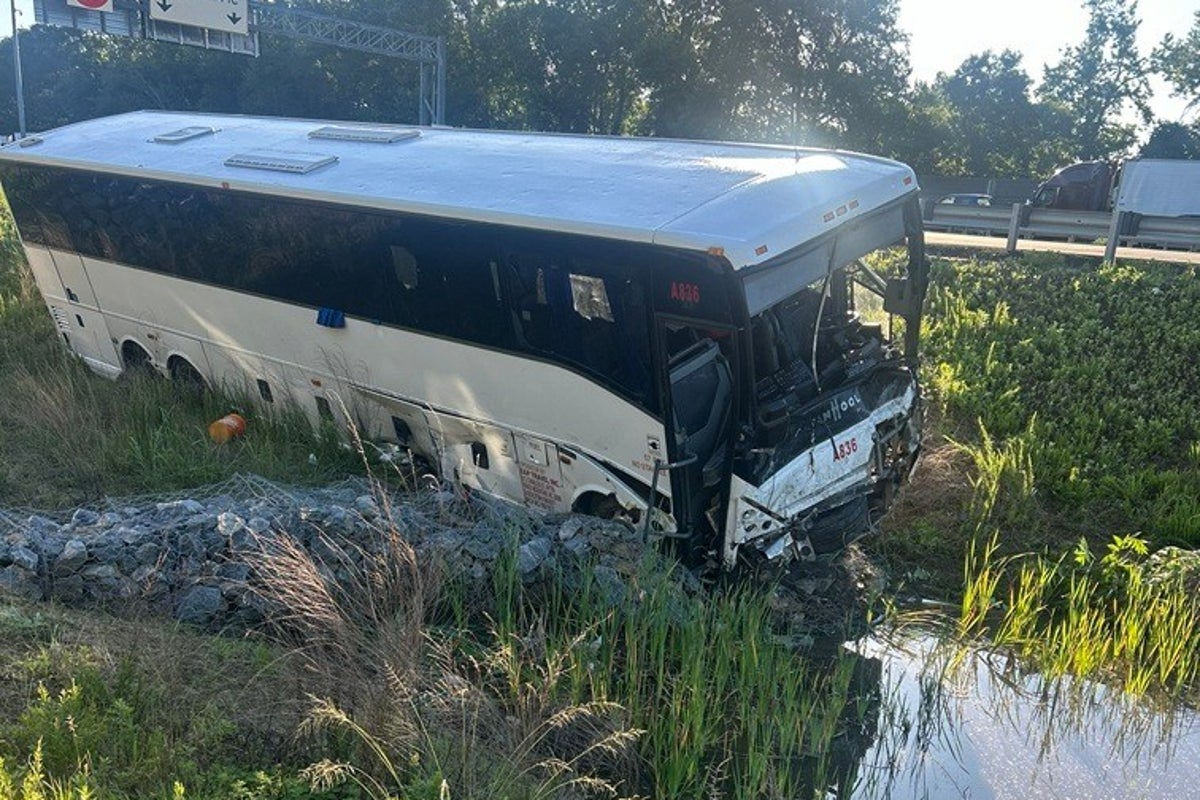
The media loves a villain. When a bus flips on a Virginia interstate and five people—including a family headed to a wedding—are crushed to death, the narrative writes itself. The driver was tired. The driver was speeding. The driver was reckless. Law enforcement moves in, charges are filed, and the public breathes a sigh of relief because the "bad apple" has been removed from the barrel.
That relief is a lie.
Charging a bus driver with reckless or involuntary manslaughter feels like justice, but it is actually the biggest barrier to systemic safety in the transport industry. Every time we pin a tragedy on a single human being, we ignore the architectural failures that made the crash inevitable. I have spent decades analyzing logistics and transport failure points. I have seen the same script played out from the 2019 Prince George County disaster to every major pile-up since. We are obsessed with individual blame because it's cheaper than fixing a broken system.
The Myth of the Autonomous Human
The core of the "lazy consensus" is the belief that a driver is a free agent operating in a vacuum. The legal system treats a driver like a pilot of a small craft, fully in control of every variable.
In reality, a commercial driver is the bottom rung of a massive, pressure-cooker hierarchy. When a bus deviates from its lane at 5:00 AM, the "error" didn't start at the steering wheel. It started weeks prior in a dispatch office. It started with a scheduling algorithm designed to maximize "on-duty" hours while technically staying within the legal limit of the Federal Motor Carrier Safety Administration (FMCSA) hours-of-service regulations.
We call it "driver error" because it's convenient. If the driver is the problem, the company isn't. The infrastructure isn't. The industry standards aren't. We prosecute the symptom and leave the disease to fester.
The Sleep Debt Trap
Let’s talk about the biological math the industry ignores. The human body operates on a circadian rhythm that does not care about your wedding schedule or your discount bus ticket.
$$T_{alertness} = f(C, S)$$
Where $C$ represents the circadian phase and $S$ represents the homeostatic sleep drive. When these two variables bottom out simultaneously—usually between 3:00 AM and 5:00 AM—the human brain begins to experience micro-sleeps. These aren't choices. They are involuntary neurological shutdowns.
When a driver is charged after a fatigue-related crash, we are essentially criminalizing a biological reflex. If a company schedules a route during the "circadian trough," they have engineered a crash. The driver is just the person sitting in the chair when the math finally catches up.
Why "Safety Training" is a Grift
Every time a major carrier has a blowout accident, they release a statement about "enhanced safety training." It’s theater.
I’ve sat through these sessions. They are designed by lawyers to create a paper trail of "informed consent." If the company tells the driver not to drive tired, and the driver then drives tired because they’ll lose their job if they don’t finish the route, the company can point to the training manual and say, "We told him not to."
This is a liability shield, not a safety protocol. True safety isn't about telling people to be "more careful." It’s about building systems where "being careful" isn't the only thing standing between a passenger and a body bag.
- Active Safety Systems: Why are we still allowing motorcoaches on the road without mandatory, non-overrideable Lane Keep Assist (LKA) and Automatic Emergency Braking (AEB)?
- Biometric Monitoring: The technology to detect eyelid flutter and heart rate variability exists. If it isn't in the cab, the company has decided that a driver’s life (and your life) is worth less than the cost of a sensor.
- Predictive Scheduling: We have the data to know which drivers are at high risk based on their previous 72 hours of activity, yet we still use "legal" as a proxy for "safe."
The Industry’s Dirty Secret: The "Ghost" Hours
The public thinks the FMCSA rules keep them safe. They don't. The 14-hour duty limit is a joke in the industry. Drivers spend hours doing "non-driving" work—inspections, loading luggage, dealing with paperwork—that drains their cognitive reserves before they even put the vehicle in gear.
When a bus crashes in Virginia, the investigators look at the logs. If the logs are legal, they blame the driver's "judgment." They never look at the "ghost hours"—the cumulative exhaustion of a career spent in a vibrating metal box, breathing recirculated air, and eating gas station sodium.
We are asking people to perform at the level of a high-performance athlete while treating them like disposable biological components.
Stop Asking if the Driver was Negligent
The "People Also Ask" section of any tragedy is always filled with: "Was the driver on drugs?" or "How fast was he going?"
These are the wrong questions. They focus on the how and ignore the why.
If you want to actually stop five more people from dying on their way to a wedding, you should be asking:
- What was the carrier's turnover rate in the last six months? (High turnover = systemic stress).
- Did the vehicle have Level 2 autonomy features active?
- What is the ratio of "driving hours" to "rest hours" in the driver's previous 14 days?
If a driver is speeding, ask why the schedule was so tight that speeding was the only way to avoid a penalty. If a driver fell asleep, ask why the cabin wasn't equipped with a haptic seat to wake them up.
The Downside of My Argument
I’ll admit the uncomfortable truth: if we actually implemented the systemic changes I’m calling for, the "cheap bus" industry would die overnight.
Ticket prices would triple. Routes would be cancelled. Transport would become a luxury again. The reason we accept the "driver error" narrative is that it allows us to keep our $40 fares. We have entered into a silent social contract where we trade a statistically significant number of lives every year for the convenience of cheap, high-speed ground travel.
Charging a driver with a crime is the ritual sacrifice we perform to keep that contract going. It allows us to pretend the system works while we bury the victims.
The Solution Nobody Wants
We need to stop treating bus crashes as criminal matters and start treating them as engineering failures.
In aviation, when a plane goes down, the NTSB doesn't just look for someone to handcuff. They look for the "Swiss Cheese Model" of failure—the series of holes in the system that lined up perfectly to allow a disaster. In trucking and busing, we just find the guy at the end of the line and throw the book at him.
- Eliminate the "Reckless" Charge for Fatigue: Unless there is proof of intoxication, fatigue should be a corporate liability, not a driver's felony.
- Mandate Telematics Transparency: Every byte of data from that bus should be public record the moment a crash occurs. No more proprietary data "protection" for carriers.
- Kill the 14-Hour Rule: It is too long. No human should be responsible for 50 lives 13 hours into a shift.
The driver in the Virginia crash is currently the villain of the week. He will likely go to prison. And while he sits in a cell, the same companies will continue to run the same routes with the same exhausted drivers on the same crumbling infrastructure.
If you think putting one man in jail makes the highway safer, you’re the one who’s asleep at the wheel.
Stop looking at the mugshot. Start looking at the balance sheet.
End the charade of individual blame and force the industry to pay for the safety it pretends to value. If a bus can’t stay in its lane without a human being perfectly alert for 10 hours straight, the bus is a defective product. Period.
Move the liability up the chain. Until the CEO faces the same charges as the driver, nothing changes.
Get off the bus.