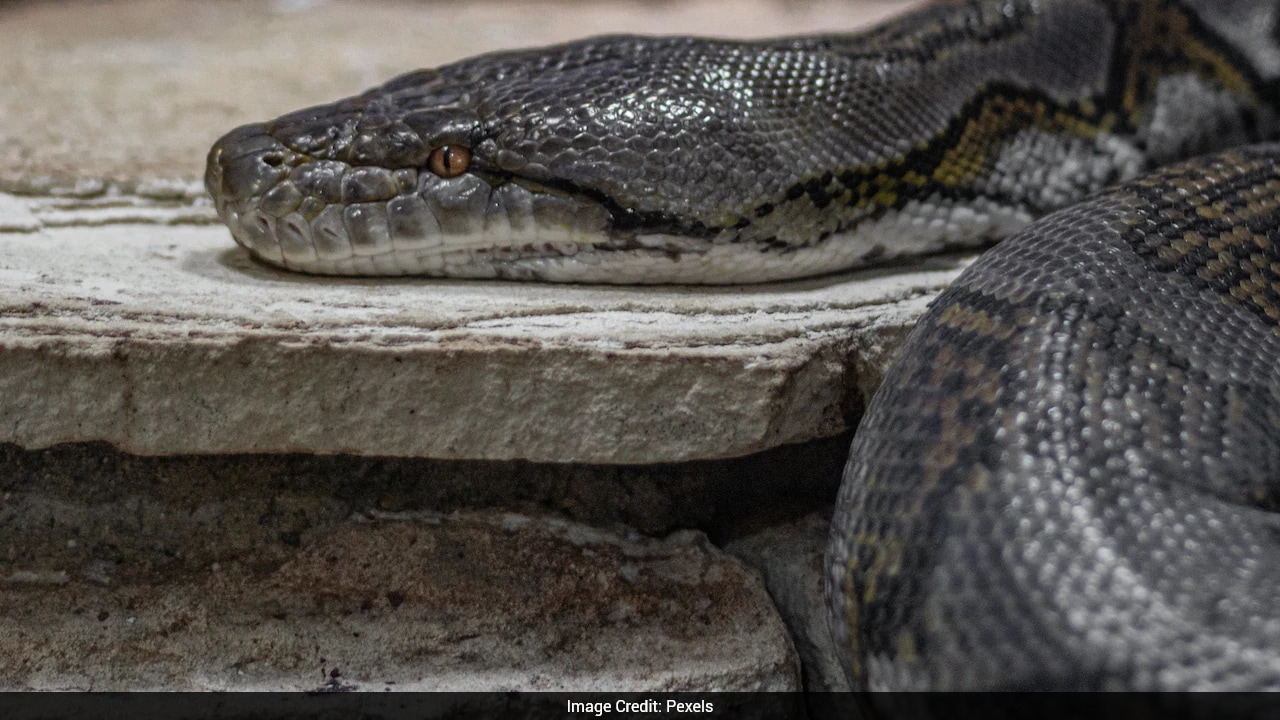
A snake crawls into a substation in Virginia, fries itself on a transformer, and plunges thousands of people into darkness. The local news runs a sensational headline. The utility company shrugs its shoulders, points at the charred reptile, and calls it an act of God or a freak accident.
Everyone buys the narrative. We all nod along and think, Wow, nature sure is wild. If you found value in this piece, you might want to read: this related article.
It is a comforting story. It is also a lie.
Blaming wildlife for grid failures is the ultimate get-out-of-jail-free card for utility monopolies. It turns a systemic failure of infrastructure investment into a tragic, unpredictable comedy of errors. The lazy consensus tells us that our power grid is a modern marvel occasionally defeated by a determined rodent or a stray reptile. The reality is far more damning: our grid is an fragile, centralized relic from the mid-20th century, and utilities are actively disincentivized from making it resilient. For another look on this development, refer to the latest coverage from CNET.
Stop treating animal-induced blackouts like a bizarre coincidence. They are a predictable symptom of structural neglect.
The Myth of the Unstoppable Squirrel
Every year, the American Public Power Association tracks the top causes of power outages. Wildlife regularly competes with severe weather for the top spot. We are told that these creatures are tiny, furry saboteurs capable of outsmarting the brightest engineers in the country.
Let us dismantle the premise entirely. A 15-pound raccoon or a three-foot black snake cannot take down a properly isolated, modern electrical system. They take down our system because we rely on open-air, uninsulated substation designs that haven't fundamentally changed since the Eisenhower administration.
When a snake shorts out a transformer, it bridging the gap between a high-voltage component and a grounded surface. This happens because utilities rely on physical distance—air insulation—to keep current where it belongs. If an animal can physically span that gap, the design has failed.
This is not a technology problem. We have the engineering solutions to stop this tomorrow. Laser-cut polymer animal guards, busbar insulation, and completely enclosed gas-insulated switchgear (GIS) exist. In parts of Europe and Asia, where substations are routinely housed entirely indoors or built with fully insulated, touch-safe components, the "snake eating the grid" trope is virtually unheard of.
American utilities do not avoid these upgrades because they are impossible. They avoid them because patch-and-repair maintenance keeps their balance sheets looking pristine for Wall Street.
The Perverse Incentives of Grid Monopoly
To understand why your lights go out when a snake gets hungry, you have to look at how utility companies make money.
I have spent years analyzing capital expenditure models in regulated markets. In the United States, investor-owned utilities operate on a cost-of-service regulatory model. They are granted a geographic monopoly, and in exchange, their returns are capped by state utility commissions. They earn a guaranteed rate of return—usually around 9% to 10%—on capital investments (building new transmission lines, erecting new power plants).
They do not earn that same guaranteed profit margin on operation and maintenance (O&M) expenses.
If a utility spends $50,000 retrofitting ten substations with advanced animal mitigation systems and robust insulation, that often falls under maintenance. It reduces their immediate profit pool. But if a transformer explodes because a snake crawled into it, the utility can write off the failure, clear the debris, and sometimes even capitalize the replacement equipment as a brand-new asset.
The system rewards reactive crisis management over proactive resilience.
"Show me the incentive and I will show you the outcome." — Charlie Munger
Our regulatory framework incentivizes utilities to build massive, centralized infrastructure, let it degrade over decades, and then act surprised when a localized disruption cascades into a multi-county blackout.
The Decentralization Threat They Are Hiding
The conventional response to a wildlife outage is to demand better physical security at the substation. Put up better fences. Install ultrasound deterrents. Spray predator urine around the perimeter.
This completely misses the point. The real vulnerability is not that the animal got into the substation; the vulnerability is that one substation failure can knock out power to 10,000 homes simultaneously.
The centralization of the grid is its fatal flaw. We pull power from massive, distant generation plants, route it through high-voltage transmission lines, and dump it into localized distribution substations. It is a fragile chain. If any single link breaks, the entire downstream population loses power.
The real threat to the utility business model isn't the wildlife. It is the microgrid.
If those 10,000 homes in Virginia were supported by a decentralized network of neighborhood solar arrays, localized battery storage, and smart distributed energy resource management systems (DERMS), a substation failure would be a non-event. The neighborhood microgrid would simply island itself off from the main grid, running on local generation and storage until the main line was restored.
Utilities fight microgrids tooth and nail. They lobby state legislatures to restrict net metering, slap punitive fees on residential solar hookups, and make it agonizingly difficult for commercial properties to operate independent power systems. Why? Because every kilowatt-hour generated and stored locally is a kilowatt-hour they cannot sell you at a premium.
They want you dependent on their fragile, centralized wire network. They need you to believe that the grid is an incredibly complex, delicate system that only they can manage—and that when it fails, it is the fault of a rogue snake, not their regressive corporate strategy.
The Hard Truth About Going Underground
Whenever a major outage happens, the immediate public outcry is simple: "Bury the wires."
It sounds intuitive. If the wires are underground, snakes can’t climb them, squirrels can’t chew them, and trees can’t fall on them.
But as a contrarian, I have to point out the brutal reality that the pro-underground crowd ignores: undergrounding is not a silver bullet, and it comes with severe trade-offs that utilities love to weaponize during public debates.
First, the cost is astronomical. Burying existing overhead distribution lines can cost anywhere from $1 million to $5 million per mile depending on the terrain. If a utility were to underground an entire state’s distribution network, your monthly electricity bill would triple overnight to pay for the capital expenditure.
Second, underground systems are not immune to failure; they are just immune to visible failure. When an underground cable fails due to insulation degradation or water ingress, locating the exact fault requires specialized thumping equipment. Fixing it requires excavating pavement or lawns. An overhead line failure can be spotted by a technician in a truck and fixed in two hours; an underground failure can leave a neighborhood dark for days while crews dig up the street.
The solution is not to mindlessly dig up every road in America. The solution is targeted resilience: modular, insulated, decentralized infrastructure that assumes failure will happen and limits the blast radius.
Stop Asking the Wrong Question
When the power goes out, the media asks: How did the animal get in?
The public asks: When will the power come back on?
Both questions are wrong. They accept the premise that our current grid architecture is inevitable and that we are merely victims of external disruptions.
The question you should be asking your public utility commission is this: Why are we paying guaranteed returns to a monopoly whose infrastructure can be brought to its knees by a reptile with no limbs?
The next time your local news runs a story about an animal causing a blackout, don't feel bad for the utility workers out in the storm, and don't marvel at the unpredictability of nature. Recognize the headline for what it is: marketing copy designed to distract you from decades of underinvestment and regulatory capture.
The snake didn't fail the grid. The grid failed you.
Demand decentralization. Build local redundancy. Force your local regulators to penalize utilities for duration-based outages regardless of the cause. Until the financial pain of an animal outage outweighs the cost of upgrading the infrastructure, the utilities will keep collecting your checks, the substations will keep sparking, and the squirrels will keep winning.