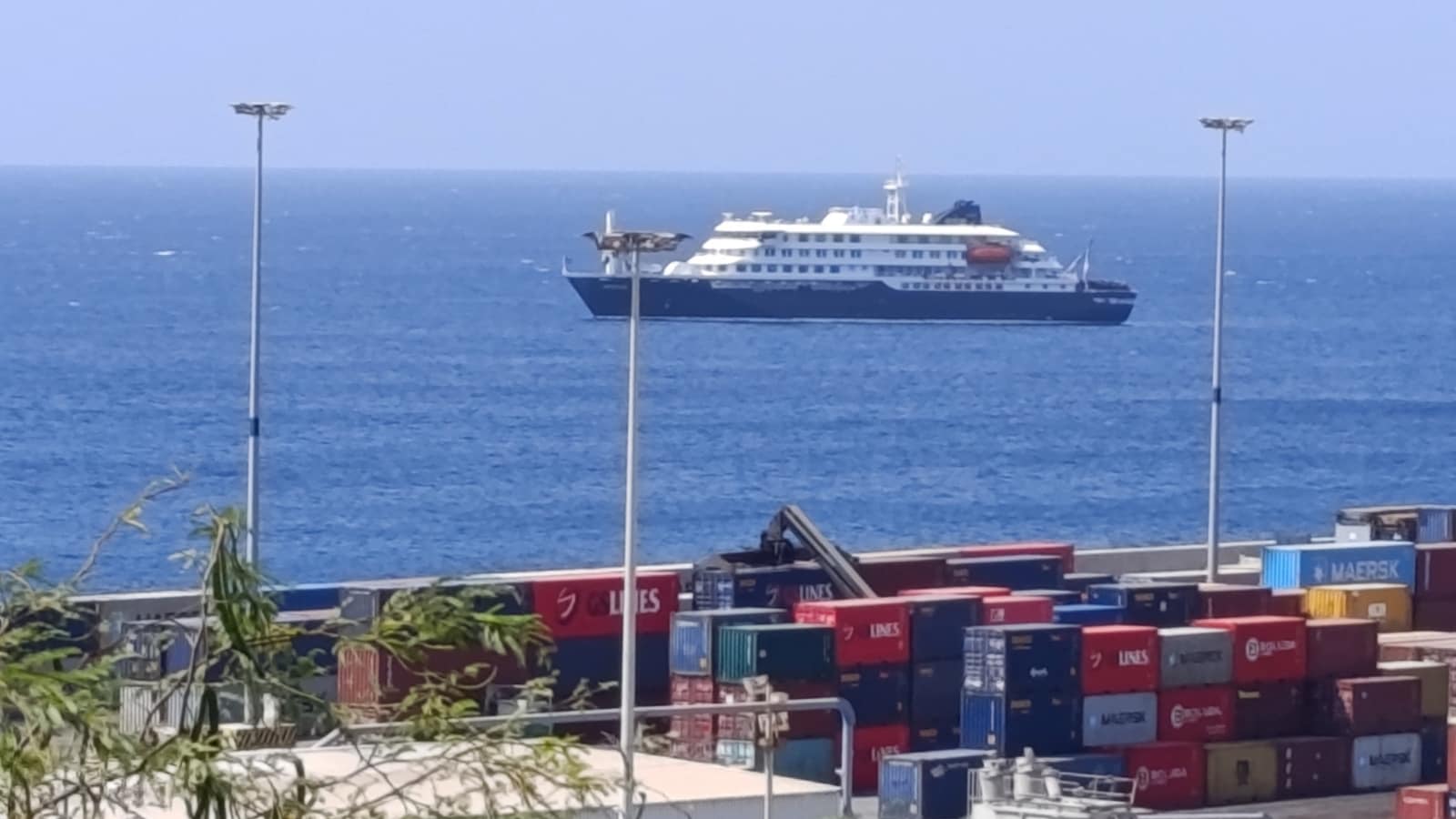
The maritime industry has a dirty secret that has nothing to do with fuel emissions or labor disputes. It is the terrifying speed with which a localized biological threat can transform a luxury expedition into a drifting petri dish. When the MV Hondius, a state-of-the-art polar vessel, signaled a health crisis involving suspected hantavirus, it wasn't just a medical anomaly. It was a systemic breakdown. Within forty-eight hours, a high-end adventure through the Southern Ocean became an international security flashpoint, revealing that our current maritime health protocols are little more than theater.
The primary breakdown occurred because of a fundamental misunderstanding of viral transmission in isolated environments. While the industry fixates on Norovirus—the standard "cruise ship bug"—the appearance of a rodent-borne pathogen like hantavirus caught port authorities and the vessel’s parent company completely off guard. This was not a failure of hygiene. It was a failure of intelligence and rapid-response logistics.
Why the Polar Fleet is a High Risk Environment
Expedition cruising has exploded in popularity over the last decade. We are sending more people than ever to the most remote corners of the map. These vessels, like the MV Hondius, are designed to be self-sufficient marvels of engineering, yet they remain vulnerable to the most ancient of stowaways: the common rat.
Hantavirus is typically transmitted through contact with infected rodent droppings, urine, or saliva. In the cramped, recycled-air environment of a ship, the risk of aerosolization increases. The industry likes to market these trips as "untamed wilderness meets five-star luxury," but the reality of operating in remote ports means that supply chains are often compromised. If a single crate of supplies from a poorly monitored terminal carries an infected rodent, the ship's ventilation system handles the rest.
The Hondius incident exposed a terrifying lag in communication. While the ship’s medical team identified symptoms early, the disconnect between the vessel, its flag state, and the international ports of call created a vacuum of indecision.
The Illusion of Maritime Quarantine
When a ship declares a medical emergency, the public assumes a well-oiled machine of international law springs into action. That is a fantasy. In reality, what follows is a series of frantic negotiations between private owners and national governments terrified of becoming the next "plague port."
During the suspected outbreak, the Hondius found itself in a geopolitical tug-of-war. Ports are businesses. A ship with a suspected Class A pathogen is a liability that can shut down a terminal for weeks. We saw this during the 2020 pandemic, and the Hondius proved we have learned almost nothing. The "health emergency" wasn't just the virus; it was the fact that no one wanted to take responsibility for the human beings on board.
The Diagnostics Gap in Remote Waters
Ships today are equipped with gymnasiums, fine dining, and theater-quality sound systems. Their medical bays, however, often resemble a small-town urgent care center from the 1990s.
To manage a hantavirus threat—or any hemorrhagic fever—you need rapid, molecular-level diagnostics. Most expedition ships rely on basic blood panels and symptomatic observation. By the time a patient shows enough distress to warrant an evacuation, they have likely been shedding viral particles for days.
The Problem with Symptomatic Overlap
The early stages of hantavirus look exactly like the flu or even severe seasickness.
- High fever and muscle aches.
- Fatigue and dizziness.
- Chills and abdominal issues.
On a vessel crossing the Drake Passage, these symptoms are a daily occurrence. The crew is trained to hand out ginger tablets and tell passengers to lie down. This creates a "delay of discovery" that is lethal. In the case of the Hondius, the suspicion of hantavirus only arose after standard treatments failed and the patient's respiratory status plummeted. By then, the international alarm bells were already late.
The Supply Chain Corruption
We must look at where these ships dock. The "expedition" niche often utilizes smaller, less regulated ports to offer "authentic" experiences. These ports do not have the same level of pest control or sanitary oversight as major hubs like Singapore or Rotterdam.
The investigation into the Hondius event suggests that the pathogen didn't originate in the Antarctic ice. It likely crawled aboard during a provisioning stop. Ships are built with "rat guards" on their mooring lines, but these are often poorly maintained or bypassed during the frantic hours of loading thousands of pounds of fresh produce and meat.
A Failure of Private Oversight
The cruise line’s first instinct is always brand protection. This isn't a conspiracy; it's a fiduciary duty to shareholders. However, when brand protection involves delaying the disclosure of a potential outbreak to the World Health Organization (WHO) or local health authorities, it becomes a criminal negligence issue.
Documents from the incident show a timeline where internal discussions about "containment" and "PR strategy" preceded the official notification of the port authorities by nearly 24 hours. In the world of infectious disease, 24 hours is an eternity. It is the difference between a single isolated case and a global tracking nightmare once passengers disembark and head for international airports.
The Reality of Medical Evacuations in the Southern Ocean
Evacuating a patient from a ship in the sub-Antarctic is a logistical nightmare that costs hundreds of thousands of dollars. It requires specialized aircraft, favorable weather windows, and a receiving hospital that won't turn the flight away.
When the Hondius crisis spiraled, it revealed that many insurance providers and "emergency extraction" services are not equipped for bio-hazardous transport. Most medevac planes are small. Putting a suspected hantavirus patient in a pressurized cabin with two pilots and a medic without a negative-pressure isolation pod is a suicide mission for the crew.
This led to the ship being forced to stay at sea longer than medically advisable. The vessel became a floating waiting room. This is the "international health emergency" the headlines missed: the realization that if you get truly, historically sick in the wilderness, no one is coming to save you quickly.
The Economic Pressure to Keep Moving
The most damning factor in these maritime health crises is the "itinerary pressure." A canceled cruise can cost a company millions in refunds and future credit. There is a massive, unspoken incentive for captains and medical officers to downplay illness until it is undeniable.
If the Hondius had turned back at the first sign of a high fever, the "emergency" might have been avoided. But the ship stayed on course. It continued its mission because that is what the customers paid for. We have created a system where the customer's "trip of a lifetime" is prioritized over the biological safety of the crew and the general public.
Technical Shortfalls in Vessel Design
Modern ships are marvels of luxury, but they are fundamentally flawed in terms of quarantine.
- Shared Ventilation: While many new builds claim to have HEPA filtration, these systems are rarely maintained to the standards required to stop viral aerosolization.
- Common Touchpoints: Buffet-style dining and narrow corridors make social distancing an impossibility.
- Crew Quarters: The crew lives in high-density environments. If a virus hits the kitchen staff or the cabin stewards, the ship is finished.
The Hondius used a relatively modern HVAC system, yet the fear of spread was palpable. The architecture of a ship is designed for efficiency and comfort, not for the containment of a Level 4 pathogen.
The Jurisdictional Black Hole
Who owns the problem when a ship is in international waters? The flag state (often a "flag of convenience" like Liberia or the Bahamas), the ship owner (often a Dutch or American corporation), and the nearest coastal state all have different agendas.
In the Hondius case, the lack of a clear, pre-existing legal framework for hantavirus on a polar vessel led to confusion. Was it a Dutch problem? An Argentine problem? A British Antarctic Territory problem? While the lawyers argued, the virus—and the fear of it—incubated.
This jurisdictional mess ensures that every future outbreak will be handled with the same "learn as we go" incompetence. We are relying on treaties that were written before the age of mass expedition tourism.
The Necessary Evolution of Maritime Health
If we are to continue sending thousands of people into the most fragile and remote ecosystems on Earth, the "wait and see" approach to health must end.
The industry needs to move toward mandatory, real-time bio-surveillance. This isn't about checking temperatures at the gangway. It’s about installing automated air and wastewater sampling technology that can detect pathogens before the first passenger starts coughing. The technology exists. It is used in high-security government buildings and some modern hospitals. The reason it isn't on ships like the Hondius is simple: it is expensive, and it might find things the cruise lines would rather not know about.
Redefining Port Entry Requirements
Governments must stop treating ship arrivals as purely commercial transactions. Every vessel entering a port should be required to provide a digital "biological manifest" that includes anonymized health data from the ship’s medical bay. If a ship shows a spike in respiratory or gastrointestinal distress, it shouldn't be allowed to dock until a third-party medical team has cleared it.
The Hondius was a warning shot across the bow of the travel industry. It demonstrated that a single rodent, a single lapse in supply chain security, and a single day of corporate hesitation can create a crisis that threatens international borders.
The next time, it might not be a suspected hantavirus with a limited transmission rate. It could be something far more efficient. The maritime industry is currently operating on luck, and as the Hondius proved, luck eventually runs out in the cold waters of the south. The only way to prevent the next international emergency is to stop treating shipboard health as a PR hurdle and start treating it as the national security issue it actually is.
Stop the fluff. Buy the diagnostic equipment. Fix the supply chains. Or stay in port.