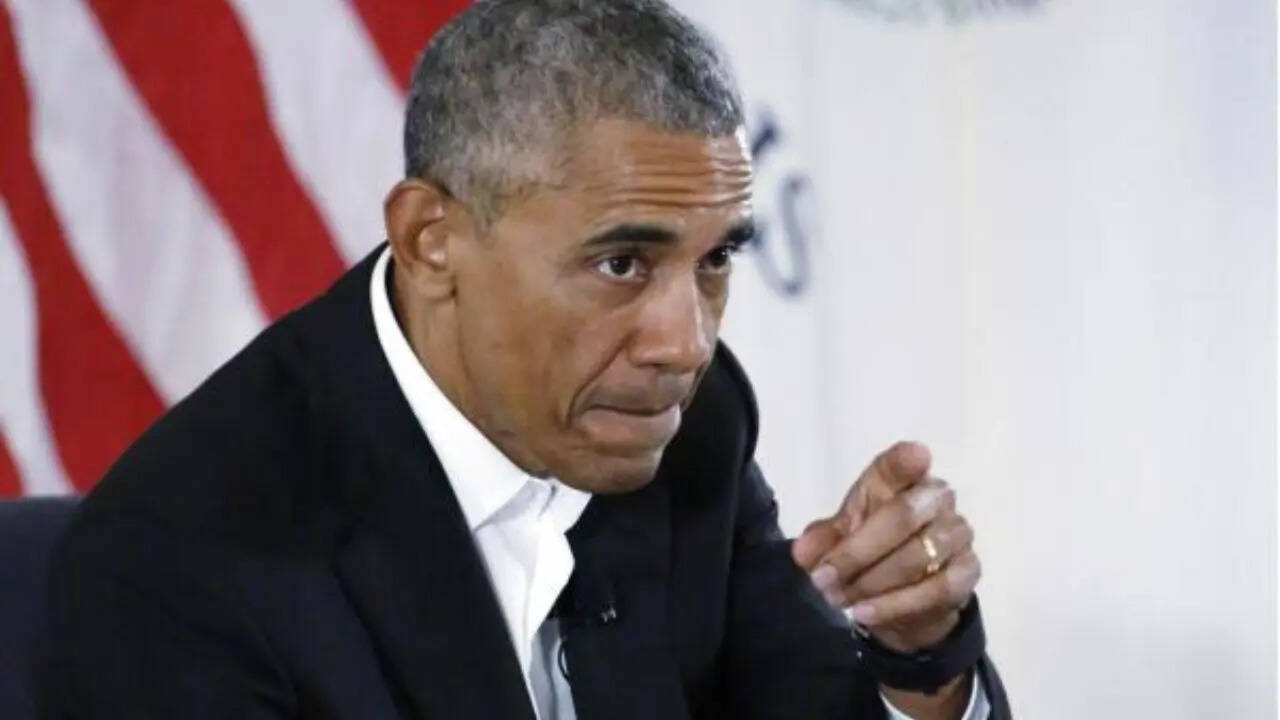
We often feel like the world is spinning out of control. Climate shifts, economic instability, and social friction feel like massive, unstoppable forces of nature. They aren't. Most of our biggest headaches aren't acts of God or inevitable cosmic shifts. They're the result of choices people made in boardrooms, voting booths, and community meetings. Barack Obama hit the nail on the head when he said our problems are man-made, which means they can be solved by us. It's a blunt reminder that we aren't victims of some mysterious fate. We're the architects of our own messes, but that also makes us the only ones who can fix them.
The Logic of Accountability
The quote originally stems from a 1963 speech by John F. Kennedy, but Obama’s frequent use of it during his presidency gave it a fresh layer of urgency. It’s a call to move past the "doom scrolling" culture that makes us feel paralyzed. If a problem has a human origin, it has a human solution. That's a powerful shift in perspective. It moves the needle from "the world is ending" to "how do we rewrite the code of our current systems?"
Think about the ozone layer. Back in the 80s, we were terrified. Humans created the chemicals that were eating a hole in the sky. It felt like an existential dead end. But because we recognized it as a man-made error, we drafted the Montreal Protocol. We changed how we made fridges and hairspray. Today, the ozone is actually healing. That's a real-world example of being "as big as we want." We weren't too small to fix a global crisis. We just had to decide to be big enough to act.
Why We Struggle to Believe Him
If solving things is so straightforward, why are we still stuck in the mud? Honestly, it's because acknowledging a problem is man-made requires us to take the blame. It's much easier to blame "the system" or "the economy" as if they're sentient monsters. But the system is just a collection of rules we wrote. The economy is just the sum of our collective spending and saving habits.
When we distance ourselves from the origin of a problem, we lose the power to fix it. Obama’s point is that we can't have it both ways. We can't claim to be the masters of our destiny when things are going well and then shrug our shoulders when things fall apart.
The Scale of Human Ambition
The second part of the quote—that man can be as big as we want—is the real kicker. It’s about the limit of human potential. Most of us operate within a tiny box of what we think is possible. We look at massive issues like systemic poverty or healthcare and say, "That's just how it is."
Obama is challenging that cynicism. He’s arguing that our capacity for innovation and cooperation hasn't even hit its ceiling yet. We've seen this throughout history. We went from horse-drawn carriages to landing on the moon in less than a century. That didn't happen because we got lucky. It happened because people refused to accept the limitations of the status quo.
Moving Past the Cynicism Trap
Cynicism is lazy. It’s a defense mechanism that protects us from the disappointment of trying and failing. If you believe a problem is "unsolvable," you don't have to do the hard work of trying to solve it. You get to sit back and complain.
But Obama’s philosophy is deeply anti-cynical. It’s grounded in the idea that progress is a choice. Look at the Affordable Care Act. Regardless of your politics, it was an attempt to tackle a massive, man-made mess in the American insurance market. It wasn't perfect, but it was a rejection of the idea that "nothing can be done."
Small Actions and Big Shifts
You don't have to be a president to apply this. It starts with the problems in your own backyard. Your local school board is a man-made system. Your workplace culture is a man-made environment. If those things are broken, they can be fixed by the people within them.
The trick is realizing that "man" doesn't just mean "the guys in charge." It means you. It means your neighbors. It means the group of people who decide that they're tired of waiting for a miracle.
Breaking Down the Man Made Barrier
We often get stuck because we think solutions have to be perfect right out of the gate. They don't. Most human progress is messy. It’s iterative. We try something, it breaks, we fix the broken part, and we keep moving.
[Image of the Apollo 11 moon landing]
The Apollo program is a perfect example of this. It wasn't a single "win." It was a series of thousands of small, man-made solutions to man-made problems like "how do we not explode in the atmosphere?" and "how do we communicate across space?" Each solution made the humans involved "bigger."
Stop Waiting for a Hero
The most dangerous part of our current culture is the wait for a "great man" or a "great woman" to save us. We look for a singular leader to wave a wand and fix the climate or the debt. Obama’s quote isn't about one person being big. It’s about "man" as a collective.
We are the ones we've been waiting for. It’s a cliché because it’s true. If you're waiting for a politician to fix your community without your involvement, you're going to be waiting a long time. The solution is as big as the collective will of the people involved.
How to Apply This Today
Start by auditing the problems you complain about most. Are they actually "natural disasters" or are they the result of human policy, behavior, or neglect?
- Identify the human element. If you're stressed about your neighborhood's safety, look at the specific policies or lack of resources causing it.
- Gather the "men" (and women). Solve problems in groups. One person is a nuisance; a hundred people are a movement.
- Decide to be big. Don't settle for the "realistic" solution if it doesn't actually fix the root cause. Aim for the solution that actually matches the scale of the problem.
We built the cities. We wrote the laws. We created the technology that connects us and the weapons that threaten us. Since we’re the ones who turned the dials to get here, we're the only ones who can turn them back. It’s time to stop acting like we’re trapped in a house we didn't build. We have the blueprints. We have the tools. We just need to start the renovation.