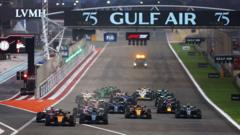
Formula 1 is about to pull the plug on the 2026 Bahrain and Saudi Arabian Grands Prix. While the sport usually prides itself on "the show must go on" mentality, even F1's massive commercial weight can't ignore the current security reality in the Middle East. If you're a fan who already booked flights for April, it’s time to start looking at your refund options.
The decision is expected to be made official before the checkered flag drops at this weekend's Chinese Grand Prix. It isn't just a rumor anymore; it's a logistical necessity. F1's massive traveling circus—over 3,000 people and hundreds of tons of gear—needs to know where it's heading by next week. Currently, that destination isn't looking like Sakhir or Jeddah.
Safety Over Sovereignty in the Middle East
The primary driver behind these cancellations is simple: safety. Recent strikes in the region have put the Bahrain International Circuit and the Jeddah Corniche Circuit in a precarious position. The Sakhir track in Bahrain is roughly 20 miles from a US military base that has already been targeted. Formula 1 CEO Stefano Domenicali and the FIA simply can’t guarantee the safety of the paddock.
It’s not just about the drivers. Think about the mechanics, the media, and the thousands of fans. When debris is falling 15 miles from the track—as seen recently near the Bahrain National Communication Centre—the risk profile changes. You can't just run a race and hope for the best when the sky isn't clear.
Why Replacing the Races Isn't Happening
Don't expect a last-minute dash to Imola or Portimao. While those tracks are always hovering in the background as "reserve" options, the 2026 calendar is too packed to make it work on three weeks' notice. Moving two fly-away races back to Europe involves a logistical nightmare that even DHL can't solve overnight.
If these races are canceled, they're gone. We’ll likely see the 2026 season shrink from 24 races to 22. This creates a massive five-week void in the schedule. We’ll go from the Japanese Grand Prix on March 29 all the way to the Miami Grand Prix on May 3 without a single engine start. For a season that just launched a massive new technical regulation era, that's a huge momentum killer.
The Problem With Regional Logistics
F1 likes to group races together to save on carbon emissions and shipping costs. Bahrain and Saudi Arabia are a "package deal." If one goes, the other almost always follows because the freight is scheduled to move directly between them.
- Freight Lockdown: Some team equipment is actually already sitting in Bahrain from pre-season testing.
- The Japan Pivot: Gear currently in Japan for the Suzuka race was supposed to head to Sakhir next.
- Storage Issues: If the races are off, that gear has to go somewhere—likely a climate-controlled holding facility—before it eventually makes its way to Florida for Miami.
The Impact on the 2026 Title Race
The timing of this is brutal. We're currently seeing the birth of a new era with 50/50 electrical and internal combustion power splits. George Russell and Mercedes have come out of the gates swinging, winning in Australia and taking pole for the China Sprint. Meanwhile, Max Verstappen is visibly frustrated with the "undriveable" nature of the new Red Bull.
A five-week break in April gives struggling teams like Red Bull and Ferrari a "second winter" to fix their chassis. Usually, the first few fly-away races are a survival of the fittest. Now, everyone gets a free month to head back to the wind tunnel. It's a get-out-of-jail-free card for anyone who botched their 2026 design.
What Fans Need to Do Now
If you have tickets, don't panic, but don't wait. Official F1 ticket holders are typically protected, but third-party resellers and hotel bookings can be a nightmare.
- Check your travel insurance: Most standard policies don't cover "civil unrest" unless you specifically added it.
- Monitor the FIA official feed: Don't rely on social media leaks; wait for the official press release before canceling your non-refundable flights.
- Expect a Miami surge: With April effectively wiped off the map, ticket demand and prices for the Miami Grand Prix are going to skyrocket as it becomes the next "must-see" event on the calendar.
This isn't the start to the new era that anyone wanted. But F1 has shown before—most notably during the 2020 pandemic and the 2022 Saudi Arabian missile strike near the track—that they'll eventually prioritize the bottom line. This time, the proximity of the threats seems to have finally tipped the scales toward caution.
Contact your travel agent today.