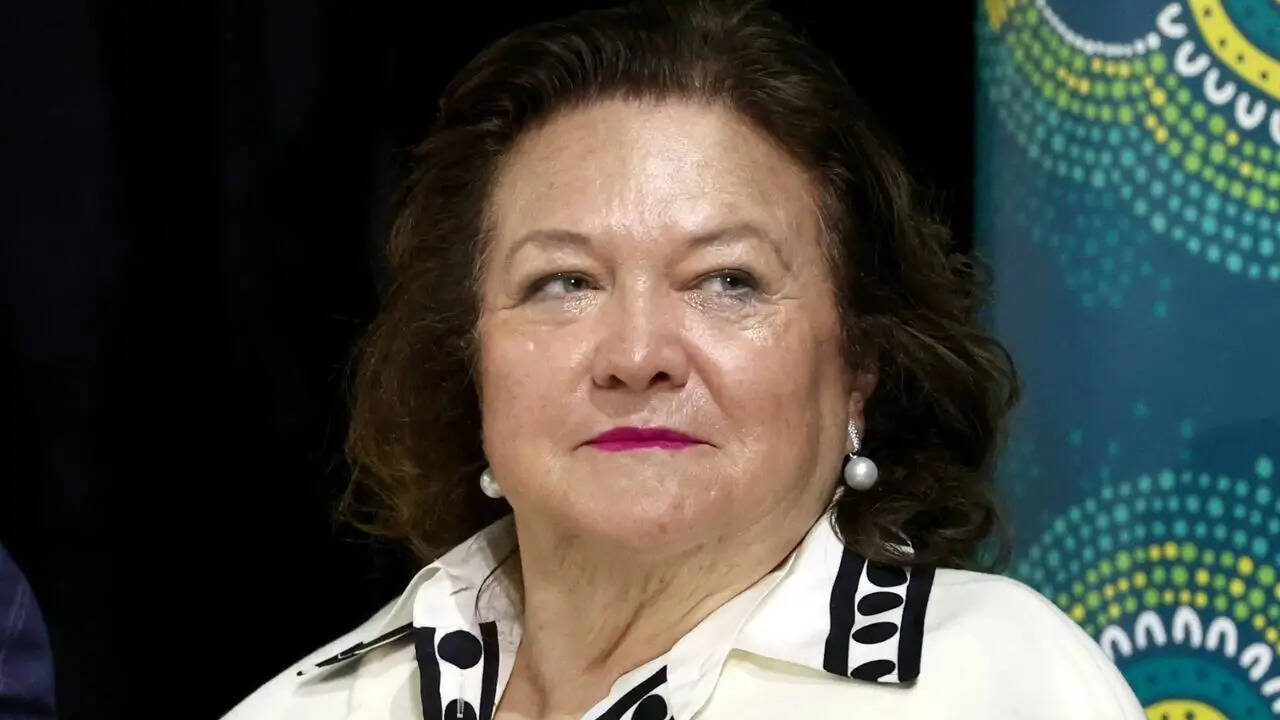
Gina Rinehart didn't build a 39-billion-dollar fortune by chasing trends. The iron ore queen of Australia is famously conservative with her capital, usually pouring cash back into the red dirt of Western Australia or snapping up massive cattle stations. That's why her latest move caught everyone off guard.
Hancock Prospecting, Rinehart’s private mining flagship, just dropped 1.4 billion Australian dollars (1 billion US dollars) into the public offering of Elon Musk’s SpaceX. It’s her largest single investment outside the resources sector.
You don't throw ten figures at a rocket company just because you like satellites. This isn't a speculative bet on Mars colonisation. It’s a calculated, strategic play that links the heaviest industries of old earth with the orbital infrastructure of tomorrow.
The Trillion Dollar Floating Machine
SpaceX hit the public markets with an explosion, raising 75 billion US dollars in a record-breaking float that pushed its market cap past 2.1 trillion. The frenzy instantly turned Elon Musk into the world's first paper trillionaire. Institutional giants and retail platforms scrambled for whatever scraps they could get. In Australia, retail traders on the platform Stake traded 21 million US dollars worth of stock on day one, completely outpacing previous high-profile listings like Cerebras.
Getting a major piece of an oversubscribed float like that takes serious pull. Hancock Prospecting got a full allocation because Rinehart and her CEO, Garry Korte, have been quietly building a relationship with Musk for a while. They’ve met several times, sharing common ground on political and economic views, specifically their mutual disdain for government red tape.
Rinehart didn't mince words about why she backed him. She publicly called Musk sensible, hard-working, and patriotic. To her, SpaceX is a rare business that stands out because it creates integrated hardware and software across space, connectivity, and artificial intelligence.
Digging Deep for Space Tech
Look past the glowing praise, though, and the real meat of the deal comes into view. Garry Korte let the real strategy slip when he noted that Hancock looks forward to working with the SpaceX team on mutually beneficial arrangements regarding critical minerals.
Advanced tech needs rare earth elements, lithium, copper, and nickel. You can't build thousands of Starlink satellites or heavy-lift Starship boosters without a massive, secure supply chain of raw materials. Hancock Prospecting controls some of the richest mineral deposits on the planet.
Modern mining isn't just about big trucks and shovels anymore. It relies heavily on remote operations. Mining companies run automated haul fleets and remote drill rigs in parts of the Australian outback where traditional cell service doesn't exist. Starlink already runs the connectivity for these remote sites. By buying a massive stake in the parent company, Rinehart secures deep operational integration. It's a closed loop. She supplies the materials to build the tech, and the tech runs her mines.
The Shift Away From Pure Iron
Iron ore made Rinehart the richest person in Australia, but relying on a single commodity is dangerous when global manufacturing patterns change. This 1.4 billion dollar bet signals a major diversification phase for Hancock Prospecting.
Rinehart has recently spread her capital into lithium explorers, rare earth projects, and even commercial media, snapping up a 10 per cent stake in Southern Cross Austereo. Investing in SpaceX puts her capital into a business that locked up a virtual monopoly on global launch services.
If you want to understand where big money is moving, watch what the old-guard billionaires do when new industries mature. Rinehart isn't buying into a tech dream. She’s buying into a global utility company that happens to use rockets instead of telephone poles.
What This Means For Private Investors
The scale of this deal highlights a fundamental truth about investing today: the lines between heavy industrial infrastructure and high tech have completely blurred. If you're looking to mirror this strategy in your own portfolio, don't look at space as a sci-fi novelty. Look at it as the new global logistical layer.
The smartest move right now isn't trying to pick speculative space startups that promise the moon. Instead, look at the companies supplying the foundational pieces. Look at critical mineral producers, advanced component manufacturers, and companies providing specialized logistics. The companies digging the dirt and bending the metal are the ones that make orbit possible.