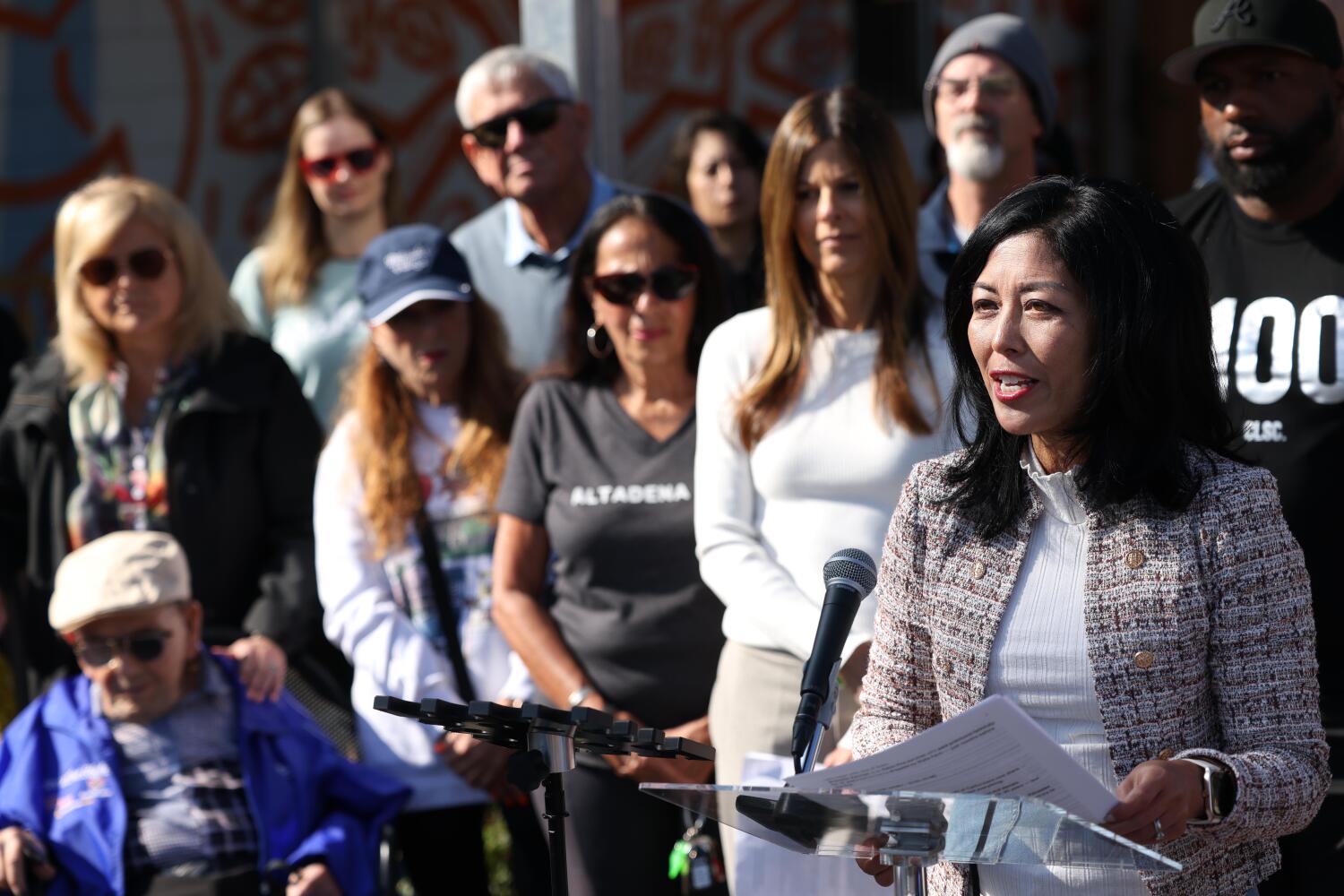
The wind in Altadena doesn't just blow. It hunts. When the Santa Anas kick up, they whistle through the canyons with a dry, metallic heat that turns the lush foothills of the San Gabriel Mountains into a tinderbox. For the families who have lived in the historic Black community of Altadena for generations, that wind has always been a restless neighbor. But in 2020, the neighbor broke down the door.
Imagine a woman named Mrs. Halloway—a composite of the dozens of residents currently locked in a bitter, bureaucratic war. She is seventy-five years old. Her house, a modest ranch with a view of the canyon, was more than just drywall and timber. It was the physical manifestation of a legacy, the culmination of a family’s struggle to find a safe harbor during the Great Migration. When the Bobcat Fire crested the ridge, it didn't just burn her roof. It scorched her history.
Now, four years after the embers cooled, Mrs. Halloway sits at a kitchen table stacked with legal documents. Across from her sits an invisible giant: Southern California Edison. The utility company is the gatekeeper of her restoration, the source of her frustration, and the entity she blames for the spark that turned her world to grey. The facts are cold and immovable. The fire burned 115,000 acres. It destroyed 171 structures. It left behind a trail of toxic ash and broken promises.
The clash isn't just about money. It is about the value of a home that the market often fails to measure accurately.
The Math of Loss
When a massive utility company calculates compensation, they use a spreadsheet. They look at the square footage, the age of the structure, and the depreciated value of the assets. They see a house.
The people of Altadena see a sanctuary.
For many Black families in this pocket of Los Angeles County, the "market value" of their homes is a weighted metric. Decades of redlining, predatory lending, and systemic undervaluation have shaped the financial landscape of these neighborhoods. When a fire levels a home in a historically Black community, the replacement cost often dwarfs the "fair market value" calculated by a corporate adjuster.
Mrs. Halloway’s neighbor, let's call him Marcus, is a third-generation resident. He isn't looking for a windfall. He’s looking for a roof that doesn't leak and walls that aren't saturated with the carcinogenic residue of the Bobcat Fire. "They offer you a check that might buy a luxury car," he says, his voice a mix of exhaustion and quiet rage. "But that check won't rebuild the foundation my grandfather poured with his own hands."
This is the invisible stake: the erosion of generational wealth.
In Altadena, the fire was the first disaster. The settlement process is the second. Southern California Edison has faced mounting pressure to settle claims, but the victims argue that the offers are insulting. They are being asked to sign away their right to sue in exchange for amounts that won't cover the cost of modern, fire-resistant materials required by current building codes.
The Invisible Ghost in the Air
Then there is the ash.
The fire didn't have to reach your porch to ruin your life. When the Bobcat Fire raged, it released a cocktail of heavy metals and chemicals from the hundreds of homes it consumed. In Altadena, this toxic dust settled into the soil, the insulation, and the very lungs of the community.
Scientific reports have detailed the presence of lead, arsenic, and copper in the "fallout zones." For a utility company, these are data points to be mitigated. For a parent in Altadena, these are the reasons their child developed a chronic cough that won't go away. The "compensation" being discussed rarely accounts for the long-tail health effects of breathing in the ghost of a burned-out neighborhood.
Edison maintains that they are following established protocols. They point to the millions already paid out. They cite the complexity of fire litigation. But their language is the language of risk management. The community speaks the language of survival.
The tension boils over in community meetings held in church basements and school gyms. These rooms are filled with people who have spent their lives being told to wait for justice. They are tired of waiting. They see the pristine rebuilds in the wealthier, whiter canyons to the west and wonder why their claims are being met with such skepticism.
The Cost of a Spark
The root of the anger lies in the origin of the flame. While the official cause of the Bobcat Fire was initially under investigation, the legal battle centers on the role of Edison’s equipment. It is a recurring nightmare in California: a power line sags, a transformer blows, or a tree branch touches a wire during a high-wind event, and an entire mountain range goes up in flames.
The liability is astronomical. But for the people of Altadena, the liability is personal.
If you lived in a house for fifty years and a company’s negligence burned it down, what is the "correct" price? Is it the 1974 purchase price? Is it the 2020 market value? Or is it the price of every holiday dinner, every child’s height mark on the doorframe, and every night of sleep that was once peaceful but is now haunted by the smell of smoke?
Edison’s legal team argues that they cannot be held responsible for the emotional "sentimental value" of a property. They deal in hard assets. This fundamental disconnect creates a chasm that no settlement check can truly bridge.
The Resilience of the Foothills
Despite the corporate stonewalling, Altadena isn't folding. This is a community built on resilience. They are organizing. They are sharing legal resources. They are documenting every grain of ash and every cracked joist.
They are also mourning.
There is a specific kind of grief that comes with seeing your neighborhood transformed into a legal battlefield. The rolling hills, once a source of pride and recreation, are now a reminder of what was lost. Every time the wind picks up, people look toward the ridgeline. They check their insurance policies. They look at their neighbors and wonder who will be left if the next settlement isn't enough to stay.
The fight between the residents and the utility giant is a proxy war for the future of the Black middle class in California. If these families are forced out because they cannot afford to rebuild, a piece of Los Angeles history vanishes. The "compensation" isn't just for a house; it’s for the right to remain.
Mrs. Halloway still goes out to her garden. The roses are gone, replaced by hardier, drought-resistant shrubs, but she still walks the perimeter of her property every morning. She touches the charred bark of an old oak tree that somehow survived. It is blackened and scarred, but its roots go deep into the mountain.
She is still here. For now.
The sun sets over Altadena, casting long, amber shadows across the canyons. The beauty is breathtaking, the kind of vista that makes people move here in the first place. But as the temperature drops and the breeze begins to pick up, the residents don't just see a sunset. They see a warning. They hear the rustle of the leaves and wait for the sound of a spark, knowing that the real fire—the one that happens in courtrooms and corporate offices—is far from over.
The ash has settled, but the air is still heavy with the weight of what is owed.