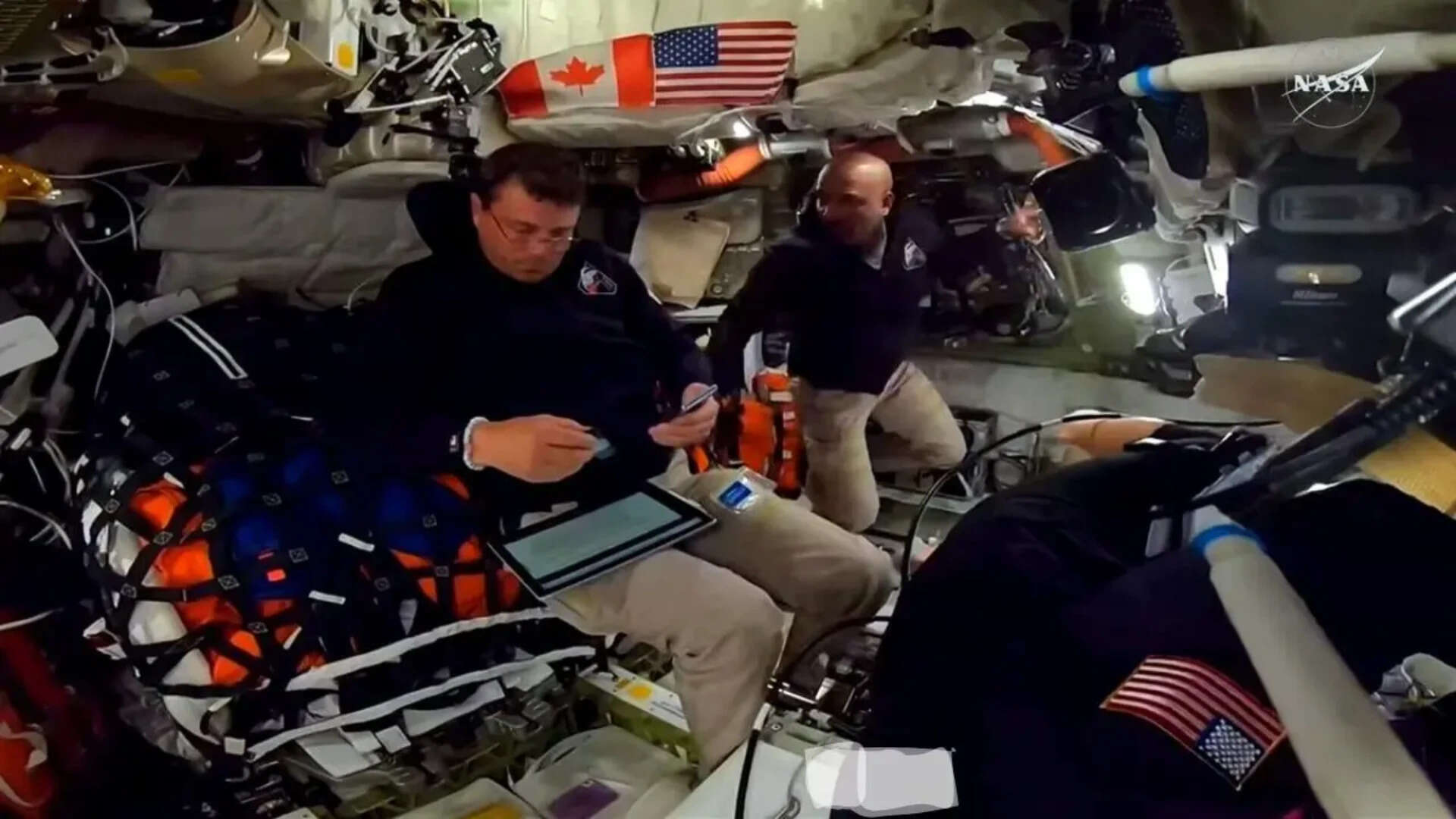
The glamour of space travel dies the second the plumbing fails. Right now, four astronauts are hurtling toward the moon inside the Orion capsule, and they're currently dealing with the most human problem imaginable. The Universal Waste Management System (UWMS) on Artemis II is acting up again. This isn't just a gross inconvenience. It’s a mission-critical failure that reminds us how fragile life is when you’re 200,000 miles away from the nearest plumber.
NASA’s $24 million space toilet was supposed to be the gold standard for lunar missions. It’s compact, designed specifically for the tight confines of Orion, and engineered to handle both liquid and solid waste in microgravity using a high-speed fan. But hardware doesn't care about the price tag. Reports from the crew indicate that the separator—the part that spinningly pulls liquid away from air—is vibrating inconsistently. If that part fails completely, the crew faces a "wet" environment. That’s NASA speak for floating waste. It’s dangerous. It’s messy. And it’s exactly what the Artemis II crew didn't need while trying to make history.
The Reality of Living in a High Tech Tin Can
Space isn't a sci-fi movie. It’s cramped, it smells like burnt metal, and when the toilet breaks, the stakes are incredibly high. The Artemis II mission is the first time humans have left Earth's orbit since 1972. Reid Wiseman, Victor Glover, Christina Koch, and Jeremy Hansen are currently testing every system to ensure we can eventually land on the lunar surface. But you can't focus on orbital mechanics when you're worried about a leak in the cabin.
The Orion capsule is tiny. You’ve basically got the interior space of a small SUV shared between four adults. In that environment, a malfunctioning waste system is a health hazard. Floating droplets of urine or fecal matter aren't just disgusting; they can get sucked into the electronics or inhaled by the crew. Bacteria grows differently in space. An infection 150,000 miles from a hospital is a nightmare scenario.
NASA spent years perfecting the UWMS. They made it 65% smaller and 40% lighter than the toilets used on the International Space Station (ISS). They also designed it to pre-treat urine so it doesn't clog the pipes with calcium deposits. That’s all great on paper. In practice, the vibration issues suggest a mechanical fatigue that shouldn't be happening this early in the mission. The crew is currently using backup "contingency" collection bags. Honestly, that's just a fancy name for plastic bags with absorbent pads. It's a massive step backward for a mission meant to represent the peak of human achievement.
Why the Artemis Toilet Keeps Failing
We’ve seen this before. During the SpaceX Inspiration4 mission, a tube came unglued and sprayed urine into the fan system under the floorboards. On Artemis I—the uncrewed test—sensors picked up anomalies in the waste system power draw. It seems we’ve mastered rocket engines that can produce 8.8 million pounds of thrust, yet we still can't quite figure out how to manage a bathroom break in zero-G.
The problem is physics. On Earth, gravity does all the work. In space, you need suction. The UWMS uses a 3D-printed titanium fan that spins at thousands of RPMs to create that suction. Any slight imbalance in that fan causes the vibrations the Artemis II crew is reporting. If that fan seizes, the system is dead. You can’t just open a window to air the place out.
Engineers at Johnson Space Center are likely working 24/7 right now to troubleshoot the telemetry. They're looking at power spikes and acoustic data to see if the crew can perform a mid-flight repair. But Orion isn't the ISS. There isn't a massive closet of spare parts. If a seal is blown or a motor is burnt out, the crew just has to deal with it. They’re professionals, but let’s be real. It sucks.
The Problem With Liquid Management in Microgravity
Liquid behaves like a sticky gel in space. It clings to surfaces. If the separator isn't spinning perfectly, the liquid won't move into the storage tanks. Instead, it stays in the lines or, worse, backs up into the funnel.
- Surface Tension: Water beads up and sticks to the walls of the pipes.
- Airflow Dependency: Without a perfect vacuum, the waste stays exactly where it started.
- Filter Clogging: If the pretreatment chemicals aren't mixing correctly due to the vibration, the filters can flash-clog.
This is why NASA is so obsessed with these tests. Artemis II is a "shakedown" cruise. You want the toilet to break now so that on Artemis III, when astronauts are actually landing on the moon, the system is bulletproof. But knowing you're the "test case" doesn't make the smell any better.
What This Means for the Rest of the Mission
The crew is currently on a free-return trajectory. This means gravity will naturally pull them back to Earth even if their main engines fail. However, they're still days away from splashdown. If the UWMS stays offline, the crew will have to rely entirely on fecal containment bags and urine collection devices.
It’s physically exhausting. Using those backup systems takes time and careful coordination to avoid contamination. It adds hours of "housekeeping" to a schedule that is already packed with navigation checks and solar radiation monitoring. The psychological toll is also real. Lack of basic hygiene leads to irritability and fatigue. When you're responsible for a multi-billion dollar spacecraft, you need to be at your best.
The mission won't be aborted. NASA has confirmed that the "human waste contingency plan" is sufficient for the duration of the flight. Basically, the astronauts are tough enough to handle a few days of uncomfortable bathroom setups. But it raises questions about our readiness for longer trips. If we can't keep a toilet running for a ten-day trip around the moon, how are we going to survive a nine-month journey to Mars?
Engineering Lessons From the Leak
Every failure is a data point. Engineers are already looking at the titanium 3D printing process used for the UWMS. There’s a theory that the harsh vibrations during the SLS launch might have slightly misaligned the separator's bearings.
- Launch Stress: The SLS is the most powerful rocket ever built. The acoustic energy alone is enough to rattle bolts loose.
- Material Fatigue: Titanium is strong but brittle in certain configurations.
- Sensor Over-sensitivity: There’s a slim chance the hardware is fine and the sensors are just overreacting to normal operation.
If I’m an engineer on this project, I’m looking at the dampening system. We clearly need better shock absorption for the plumbing. You can’t have the most expensive toilet in history failing because the ride up was too bumpy.
How the Crew Is Handling the Mess
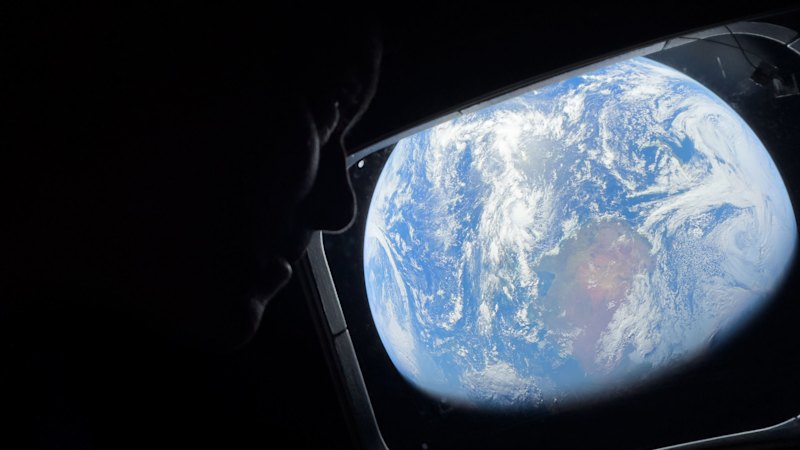
Victor Glover and the team are incredibly composed. In their radio check-ins, they've downplayed the issue, focusing instead on the breathtaking views of the lunar far side. That’s what astronauts do. They’re trained to ignore the "gross" stuff and focus on the mission. But behind the scenes, they’re following a strict protocol to keep the cabin clean.
They use biocidal wipes for everything. Every time a backup bag is used, it’s sealed, double-bagged, and stowed in a specific waste locker. It’s a tedious process. It’s also a reminder that space exploration is 90% grunt work and 10% staring at the stars.
The Artemis II mission is still a massive success. They've proven the heat shield works, the life support (mostly) works, and the navigation is spot on. The toilet is a hiccup. A gross, vibrating, $24 million hiccup. But it’s one they’ll solve before we put boots back on the lunar dust.
If you're following the mission, don't just look at the high-res photos of the moon. Think about the four people in that tiny can, dealing with mechanical failures and still pushing the boundaries of where humans can go. They aren't just pilots. They're technicians, scientists, and occasionally, high-altitude janitors.
Check the official NASA Artemis blog for the latest telemetry updates on the UWMS. The next major milestone is the lunar flyby maneuver. Hopefully, by then, the vibrations will have settled, and the crew can get back to the business of exploration without worrying about their plumbing. If you're interested in the tech, look up the "NASA Space Toilet Challenge" results to see how they're planning to fix this for the Mars missions. We’re going to need a better solution before we head into the deep dark.