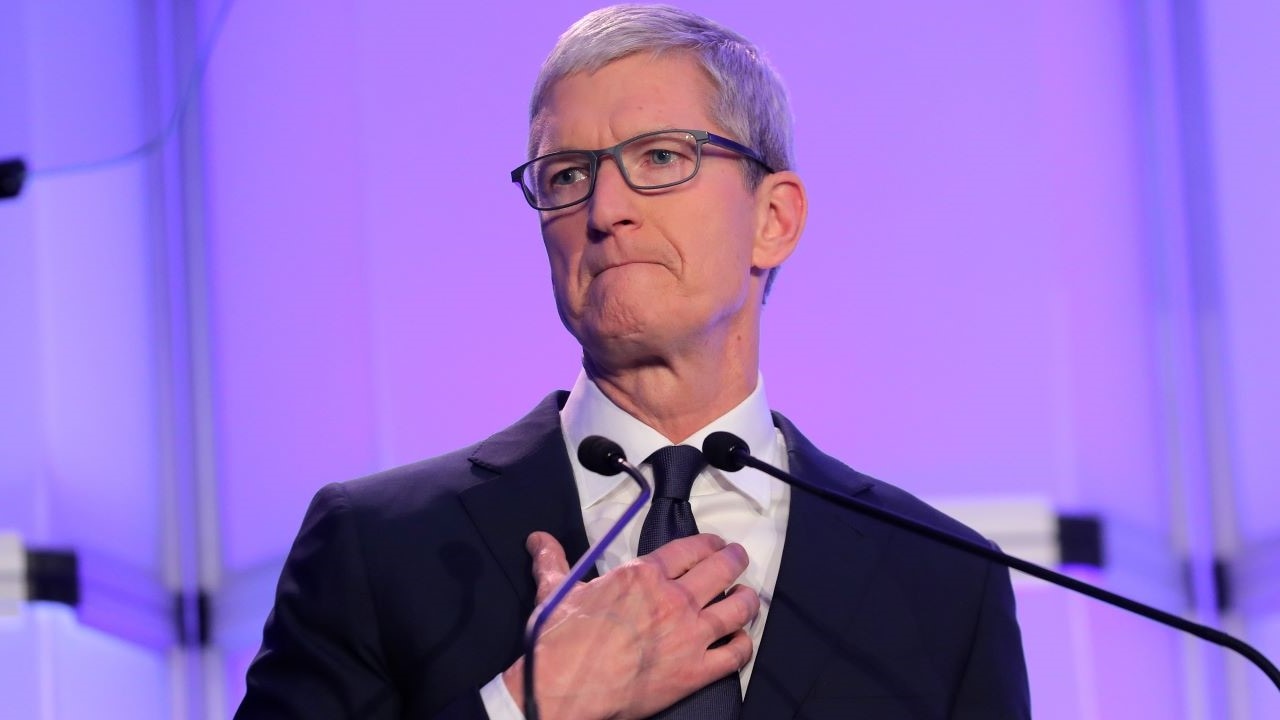
The boardroom at 1 Infinite Loop usually smells like expensive espresso and the faint, ionized scent of high-end hardware. It is a place of precision. But the world outside those glass walls is messy, loud, and increasingly governed by the volatile whims of political theater.
For years, the tech industry has operated on a predictable axis. You build a product, you optimize a supply chain, and you hope the consumers show up. That world is dead. In its place is a high-stakes chess match where the board is on fire and the pieces are made of tariffs, tweets, and trade wars. At the center of this chaos stands Tim Cook.
He does not look like a gladiator. He is soft-spoken, methodical, and possesses the steady energy of a librarian who knows exactly where every book is shelved. Yet, he has managed something his flashier peers have not. He has successfully charmed the most unpredictable force in modern American politics: Donald Trump.
The Unexpected Handshake
Think about the optics. Silicon Valley and the MAGA movement are supposed to be oil and water. One side dreams of borderless digital utopias; the other is built on the bedrock of national borders and industrial revival. Usually, when a Big Tech CEO goes to Washington, it looks like a deposition. There are stern faces, pointed fingers, and a general sense of mutual loathing.
Then there is Cook.
When Donald Trump speaks about the Apple CEO, the tone shifts. The former president, known for his scorched-earth rhetoric toward Amazon’s Jeff Bezos or Meta’s Mark Zuckerberg, softens. He calls Cook an "amazing manager." He calls him a leader. He even affectionately dubbed him "Tim Apple"—a slip of the tongue that Cook, with characteristic poise, later turned into a joke by changing his Twitter profile name to that very moniker.
This wasn't an accident. It was a masterclass in relational diplomacy.
While other CEOs sent their lobbyists to do the dirty work or issued defiant press releases from the safety of Palo Alto, Cook did something radical. He picked up the phone. He showed up for dinner. He sat across the table from a man who represented everything his core customer base in San Francisco ostensibly hated.
The Stakes of the Silicon Shield
Why would a man who runs a trillion-dollar empire spend his weekends at Mar-a-Lago or touring factories in Texas with a polarizing president?
Survival.
Apple’s lifeblood is its supply chain. Most of that chain runs through China. During the height of the trade tensions, a single stroke of a presidential pen could have leveled a 25% tariff on iPhones. That isn't just a "business challenge." It is a mathematical catastrophe. It would mean the difference between a $1,000 phone and a $1,250 phone. It would mean the erosion of the most loyal customer base in history.
Cook understood a fundamental truth about power that many of his contemporaries missed: People don't negotiate with corporations; they negotiate with people.
He didn't walk into the Oval Office with a deck of slides about "globalist synergy" or "digital infrastructure." He walked in and talked about jobs. He talked about American investment. He spoke the language of the man sitting behind the Resolute Desk.
[Image of global supply chain logistics]
A Tale of Two Temperaments
Imagine two different captains navigating a storm. One captain screams at the clouds, cursing the rain, and demanding the wind respect his authority. The other captain says nothing. He simply adjusts the sails, watches the barometer, and finds the exact angle that allows the gale to push the ship forward instead of capsizing it.
Cook is the second captain.
His peers often fall into the trap of ideological purity. They want to be right. They want to be seen standing on the "correct" side of history. Cook, however, wants Apple to win. He recognizes that in a polarized world, the most effective tool isn't a megaphone; it’s a bridge.
By building a personal rapport with Trump, Cook secured exemptions that his competitors didn't get. He turned potential existential threats into photo opportunities. He managed to keep the iPhone relatively insulated from the crossfire of a trade war that was bruising almost every other sector of the economy.
The Invisible Weight of Leadership
There is a cost to this kind of pragmatism. Every time Cook was seen smiling next to Trump, a segment of his workforce and his customer base winced. They saw it as a betrayal of "Apple values." They wanted him to be a resistor, not a collaborator.
But leadership at this level is rarely about making everyone happy. It’s about the burden of the "and." You must be a champion of privacy and maintain a relationship with a government that wants backdoors. You must be an advocate for green energy and manage a massive manufacturing footprint in coal-reliant regions.
Cook’s genius lies in his ability to exist in that tension without snapping.
He is the "amazing manager" not because he invented the next great gadget—Steve Jobs handled that—but because he maintained the ecosystem that allows those gadgets to exist in a fractured world. He turned Apple from a creative boutique into a geopolitical entity.
The Texas Gold Mine
One of the most vivid moments of this odd-couple partnership happened in Austin, Texas. There, amidst the humming machinery of a Mac Pro assembly plant, the two men stood side-by-side. Trump was there to tout "Made in America." Cook was there to ensure his company remained in the president’s good graces.
To the casual observer, it was a political stunt. To the analyst, it was a defensive fortification.
By giving the president a win—a tangible, visible example of American manufacturing—Cook bought his company another year of peace. He traded a few hours of uncomfortable headlines for billions of dollars in tariff savings.
The Human Currency of Power
We often talk about "business" as if it’s a machine governed by algorithms and quarterly earnings. It isn't. It is a messy, human endeavor.
Trump’s praise for Cook reveals more about the nature of modern power than any white paper ever could. It suggests that even in an age of artificial intelligence and global data, the most valuable currency is still a personal connection. Trump likes Cook because Cook treats him with respect. Cook doesn't talk down to him. Cook doesn't lecture him.
Instead, Cook listens. He finds the common ground—the "Amazing Manager" narrative—and he lets the president own that story. In exchange, Apple gets to keep being Apple.
The Long Game
The headlines will fade. New administrations will come, and the political winds will shift again. But the blueprint Tim Cook created remains. It is a strategy of radical pragmatism.
It tells us that the leaders who survive the next century won't be the ones who shout the loudest on social media. They will be the ones who can walk into a room full of their enemies and walk out with a partnership.
They will be the ones who understand that "manager" isn't a boring title—it's a survival skill. It is the ability to hold a thousand different moving parts together while the ground is shaking beneath your feet.
In the quiet of his office, away from the cameras and the rallies, one can imagine Tim Cook simply checking his watch. The storm is still blowing outside. The rhetoric is still heated. But the supply lines are moving. The stores are open. The brand is intact.
He didn't fight the weather. He simply learned how to command the wind.
The sun sets over the Cupertino campus, reflecting off the curved glass like a shield. Inside, the lights stay on. There are more calls to make, more bridges to build, and more rooms to enter where everyone is shouting. Tim Cook will be there, waiting for the silence, ready to whisper.


