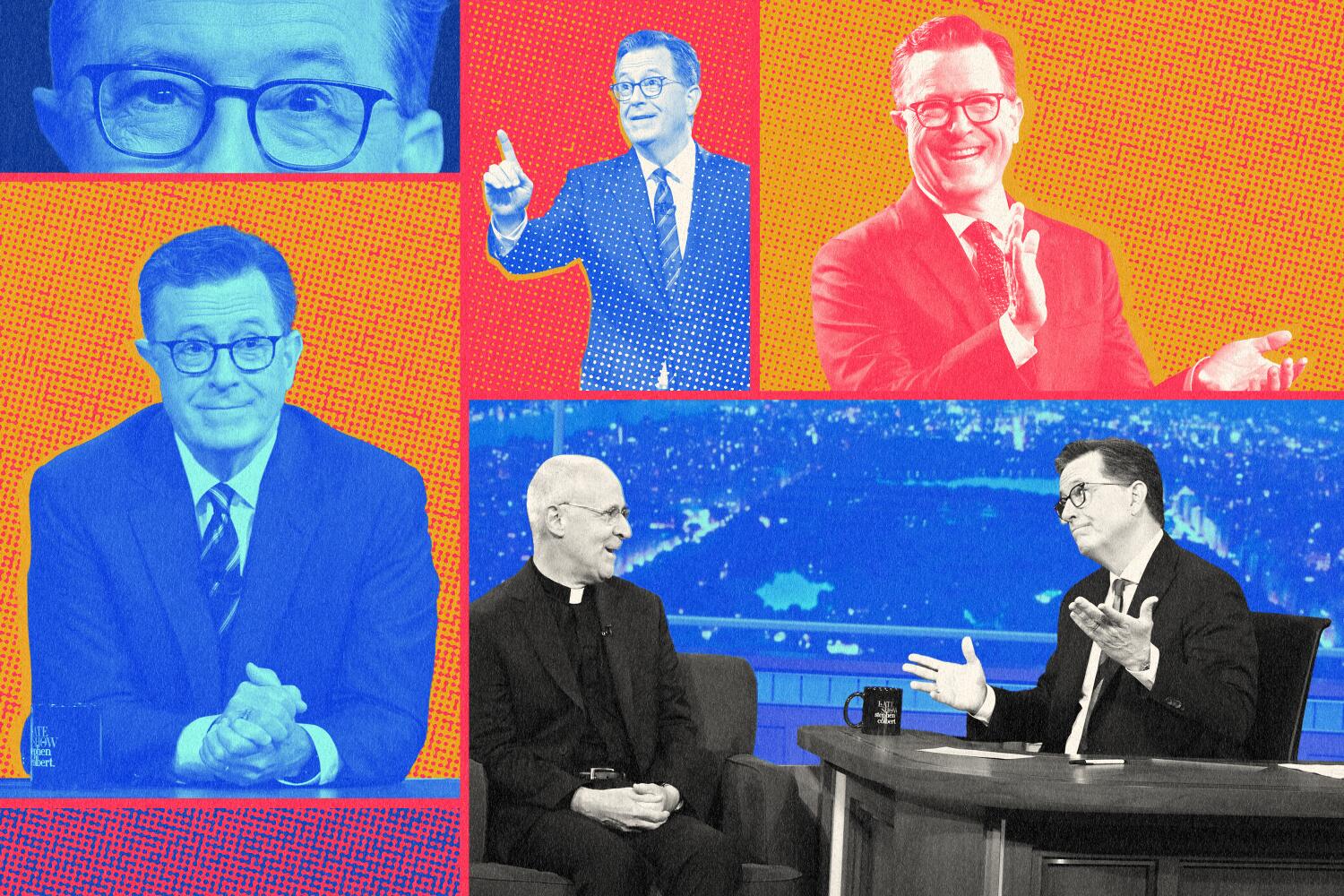
Stephen Colbert transformed late-night television by blending sharp political critique with deep, human vulnerability. His eventual departure from the late-night stage does not just signify the loss of a beloved host; it marks the final collapse of the traditional post-midnight monoculture. For decades, these shows acted as the nation’s collective cooling-down period, a place where fractured audiences gathered to process the day's chaos through a shared comedic lens. As Colbert prepares to step away, the industry faces an existential vacuum that streaming algorithms and fragmented social media feeds cannot fill.
The evolution of late-night television reflects a broader shift in how the public consumes news, processes political trauma, and seeks comfort. To understand why Colbert’s absence will be felt so acutely, one must look past the nightly monologues and examine the structural mechanics of his performance, the historical shift from his Colbert Report persona, and the economic realities rewriting the rules of broadcast entertainment.
The Evolution of the Nightly Minister
Late-night hosts have always served as surrogate anchors for a public exhausted by the standard news cycle. Johnny Carson offered genial escapism. Jon Stewart brought righteous, media-analyzing fury. Colbert, however, built something entirely different, a nightly ritual that felt less like a comedy routine and more like a secular, communal processing of modern anxiety.
When Colbert occupied the host chair at The Late Show, he bore the heavy baggage of his previous avatar. For nearly a decade on Comedy Central, he played a hyper-conservative, bombastic caricature of a cable news pundit. It was a brilliant, exhausting high-wire act.
The transition to network television forced a profound shedding of that armor. Audiences did not just get a new host; they discovered the actual man behind the character. This version of Colbert was someone grounded in tragedy, open about his grief, and deeply informed by a lifetime of faith and literary curiosity.
This authenticity changed the calculus of the late-night monologue. It ceased to be a mere collection of setup-and-punchline jokes about the daily headlines. Under his stewardship, the monologue became an editorial essay. He subverted the traditional detached irony of late-night, replacing it with a palpable, earnest care for the state of the world.
The Mechanics of Comfort in a Fractured Media Market
The modern media ecosystem thrives on division. Cable news networks lock viewers into perpetual loops of outrage, while social media algorithms reward extremism. Late-night television, particularly during Colbert’s tenure, functioned as an intentional counterweight to this polarization.
Consider the structural design of a typical post-2016 Late Show episode. The cold open and monologue addressed the political absurdity of the prior twenty-four hours, but the tone remained conversational rather than apocalyptic. By processing terrifying or frustrating national events through wit, the show stripped these events of their power to immobilize the viewer.
This approach relied on a specific psychological mechanism. Psychologists refer to this as cognitive reframing. By laughing at the powerful, the audience experiences a temporary restoration of agency. Colbert mastered this delivery, balancing righteous indignation with a reassurance that the world, despite appearances, had not completely lost its mind.
Furthermore, his interview style rejected the superficial promotional junket format that dominated the genre for decades. While he routinely welcomed Hollywood stars, his most compelling segments featured authors, politicians, historians, and scientists. He engaged these guests in substantive debates regarding policy, morality, and philosophy. He treated his audience as intelligent adults capable of digesting complex ideas past midnight.
The Economic Reality Eating Late Night Alive
The emotional resonance of Colbert’s work cannot mask the brutal financial realities currently decimating broadcast television. The traditional late-night model is dying, and no amount of creative brilliance can save it from the shift in consumer habits.
Linear television viewership is falling at a catastrophic rate. The financial foundation of these programs—lucrative network ad spots bought by corporations looking to reach millions of simultaneous viewers—has disintegrated. Advertisers now favor targeted digital campaigns over broad late-night blocks.
| Metric | The Golden Era (1990s-2000s) | The Modern Era (2020s) |
|---|---|---|
| Primary Distribution | Linear Broadcast TV | Social Snippets / YouTube / Streaming |
| Monetization Focus | Premium Network Ad Spots | Digital Ad Revenue & Subscriptions |
| Audience Behavior | Appointment Viewing | On-Demand Fragmented Consumption |
| Cultural Impact | Singular Monoculture Driver | Niche Echo Chambers |
Production costs for a high-end, New York-based late-night show remain staggering. Writing staffs, live bands, research teams, and studio maintenance require budgets that shrinking linear ratings can no longer justify. Networks are quietly cutting costs across the board, reducing band sizes, eliminating Friday broadcasts, and shortening season orders.
When Colbert leaves, CBS is highly unlikely to replace him with another talent demanding a massive multi-million dollar contract and an expensive, traditional variety format. The future points toward cheaper, easily extractable content designed for TikTok, YouTube Shorts, and streaming platforms. This shift destroys the very essence of what made Colbert’s tenure significant: the shared, real-time experience of a community watching the same broadcast at the exact same hour.
The Dangerous Illusion of the Digital Replacement
Optimists argue that the loss of traditional late-night hosts matters very little because the content simply migrates to digital platforms. Clips of monologues and celebrity interviews rack up millions of views on YouTube the morning after they air. This perspective misses the fundamental point of the medium.
A viral three-minute clip consumed on a phone during a morning commute does not carry the same cultural weight as a full, structured hour of television designed to close out the day. Digital consumption is inherently solitary and hyper-personalized. The algorithm feeds the viewer exactly what aligns with their existing biases.
The traditional late-night show was a big tent. It forced viewers to sit through political commentary, artistic performances, and intellectual conversations they might not have actively searched for online. It created a baseline of shared cultural reference points. Without a figure like Colbert anchored to a major network desk, that baseline erodes further, accelerating the balkanization of public discourse.
The Hidden Deficit of Moral Gravity
What truly separates Colbert from his peers—and what the industry will find impossible to replicate—is his unique moral gravity. Most late-night comedy operates from a position of detached cynicism. Cynicism is easy; it requires no emotional investment and protects the performer from vulnerability.
Colbert consistently chose earnestness over cynicism. His public discussions about his personal tragedies, specifically the loss of his father and brothers in a plane crash during his childhood, informed his entire worldview. He frequently discussed how grief shaped his capacity for empathy, transforming his show into a rare space on commercial television where profound human suffering was discussed with dignity.
This moral framework allowed him to navigate national tragedies with a grace that few other entertainers could summon. When mass shootings, political upheavals, or global crises occurred, the audience did not turn to Colbert just for jokes. They tuned in to see how a decent, thoughtful human being was processing the pain. He acted as a cultural shock absorber.
Losing that presence leaves a void that cannot be filled by clever writers or charismatic internet personalities. The industry knows how to manufacture humor, but it cannot manufacture character.
The Unforgiving Path Forward
The television landscape after Colbert will be unrecognizable to those who grew up on the late-night wars of the past. The era of the singular, dominant host guiding the nation through its nightly anxieties is drawing to a close.
Networks will inevitably try to fill the slot with cheaper panel shows, influencer-driven vehicles, or syndicated reruns to protect their bottom lines. These options will fail to capture the cultural zeitgeist because they mistake the format for the appeal. The appeal was never the desk, the city skyline backdrop, or the house band. The appeal was the trust established between a singular voice and an audience searching for clarity in an increasingly incoherent world.
The departure of Stephen Colbert signals more than just the end of a successful television run. It represents the closure of a vital civic institution, leaving us to navigate the midnight hours entirely on our own.