The Weight of a Cold Room
The coffee in Brussels always tastes like paper when the winter transitions into spring. It is a specific kind of cold that clings to the limestone of the Justus Lipsius building, where European diplomats gather to decide the geometry of a continent. In these rooms, history is not a textbook. It is the sound of expensive shoes scraping against polished floors, the rustle of briefing papers, and the heavy, suffocating silence that follows a declaration of war on the senses.
Consider an empty chair.
To a casual observer, it is merely a piece of office furniture, perhaps upholstered in blue wool, positioned around a circular mahogany table. But in international politics, an empty chair is a weapon. It is a statement of absence, a calculated insult, or a line drawn in the dirt. For months, whispers have echoed through the corridors of Moscow suggesting that when the time comes to negotiate an end to the devastation in Ukraine, the Kremlin will decide who gets to sit in those chairs. They want to pick their conversational partners. They want to look across the table and see someone they can bend, someone they can threaten, or someone they can ignore.
But a room full of European foreign ministers recently decided to lock the door from the inside.
The core of the issue is deceptively simple, yet it carries the weight of thirty nations. Russia has hinted that if peace talks ever begin, they prefer to bypass the European Union as a collective body. They want to deal with Washington. They want to deal with individual, fractured European capitals. They want to carve the world back into the spheres of influence that defined the dark century we thought we left behind.
The European response was not a roar. It was a cold, synchronized click of briefcase latches. European Union ministers made it clear: the Kremlin does not get to write the guest list for Europe’s survival.
The Ghost in the Geography
To understand why this matters to someone sitting in a cafe in Madrid or a farmhouse in Poland, you have to look past the press releases. You have to look at the map through the eyes of a grandmother in Kharkiv who spends her nights in a subway station, or a young diplomat in Tallinn who knows exactly how many minutes it takes for a missile to cross the border.
Europe is not an abstraction. It is a shared backyard.
Imagine a neighborhood where one abusive tenant decides he will only negotiate the property lines with the landlord down the street, completely ignoring the families who actually live in the building. That is the Russian strategy. By attempting to cut the European Union out of potential peace negotiations, Moscow is attempting to delegitimize the very concept of European sovereignty. They want to treat Europe like a theater, not an actor.
Let us look at the cold reality of the numbers. Since the escalation of the conflict, the European Union and its member states have committed billions in financial, humanitarian, and military assistance. This is not just a line item in a budget. It represents heated blankets, electrical generators, demining equipment, and the artillery shells that keep the frontline from moving west. To suggest that the entity funding the survival of the Ukrainian state should have no voice in the architecture of its peace is a logical absurdity.
Yet, diplomacy is often an exercise in enduring absurdities.
The tension in these ministerial meetings is palpable. It is the friction between raw power and collective law. When the ministers gathered, the air was thick with the realization that the coming months will test whether a bloc of democracies can hold a single line when the pressure mounts. It is easy to stand together when the flags are waving and the speeches are loud. It is much harder when the energy bills rise, the public grows weary, and the adversary is whispering separate, sweeter deals to individual capitals behind closed doors.
The Anatomy of the Stare
There is an old saying in diplomacy that if you are not at the table, you are on the menu.
During the recent meetings, the European Union’s foreign policy apparatus sought to permanently dismantle the menu. The message sent back to Moscow was remarkably uniform across different languages: we are the table.
Let us ground this in a hypothetical scenario that plays out in various forms every week. A senior diplomat—let us call her Elena—sits across from a counterpart who drops a casual hint. Perhaps your country could secure better gas infrastructure guarantees if you didn't insist on the collective framework. It is a classic wedge strategy. It relies on human greed and national fear. It asks Elena to look at her own country’s immediate comfort at the expense of her neighbor’s existence.
The victory of the recent ministerial declaration is that Elena said no. They all said no.
This solidarity is fragile, which is precisely why it must be stated with such fierce clarity. The Kremlin’s preference for bilateral negotiations—dealing with countries one-by-one—is not a secret preference; it is a tactical necessity. A single stick is easily broken; a bundle is resilient. The European Union, for all its bureaucratic slowness and agonizing committee meetings, represents that bundle.
Consider the alternative. If Russia succeeds in dictating who speaks for Europe, the precedent is set. The international order shifts from one governed by treaties and mutual recognition to one governed by raw proximity to violence. If Moscow can decide that Brussels has no standing in a conflict on European soil, then the entire post-Cold War architecture dissolves like salt in the rain.
The Architecture of the Stare
We often think of peace as the absence of gunfire. But true peace is the presence of an agreement that can be enforced.
If negotiations happen in a vacuum where Europe is excluded, any resulting treaty is built on sand. The ministers understand that a sustainable future requires Ukraine to be integrated into the European family—economically, politically, and structurally. You cannot negotiate that integration without the people who hold the keys to the house.
The debate isn't about pride or diplomatic protocol. It isn't about who gets the larger office or whose name appears first on the communique. It is about the fundamental right of a continent to determine its own destiny without a neighbor holding a stopwatch and a map of former imperial borders.
The human cost of getting this wrong is measured in generations. If Europe allows itself to be bypassed, it signals to every revisionist power on the planet that collective security is a myth. It tells the smaller nations that their larger neighbors can negotiate their borders over their heads, returning the world to the era of secret treaties signed in smoke-filled rooms by men who will never have to dig a trench.
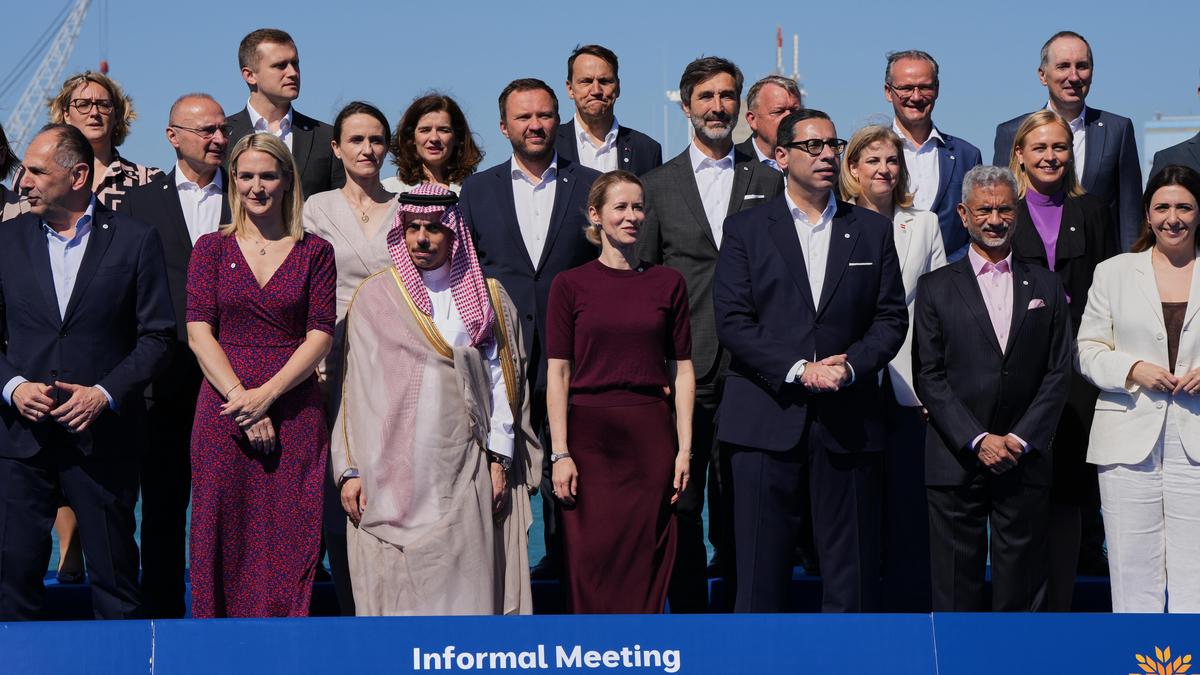
The ministers left the room in Brussels with their coats buttoned against the draft. They had agreed on a text, a few paragraphs of dry, legalistic language that will be filed away in archives. But beneath the jargon lay a raw, human truth. They had looked at the empty chair the Kremlin was preparing for them, and they had chosen to occupy it together.
The paper cup of coffee on the desk had gone cold. Outside, the traffic of a continent moved forward, oblivious to the fact that its right to exist in unity had just been quietly, stubbornly defended for another day.