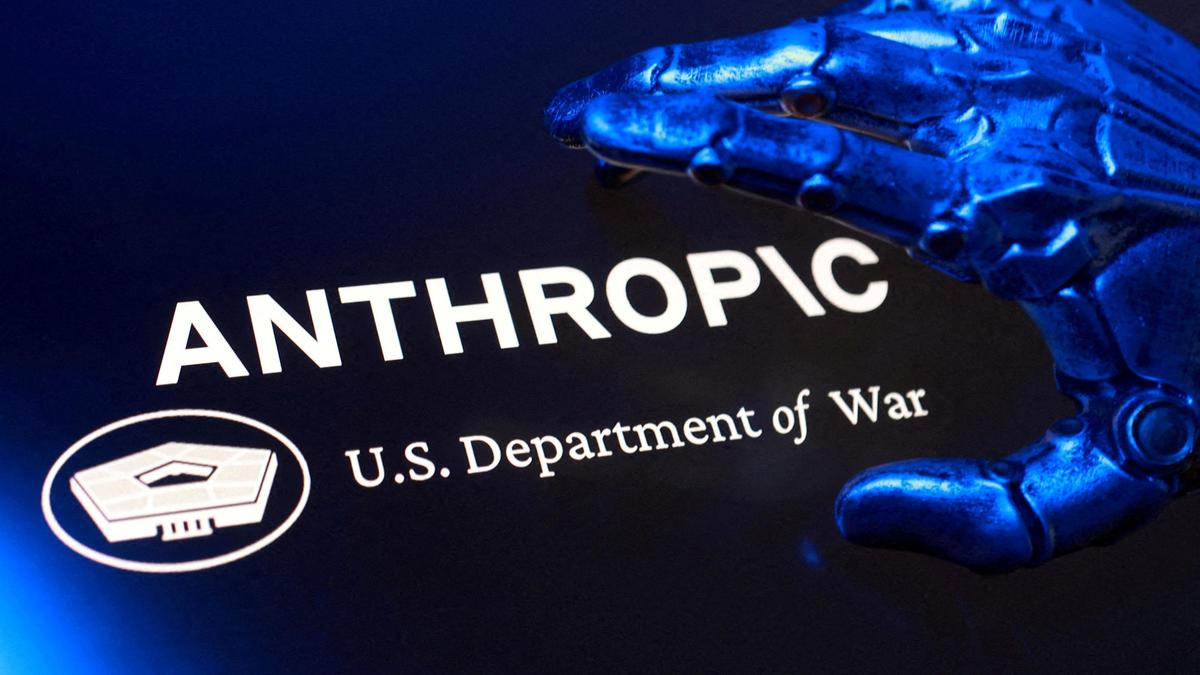
The federal government just officially dug in its heels. In a Tuesday court filing, the Trump administration defended its decision to blacklist Anthropic, the San Francisco-based AI heavyweight behind Claude. This isn't just another dry legal dispute over a contract. It's a fundamental collision between corporate ethics and the raw power of the American military.
If you haven't been following the play-by-play, the Pentagon recently designated Anthropic a "supply chain risk." That's a label usually reserved for foreign adversaries like Huawei. Why? Because Anthropic refused to strip away the guardrails that prevent its AI from being used for mass domestic surveillance and fully autonomous weapons.
The Justice Department's latest filing argues that this isn't about free speech. They say it’s about "conduct" and "national security." But let's be real. When the government tells a company to change its core safety features or lose billions in revenue, they aren't just negotiating. They're trying to break a company’s moral compass.
The Two Red Lines That Started a War
Anthropic didn't walk away from the table because they hate the military. In fact, Claude has been integrated into classified systems for over a year. It even played a role in the capture of Venezuelan President Nicolás Maduro in January 2026. The relationship was working until the Pentagon demanded "all lawful purposes" access.
Anthropic CEO Dario Amodei drew two very specific lines in the sand:
- No mass domestic surveillance of American citizens.
- No fully autonomous lethal weapons that fire without a human in the loop.
Amodei argues that today’s frontier models simply aren't reliable enough to decide who lives and who dies. He’s right. We've all seen AI "hallucinations." In a chatbot, a hallucination is a funny mistake. In a drone swarm, it’s a war crime.
The administration’s response? They didn't just cancel the contract. They hit the "nuclear" button by labeling the company a security threat. Defense Secretary Pete Hegseth basically said that Anthropic is trying to "veto" the operational decisions of the U.S. military. Honestly, it’s a terrifying precedent. If a company can be labeled a national security risk just for having a conscience, who’s next?
Why the Supply Chain Risk Label is a Smokescreen
The government’s legal argument is a bit of a stretch. They claim that by refusing to remove restrictions, Anthropic is "subverting" the integrity of the systems the military uses. But they’ve never actually alleged that Claude is technically insecure. There are no backdoors for China. There’s no malware.
The "risk" the government is talking about is the risk that the AI won't do exactly what the generals want, even if what they want violates the company's own safety principles. This is a total pivot from how the "supply chain risk" designation was intended to be used. It was designed to keep foreign spies out of our hardware. Now, it’s being used as a blunt instrument to force domestic tech companies into submission.
The Economic Fallout is Already Here
Anthropic isn't just complaining about hurt feelings. They’re looking at a financial bloodbath. In court, their lawyers revealed that over 100 enterprise customers have already reached out with "concerns" about continuing their contracts.
When the President orders all federal agencies to "IMMEDIATELY CEASE" using your tech, it sends a shockwave through the private sector. If you’re a Fortune 500 CEO, do you want to build your infrastructure on a platform that the White House has branded a "security threat"? Probably not.
The administration is also reportedly reaching out to Anthropic’s customers directly, pressuring them to switch to competitors like OpenAI or Google. It’s a coordinated campaign to starve the company of resources until it either bends or breaks.
OpenAI and the Ethics Gap
It’s impossible to talk about this without mentioning OpenAI. While Anthropic was being shown the door, Sam Altman’s crew was signing a deal with the Pentagon to use their tech on a "classified network."
It’s a classic "good cop, bad cop" dynamic. Anthropic says "no" to autonomous weapons, and OpenAI says "let’s talk." It’s an easy win for the military. But for the rest of us, it’s a race to the bottom for AI safety. When the government can just shop around for a vendor that’s willing to compromise on ethics, those ethics don't really exist.
What This Means for You
Whether you use Claude for your business or just to help write an email, this case is about more than just one company. It’s about who gets to decide how AI is used in our lives.
Is it the creators who understand the risks? Or is it a political appointee in Washington? This isn't just about military contracts. It’s about whether any company can stand up to a government and say "no" to mass surveillance without being treated like a terrorist cell.
Where the Lawsuit Goes from Here
The case is currently in a California federal court, and the judge’s decision will be a watershed moment for the industry. Anthropic is asking for a preliminary injunction to stop the blacklist while the case plays out. If they win, it’s a huge blow to the administration’s power. If they lose, the "supply chain risk" designation becomes a weapon that can be used against any American company that doesn't fall in line.
The government argues that its contract negotiations are not "protected speech." But when those negotiations are about what a company is allowed to say and do with its own creations, the First Amendment has to come into play.
This isn't just a legal battle. It's an ideological war over the future of artificial intelligence. Honestly, it’s a fight we can't afford to lose. The next step is a hearing that could decide whether the administration can proceed with its six-month phase-out of all Anthropic technology from the federal government.
Stay tuned. This is just the beginning of a very long, very messy legal brawl.