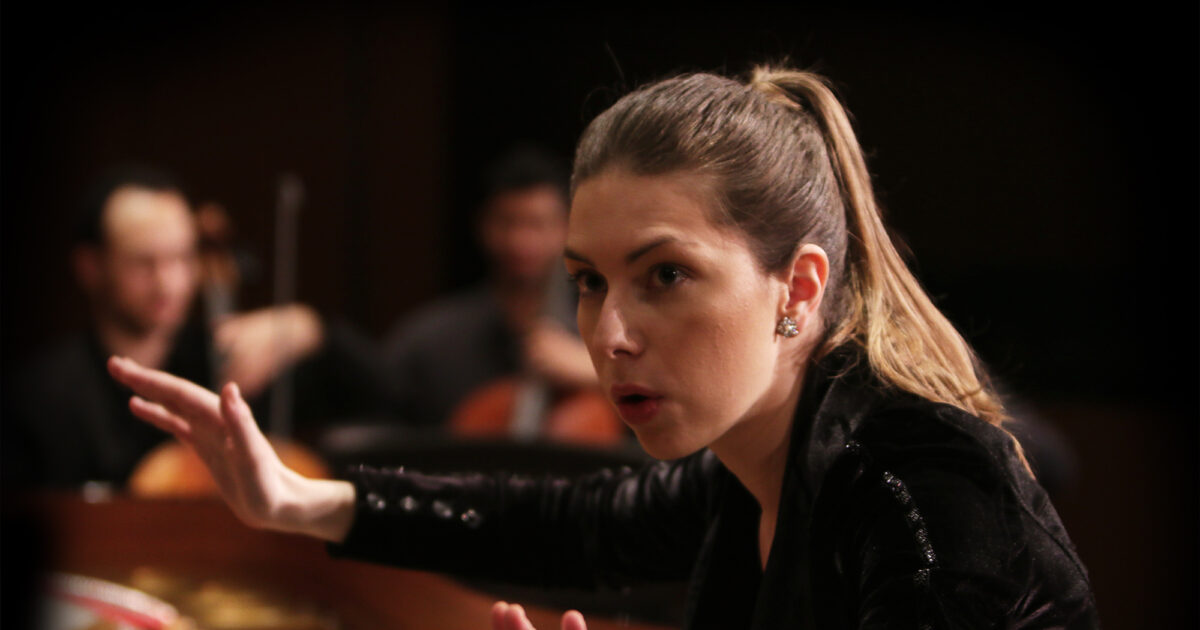
The Los Angeles Philharmonic has officially tapped German-Colombian conductor Anna Handler as its next assistant conductor for the 2024-2025 season. While the official press release frames this as a standard talent acquisition, the appointment represents a calculated maneuver within a global power struggle for the future of orchestral leadership. Gustavo Dudamel is preparing his eventual departure for the New York Philharmonic. The LA Phil is not just hiring a resident; it is stress-testing a potential successor in the most demanding acoustic and administrative environment in North America.
Handler joins a lineage of "Dudamel Fellows" and assistants who have historically used the Hollywood Bowl and Walt Disney Concert Hall as a high-velocity springboard. However, the timing of her arrival coincides with a period of profound structural anxiety in the classical music world. Major institutions are grappling with a shrinking pool of "superstar" conductors who can actually sell tickets. In Los Angeles, the conductor-in-residence role has shifted from a mere apprenticeship to a critical safeguard for the organization's artistic continuity.
The Strategy Behind the Selection
The search for a resident conductor is rarely just about musicality. It is about endurance. Handler emerged from a competitive field not just because of her technical precision with a baton, but because of her proven ability to navigate the disparate worlds of European tradition and American commercialism.
She previously served as an assistant at the Salzburg Festival. That is a pressure cooker of a different sort, defined by rigid hierarchies and deep-pocketed donors with very specific expectations. Los Angeles requires a different gear. The LA Phil operates with a massive budget and a programming schedule that bounces from Mahler to film scores within the same week. Handler’s background as a pianist and her experience with the Juilliard School’s conducting program suggest a versatile intellectual foundation.
The orchestra needs someone who can step onto the podium at a moment’s notice if a guest conductor falls ill. This isn't a hypothetical safety net. In the post-pandemic era of travel delays and health cancellations, the resident conductor is the literal glue holding a multi-million dollar season together. Handler is being paid to be the most prepared person in the room at all times.
Breaking the Glass Podium
Gender dynamics in classical music remain a significant, if often understated, factor in these appointments. For decades, the "Maestro" archetype was exclusively male. The tide is turning, but the scrutiny remains lopsided. Handler enters a space where her predecessors have faced intense public evaluation regarding their "authority" over veteran orchestral players.
The LA Phil has been more progressive than its peers in Berlin or Vienna, yet the industry at large still struggles to treat female conductors as musicians first and "female conductors" second. Handler’s appointment is a signal that the organization is doubling down on a more representative future.
The Weight of the Dudamel Legacy
Gustavo Dudamel didn't just conduct the LA Phil; he redefined what a conductor looks like in the 21st century. He became a brand. Handler is stepping into an ecosystem that expects its leaders to possess a level of charisma that borders on the cinematic.
The challenge for any resident under the Dudamel shadow is finding air to breathe. The assistant role often involves grueling rehearsals where the primary job is to sit in the back of the hall and take notes on balance and intonation for the music director. It is a humble position that requires an immense ego to survive. Handler will be expected to conduct the orchestra during its various neighborhood concerts and educational series. These are the front lines of the LA Phil's community engagement strategy. If she cannot command the respect of the musicians during a dusty outdoor rehearsal, her tenure will be short-lived.
Artistic Risk in the Disney Hall
The acoustics of the Walt Disney Concert Hall are unforgiving. Designed by Frank Gehry, the space provides a clarity that can expose even the slightest rhythmic deviation. Handler’s primary task during her residency will be mastering this "instrument." An assistant conductor at the LA Phil must learn the specific sonic signature of the orchestra—how the brass reflects off the Douglas fir walls and how the strings sustain in the terraced seating.
Musicians in the LA Phil are among the highest-paid and most technically proficient in the world. They have played under every living legend from Esa-Pekka Salonen to Zubin Mehta. They can smell hesitation. Handler’s biggest hurdle isn't the score; it's the 100-plus professionals who have played these pieces thousands of times. She has to convince them that her interpretation has something new to offer.
The Business of the Baton
From a business perspective, the conductor-in-residence is a cost-effective way to build a talent pipeline. Why hire an expensive guest conductor for a youth concert when you have a rising star on a fixed salary?
- Talent Incubation: The LA Phil acts as a finishing school for conductors who will eventually lead other Top 10 orchestras.
- Operational Flexibility: Having a resident allows the administration to schedule high-risk contemporary works that require extra rehearsal time.
- Brand Alignment: Handler’s Colombian-German heritage fits perfectly with Los Angeles’s identity as a global crossroads.
The organization is also betting on Handler's ability to engage with a younger, more diverse audience. The classical music demographic is aging out. To survive, the LA Phil needs conductors who look and act like the people they want in the seats. Handler’s social media presence and modern approach to performance are small but necessary components of this survival kit.
The Unspoken Competition
While Handler is the new face of the residency, she is also competing against every other rising conductor in the world. The "assistant" title is a double-edged sword. If you stay too long, you are branded as a perpetual second-in-command. If you leave too soon, you haven't built the necessary institutional weight.
The reality of the industry is that there are fewer than twenty "destination" podiums in the world. Every movement Handler makes in Los Angeles will be dissected by search committees from London to Tokyo. The stakes are not just about a successful season in California; they are about the next thirty years of her career.
She will likely lead the orchestra through several world premieres. The LA Phil is famous for commissioning more new music than almost any other major ensemble. This means Handler won't just be conducting the "Greatest Hits" of the 19th century. She will be interpreting complex, never-before-heard scores where there is no recording to fall back on. This requires a specific type of musical intelligence that is rare even among elite conductors.
A Precarious Path Forward
Success in this role is not guaranteed. The history of the LA Phil is littered with brilliant assistants who never quite made the leap to a major directorship. The difference for Handler will be her ability to handle the "off-podium" responsibilities.
In Los Angeles, the conductor is a civic figure. You are expected to rub elbows with Hollywood royalty and Silicon Beach donors. You are an ambassador for the arts in a city that is obsessed with the "next big thing." If Handler can balance the grueling technical demands of the scores with the performative demands of the LA social circuit, she will become more than just a resident. She will become a contender.
The LA Phil has placed its chips on Handler. Now, the music begins. The real test won't happen during the standing ovations at the end of a gala. It will happen on a Tuesday morning in a rehearsal room when the violins are tired, the woodwinds are out of tune, and the conductor has exactly ten minutes to fix a problem that only she can hear. That is where a career is made or broken.
Learn the score, manage the egos, and don't let the acoustics of the room swallow you whole.