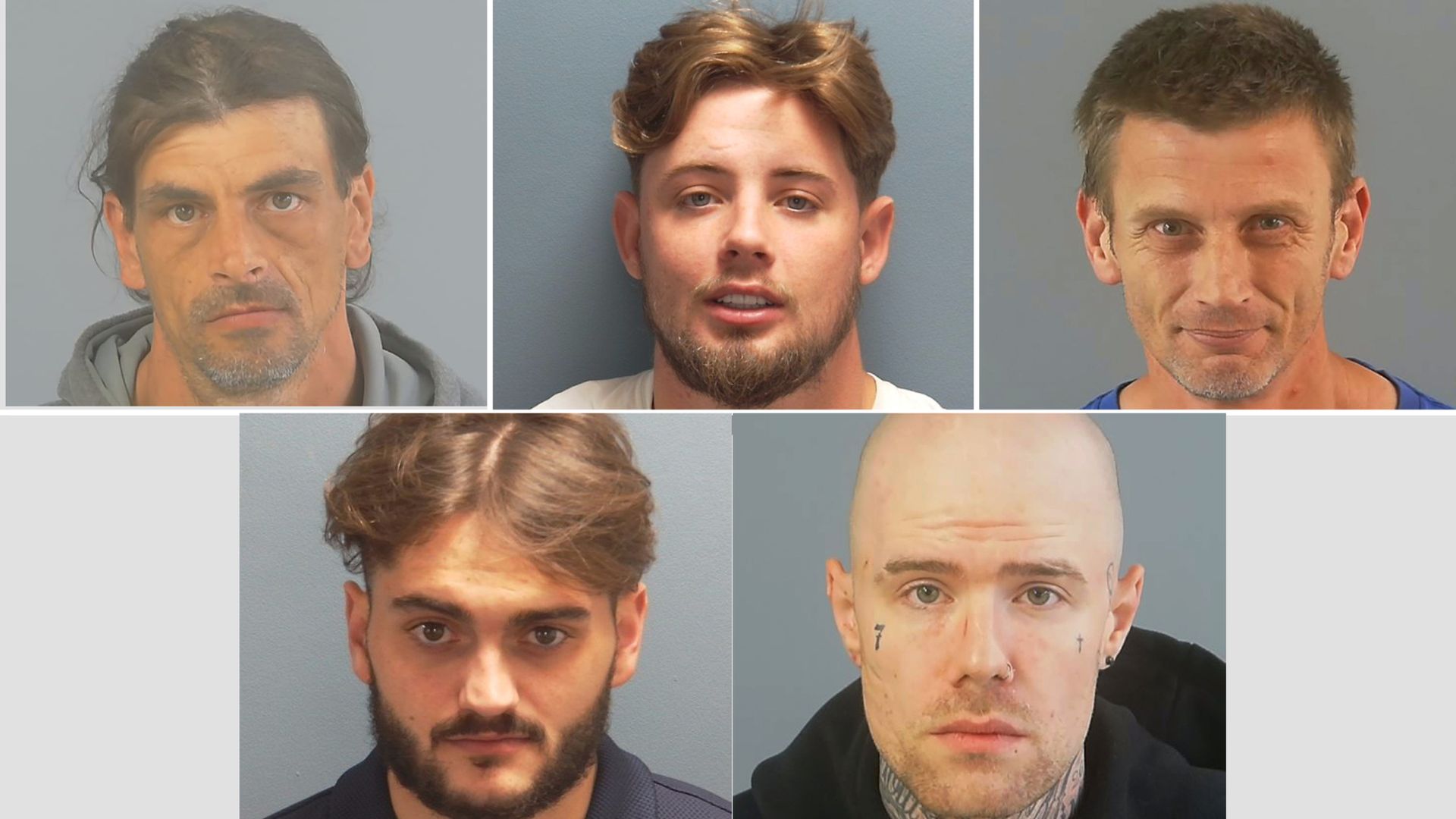
A standard court reporting piece won't tell you why people are genuinely furious. When the first jail sentences dropped at Southampton Crown Court for the violent protests following the murder of 18-year-old student Henry Nowak, the headlines focused on the chaos. They gave you the numbers. They detailed the projectiles. Leon O’Leary, 41, got three years and one month for throwing a smoke grenade. Connor Bishop, 24, received two years and eight months for hurling a traffic cone.
But looking at this strictly as a story about two rioters missing their court dates and getting locked up ignores the entire undercurrent paralyzing British street politics right now. The public isn't just reacting to a murder. They're reacting to a horrific piece of bodycam footage that confirms their absolute worst fears about modern law enforcement.
The Video that Triggered a Flashpoint
To understand why a thousand people swarmed Southampton Central Police Station, you have to look at what happened on December 3, 2025. Henry Nowak, a first-year accounting student, was walking home. He crossed paths with 23-year-old Vickrum Digwa, who was carrying a 21-centimeter dagger.
Digwa stabbed Nowak five times. When the police arrived, Digwa spun a quick lie, claiming he was the actual victim of a vicious racial assault. The responding officers swallowed it whole.
As Nowak lay dying on the pavement, drowning in his own blood, he repeatedly told officers he had been stabbed. He told them he couldn't breathe. The response from the police?
"I don't think you have, mate."
Instead of administering immediate first aid, officers handcuffed the dying teenager. He pleaded nine times that he could not breathe before losing consciousness. He died right there on the street.
The court completely threw out Digwa’s claims of racial abuse, labeling them total fabrications, and handed him life with a minimum of 21 years. But the damage to public trust was already done. The release of that bodycam footage on June 2, 2026, acted like a match dropped into a powder keg.
Street Violence vs. Legitimate Rage
Nobody should defend throwing bricks, lighting flares, or threatening everyday police officers. The protest quickly devolved into ugly chaos. Eleven officers were injured when the crowd surged into the Portswood area. British Transport Police officer Ruby Stephenson gave a terrifying account of being chased by a mob calling her "traitor and scum." She legitimately feared for her life.
That kind of violence is entirely unacceptable. It completely derails the message. Even Henry’s father, Mark Nowak, begged the public not to let his son's tragic death become a tool for division and hatred.
Yet, the institutional reaction to the riot has only fueled the fire. Mainstream commentary tried to sweep the initial anti-police anger under the rug by immediately branding the entire demonstration as a "far-right" riot orchestrated by professional agitators. Tommy Robinson showed up, sure. Politicians like Nigel Farage capitalized on it, telling people to react with "pure cold rage."
But minimizing a 1,000-person protest down to simple political extremism misses the plot. The anger crossed demographic lines. People watched a young boy get treated like a criminal while his murderer dictated the narrative to compliant officers.
The Reality of Two-Tier Policing
This case has reignited an explosive debate about "two-tier policing." The term gets thrown around a lot by politicians, but here it represents something incredibly specific: a deep-seated belief that British police are so terrified of being called racist that they will actively ignore the evidence right in front of their eyes.
When Digwa played the race card, common sense fled the scene. Officers chose to believe a lie and handcuff a dying victim rather than question the narrative. That's the core issue driving the public insanity. It’s an institutional paralysis caused by years of bureaucratic hyper-fixation on identity politics over fundamental duty.
Prime Minister Keir Starmer called the footage harrowing and admitted it made him feel sick as a father. But words don't fix a systemic cultural rot. The independent Office for Police Conduct is investigating, but a quiet bureaucratic review won't satisfy a public that just watched an innocent teenager die in handcuffs.
Where the Public Conversation Goes From Here
If we want to stop these explosive street clashes, the strategy cannot just be handing down heavy prison sentences to guys throwing traffic cones. The state has to address the underlying breach of faith.
First, there has to be an completely transparent overhaul of how emergency services handle cross-allegations at violent crime scenes. The fact that a victim can be denied medical care because the attacker claimed offensive language was used is an absolute failure of basic triage.
Second, the UK needs a serious conversation about knife exemptions. Digwa claimed he carried the blade as part of his adherence to the Nihang order of Sikhs. Yet, even Sikh scholars noted during the trial that the massive dagger he used went far beyond traditional requirements. Mark Nowak has explicitly called for a strict review of legally permitted knife lengths, a practical move that deserves immediate legislative backing.
The government can lock up rioters all day long, but until people feel that the law applies equally, without fear or favor, the tension on the streets isn't going anywhere.