A commercial airliner operating under international flight rules is an active node in a highly integrated network of sovereign defense architectures. When LOT Polish Airlines Flight 155—an Airbus A320 operated by wet-lease provider Electra Airways—transmitted transponder code 7500 during its route from Warsaw to Tel Aviv, it automatically triggered a non-discretionary cascade of military and civil air traffic control protocols. The subsequent scrambling of fighter jets by Bulgaria, Turkey, and Israel was not an act of spontaneous panic, but rather the predictable output of deterministic, multi-national security algorithms designed to mitigate airborne asymmetric threats.
Understanding this event requires a structural analysis of the failure modes of secondary surveillance radar, the economics of airspace intercept operations, and the rigid operational boundaries governing international flight crews. If you liked this post, you might want to read: this related article.
The Transponder Interface: A Single Point of Failure
The primary mechanism under investigation centers on the aircraft's transponder, the electronic device that emits a four-digit octal code via secondary surveillance radar to communicate state parameters to air traffic control (ATC). Under standard international aviation regulations established by the International Civil Aviation Organization (ICAO), specific emergency profiles are mapped to discrete, universal codes:
- Squawk 7500: Unlawful Interference (Hijacking)
- Squawk 7600: Radio Communication Failure
- Squawk 7700: General Emergency
A conflict exists between the official explanations provided by the participating entities. While LOT Polish Airlines and regional airport officials initially categorized the incident as pilot error—specifically an inadvertent physical entry of the code or a mismanaged manual reset—the Bulgarian Transport Ministry asserted a hardware hypothesis, citing a "technical failure of the aircraft's transponder" that autonomously broadcast the false signal. For another perspective on this development, see the recent coverage from MIT Technology Review.
Whether driven by human input or a component short-circuit, the system functioned precisely as engineered. The transponder interface is optimized for speed of transmission during high-stress anomalies, meaning it intentionally lacks complex confirmation prompts. This optimization introduces a critical systemic vulnerability: the zero-threshold activation mechanism converts an input error directly into an international security crisis.
The Intercept Cascade: Mapping the Tri-Border Defense Protocol
The generation of a Squawk 7500 code alters the legal and operational status of an aircraft instantly, shifting jurisdiction from civilian air traffic managers to national air defense commands. The response to Flight 155 reveals the interlocking layers of NATO and non-NATO defense structures.
[Transponder Code 7500 Broadcast]
                |
                v
[NATO Combined Air Operations Centre Alerted]
                |
       +--------+--------+
       |                 |
       v                 v
[Bulgarian MiG-29s]   [Turkish F-16s] ---> [Israeli IAF F-16/F-35s]
  (Air Policing)      (Airspace Escort)      (Terminal Deficit Intercept)
The cascade executed across three distinct sovereign zones, each operating under localized threat-assessment frameworks.
The NATO Air Policing Layer (Bulgaria)
The moment the transponder signal crossed into Bulgarian airspace, it fell under the jurisdiction of NATO's Integrated Air Defense System. The Combined Air Operations Centre directed the immediate launch of Bulgarian MiG-29 fighter jets under the alliance’s Air Policing mandate. The objective of this phase is visual confirmation; military pilots must verify the physical state of the flight deck, observing pilot behavior and checking for visible signs of cabin distress.
The Transit Escort Layer (Turkey)
As the aircraft progressed south into Turkish airspace, the responsibilities transferred to the Turkish Air Force, which scrambled two F-16 fighter jets. Despite the flight crew verbally informing Turkish air traffic controllers that the broadcast was an error and the cabin was secure, international protocol dictates that verbal retractions cannot override an active electronic hijack code. The F-16s maintained a physical escort, establishing a continuous containment perimeter around the airliner.
The Terminal Deficit Intercept (Israel)
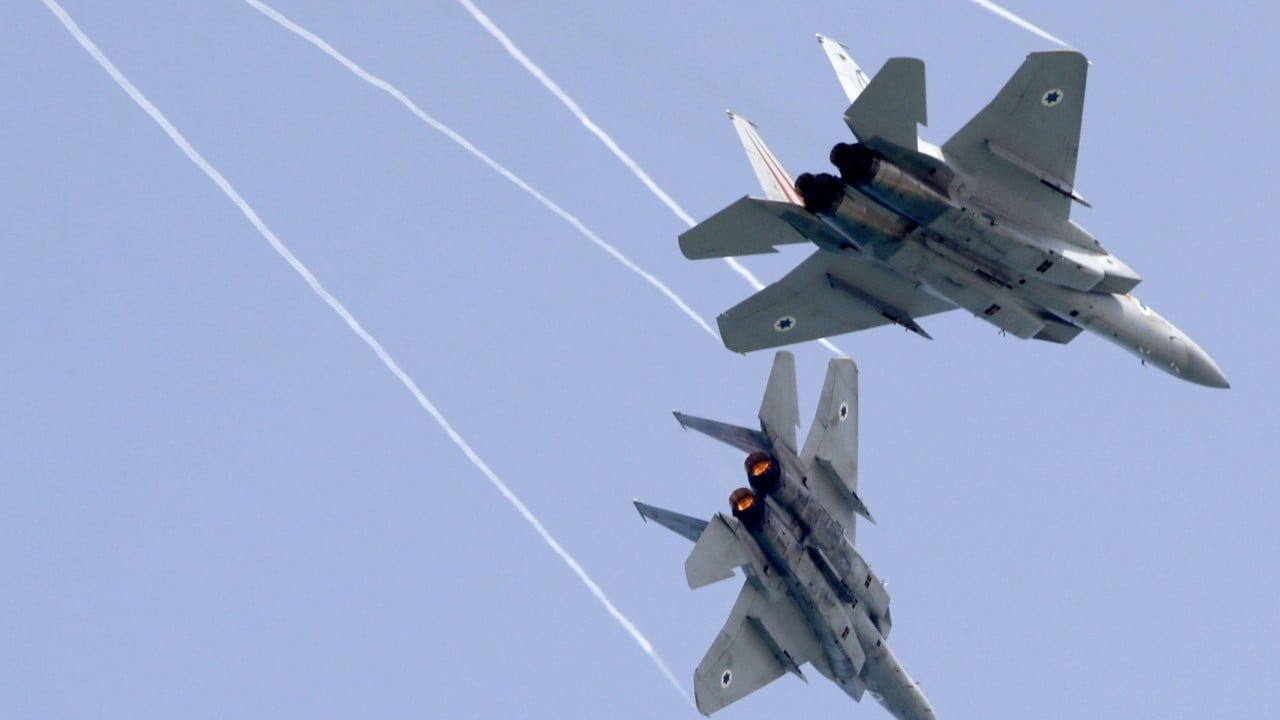
The final and most aggressive layer occurred as the flight approached the Eastern Mediterranean. The Israel Defense Forces (IDF) scrambled a pair of fighter jets to intercept the airliner. In the Israeli defense paradigm, an incoming aircraft transmitting Squawk 7500—compounded by a temporary "lack of contact" noted by the military—presents an existential threat vector to major population centers like Tel Aviv. The IAF interceptors were deployed to execute a terminal deficit strategy, positioning themselves to neutralize the asset if it deviated toward restricted targets before its status could be verified.
Operational Bottlenecks and the Mechanics of Rejection
The trajectory of Flight 155 reveals how security protocols generate operational friction that forces suboptimal route choices. Once the hijack alert was active, the aircraft entered a state of diplomatic and physical exclusion.
The flight crew attempted to mitigate the escalating situation by seeking emergency landing clearance in Cyprus at Paphos Airport. This request was denied. Local authorities cited high traffic volume and an inability to handle the acute security footprint required by a hijacked aircraft. This refusal underscores a fundamental reality of aviation security: sovereign states will prioritize the insulation of their own critical infrastructure over assisting a compromised foreign asset.
This denial created a compounding operational bottleneck:
$$T_{\text{avail}} \le T_{\text{crew_limit}} + T_{\text{fuel_reserve}}$$
The flight turned back toward Eastern Europe. The decision to divert to Burgas, Bulgaria, was dictated by the strict regulatory frameworks governing flight crew duty times. Under European Union Aviation Safety Agency (EASA) rules, a crew cannot exceed their maximum Flight Duty Period (FDP). The delays incurred by circling near Cyprus, executing mid-air intercepts, and navigating indirect routing exhausted the crew's legal operating window, eliminating Tel Aviv as a viable destination irrespective of the security clearance status.
Systemic Vulnerabilities in Airspace Verification
The primary deficiency highlighted by this incident is the verification latency inherent in modern identification friend-or-foe (IFF) networks. There is currently no out-of-band, cryptographically secure method for a pilot to confirm a false alarm to multiple regional militaries simultaneously once a distress code has been broadcast.
Civil air traffic control towers can receive verbal confirmation of safety, but air defense networks operate on a zero-trust model. A hostage pilot can be forced to declare a situation safe under duress; consequently, military authorities must treat verbal retractions as potentially compromised inputs until a physical inspection or a safe landing is completed.
The strategy relies entirely on kinetic interception—physically placing fighter aircraft alongside the airliner—to perform visual verification. While highly reliable, this method incurs significant economic costs, strains airframe lifespans, and introduces the risk of mid-air collision or catastrophic miscalculation by intercepting pilots operating under extreme readiness states.
The aviation industry continues to tolerate this vulnerability because the cost of occasional false-alarm scrambles is systematically heavily outweighed by the catastrophic risk of failing to intercept a genuinely hostile aircraft. Until international regulators adopt multi-factor biometric verification or encrypted secondary confirmation links directly from the cockpit to defense networks, air travel will remain susceptible to these disruptive airspace defense cascades.