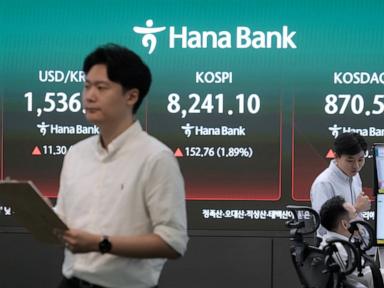
A profound divergence has developed within modern equity markets: major stock indexes continue to push toward historic thresholds even as the clear majority of individual equities decline. When the S&P 500 ticks upward by 0.7% on a day where more than half of its constituent companies lose value, it signals that standard index benchmarks no longer reflect broad corporate health. Instead, they function as capitalization-weighted vessels powered by an increasingly narrow cohort of artificial intelligence infrastructure and hardware providers.
This structural fragmentation stems from a localized liquidity squeeze. Market participants are rotating capital away from defensive and consumer-centric sectors to absorb the massive capital demands of the global AI buildout. The current market structure is not experiencing a universal rising tide; it is exhibiting a highly concentrated redistribution of capital that masks systemic vulnerabilities across the broader macroeconomic spectrum.
The Tripartite Framework of AI Infrastructure Monetization
To accurately diagnose why specific technology equities can single-handedly swing multi-trillion-dollar indexes, the AI ecosystem must be disaggregated into its core financial drivers. The market is currently evaluating technology companies based on a clear hierarchy of structural dependence, categorizing them into three distinct layers.
[Layer 1: Compute & Custom Silicon] -> [Layer 2: Specialized Memory Storage] -> [Layer 3: Physical Hosting Assets]
Layer 1: Compute and Custom Silicon
The primary layer consists of specialized semiconductor designers and custom silicon providers. This layer experiences immediate revenue realization because hardware procurement represents the non-negotiable first step in building machine learning models. For example, Broadcom’s recent securing of long-term silicon supply agreements with Apple serves as a fundamental validation of this layer's pricing power.
When infrastructure buyers commit to multi-year hardware architectures, they establish locked-in revenue streams for providers. This structural commitment explains why Broadcom, Advanced Micro Devices (9.2% single-day advance), and similar fabricators exert such an outsized impact on capitalization-weighted indexes. Their margins are protected by structural backlogs, isolating them temporarily from broader consumer spending slowdowns.
Layer 2: Specialized Memory Storage
High-performance compute architectures are fundamentally throttled by data throughput limitations. This reality positions high-bandwidth memory (HBM) and enterprise storage as the secondary critical layer. Memory manufacturers like Micron Technology and SK Hynix operate within a highly cyclical, supply-constrained commodity framework.
The planned $28 billion U.S. equity offering by South Korea's SK Hynix—positioned immediately behind SpaceX’s $75 billion public debut—crystallizes the unprecedented scale of capital absorption required by this layer. The willingness of public markets to swallow tens of billions of dollars in fresh equity issuance demonstrates that investors are prioritizing long-term physical capacity expansion over short-term earnings multiples.
Layer 3: Physical Hosting Assets and High-Performance Computing Conversion
The final layer governs the physical constraints of execution: data centers, energy procurement, and cooling infrastructure. The financial dynamics here are shifting from speculative venture funding to long-term enterprise commitments.
TeraWulf’s execution of a 20-year data center hosting agreement with Anthropic in Kentucky illustrates this mechanism. By securing an estimated $19 billion in contracted revenue, the asset class proves that legacy operational footprints—such as industrial bitcoin mining facilities—can be structurally retrofitted into high-performance computing centers. This contract architecture shifts the underlying equity from a speculative asset to a long-term utility model, backed by predictable enterprise cash flows.
The Divergent Index Cost Function
The primary structural risk embedded within the current market environment is the decoupling of equity prices from the broader corporate cost of capital. Index-tracking investment vehicles, such as the Invesco QQQ or various S&P 500 exchange-traded funds, are structurally mandated to purchase underlying equities based on market capitalization, irrespective of fundamental valuation metrics.
This mechanics-driven buying creates a self-reinforcing capital loop:
- High-momentum AI stocks experience a price expansion driven by infrastructure spending announcements.
- The market capitalization of these specific tech entities expands as a percentage of the total index.
- Passive index-tracking funds are structurally forced to reallocate capital away from the other 450+ companies in the index to buy more shares of the swelling tech giants.
- The broader index rises, creating the illusion of a systemic equity rally, while the median stock suffers from capital starvation.
This structural reality introduces a severe systemic vulnerability. If an index relies on less than 10% of its components to sustain its nominal value, any downward re-rating of that core group will trigger an index-wide contraction that index-tracking automated funds will accelerate via forced liquidation.
Macroeconomic Headwinds vs. Microeconomic Capital Expenditure
The sustainability of the current market structure depends entirely on whether massive microeconomic capital expenditures can eventually generate sufficient enterprise productivity gains to offset mounting macroeconomic headwinds.
Macroeconomic Headwinds (Rising Capital Costs + Consumer Compression)
                          VS.
Microeconomic AI Capex (Locked-in Enterprise Infrastructure Buys)
The corporate sector is currently navigating two conflicting economic realities.
The Capital Cost Boundary
The global competition for funding is intensifying. The concurrent demands of private technology giants building data centers and sovereign governments financing expanding fiscal deficits are placing structural upward pressure on long-term borrowing costs. With the 10-year U.S. Treasury yield hovering near 4.48%, the risk-free rate of return remains historically high. This elevates the cost of capital for every non-AI enterprise, severely limiting their ability to borrow for traditional operational expansions.
Consumer Compression Dynamics
While corporate tech spending remains robust, the end-consumer economy exhibits growing fragility. Inflation-adjusted household purchasing power has steadily degraded, evidenced by escalating credit card delinquencies and compressed retail margins. The broader equity market reflects this reality; sectors tied directly to consumer discretionary spending, traditional manufacturing, and regional services are underperforming because they possess zero pricing power in a weakening consumer environment.
Strategic Allocation Recommendations
Relying purely on passive indexing exposes capital to maximum concentration risk at the precise top of an infrastructure spending cycle. Sophisticated asset managers must transition from broad index exposure to a barbell allocation framework designed to exploit structural data center demands while protecting against a broader market contraction.
- Prioritize Cash-Flow Contract Architecture Over Multiples: Allocate capital exclusively to infrastructure providers that possess long-term, legally binding enterprise service agreements (e.g., 15-to-20-year data center host contracts). Avoid software-as-a-service providers trading at extreme revenue multiples whose AI tools have not yet proven net-positive productivity enhancements for enterprise buyers.
- Exploit Forced Index Inclusion Rebalancings: Institutional portfolios should systematically front-run structural index adjustments. When mega-cap entities like SpaceX or heavily capitalized international firms execute U.S. public listings, passive index funds are structurally obligated to purchase billions of dollars of shares upon index inclusion. Alpha is generated by accumulating positions prior to these predictable, non-fundamental passive buying surges.
- Hedge via Capitalization-Weighted vs. Equal-Weighted Spreads: To insulate portfolios from a potential localized tech correction, establish short positions on highly concentrated, market-cap-weighted indexes while simultaneously holding long positions in equal-weighted variations of the same index. This spread captures the fundamental catch-up potential of the broader economy while muting downside exposure to a sudden devaluation in the top five tech constituents.