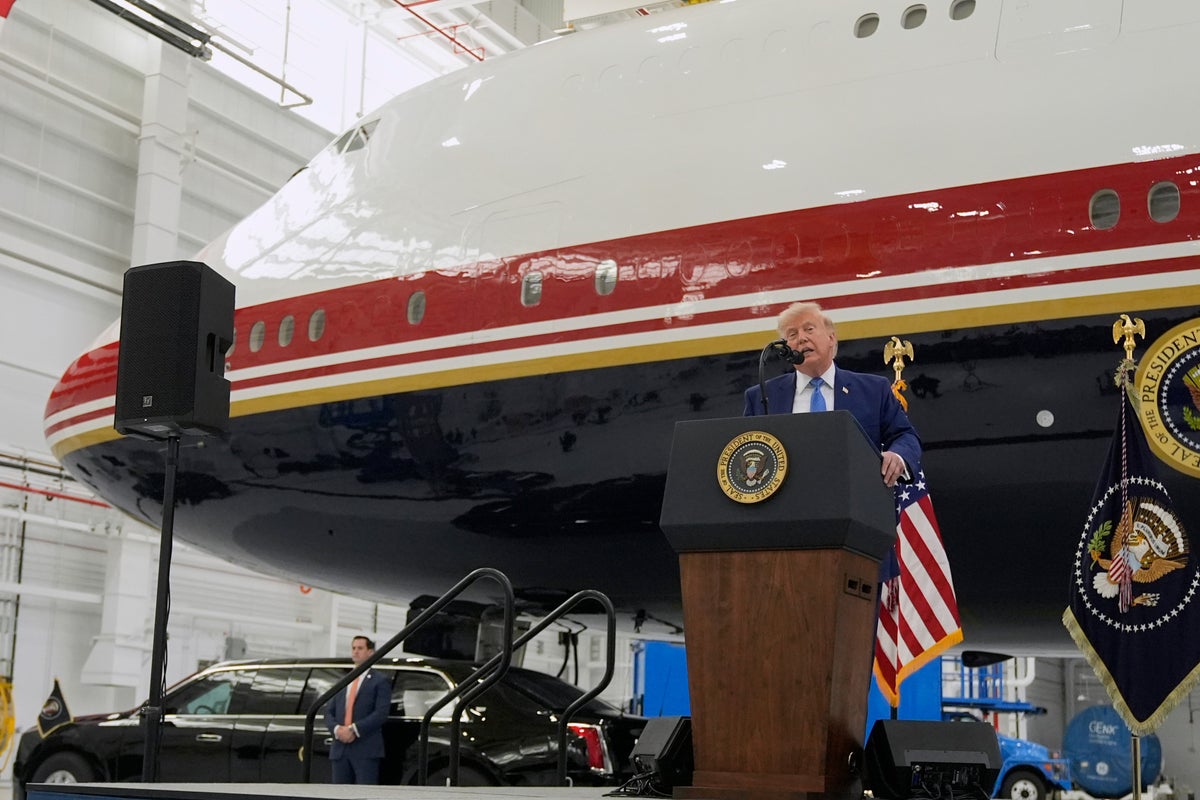
The introduction of a converted Qatari Boeing 747-8 into the United States executive airlift fleet as a temporary "bridge" aircraft exposes a critical breakdown in domestic defense procurement timelines. The acquisition, driven by structural delays in Boeing's Next-Generation Presidential Aircraft Recapitalization program (VC-25B), highlights a fundamental trade-off between industrial capacity, regulatory certification speeds, and geopolitical leverage. While framing the foreign gift as a zero-cost asset to the American taxpayer simplifies a highly complex transaction, a rigorous evaluation reveals that the economic, operational, and institutional costs of this bridge platform are substantial.
The decision to integrate this asset rests upon three distinct operational and macroeconomic pillars.
The Tri-Border Framework of Executive Airlift Architecture
The justification for bypassing standard defense procurement cycles to accept a foreign sovereign gift requires analyzing three interlinked friction points in the existing executive transport framework.
1. The Industrial Degradation Cost Function
The primary catalyst for this acquisition is the compounding delay of the official VC-25B program. Originally scheduled for deployment in 2024, the structural conversion of two commercial 747-8 airframes into heavily modified military command posts has faced severe supply chain bottlenecks, labor deficits, and engineering overruns, pushing the delivery horizon back to 2028.
The maintenance cost function of the legacy VC-25A fleet—the modified Boeing 747-200 platforms built in the late 1980s—grows exponentially as a function of airframe age. Component obsolescence forces the Air Force to source or custom-manufacture legacy parts, driving flight-hour operating costs to unsustainable levels. The introduction of an intermediate 747-8 airframe acts as an operational buffer, arresting this steep cost curve by absorbing long-range flight requirements.
2. The Operational Capabilities Gap
Executive airlift for the head of state is not a commercial transportation exercise; it is an extension of national command authority. The legacy VC-25A platforms lack the range, fuel efficiency, and gross takeoff weight capacity of modern wide-body variants.
| Metric | Legacy VC-25A (747-200) | Bridge Variant (747-8) |
|---|---|---|
| Airframe Generation | late-1980s Analog | Modern Digital / Fly-by-wire |
| Typical Range | ~7,800 nautical miles | ~8,000+ nautical miles |
| Fuel Burn Efficiency | Baseline | ~16% reduction per engine |
| Max Takeoff Weight | 833,000 lbs | 987,000 lbs |
The newer 747-8 platform expands the operational envelope by allowing longer non-stop transit corridors to high-priority diplomatic theaters in Europe and Asia without requiring tactical refueling stops. This reduces vulnerability windows during international transits.
3. The Geopolitical Transaction Matrix
The acceptance of a $400 million asset from the Qatari state introduces complex non-monetary liabilities. Foreign policy architecture operates on a reciprocity matrix. A structural gift of this magnitude creates an immediate diplomatic imbalance, signaling an informal alignment of security interests. This bypasses standard foreign military sales frameworks and compromises domestic regulatory standards, setting a precedent where strategic equipment procurement becomes intertwined with bilateral favors.
Security Modifications and Engineering Realities
The assertion that a commercial or foreign-configured VVIP aircraft can seamlessly step into the role of Air Force One overlooks the physics of hardened airborne command nodes. The Air Force allocated approximately $400 million for rapid retrofitting at specialized facilities in Texas. This engineering phase prioritize secure continuity of government over cosmetic overhauls.
[Commercial Airframe Intake]
       │
       ▼
[Phase 1: Structural Stripping & Avionics Isolation]
       │
       ▼
[Phase 2: Installation of Advanced Military Comms & EMP Hardening]
       │
       ▼
[Phase 3: Integration of Active/Passive Countermeasure Suites]
       │
       ▼
[Commissioning & Airworthiness Flight Testing]
The retrofitting protocol targets three mandatory survival systems:
- Avionics Isolation and Electromagnetic Pulse (EMP) Hardening: Commercial wide-body aircraft rely on distributed digital architectures vulnerable to high-altitude nuclear detonations or directed-energy interference. The retrofit demands the installation of military-grade, shielded cabling and isolated communication busses to guarantee uninterrupted command capabilities.
- Cryptographic Communication Integration: The aircraft must interface directly with the National Military Command System via secure satellite communications and low-frequency arrays. This requires replacing the existing Qatari executive communication suite with proprietary U.S. defense hardware.
- Defensive System Architecture: The platform requires advanced threat-reduction systems, including directional infrared countermeasures to blind incoming man-portable air-defense systems and radar-jamming pods.
To meet an compressed 10-month delivery timeline, the Air Force maintained much of the existing Qatari interior layout, including its high-end lounges and layout configurations. While this compressed the engineering cycle, it creates a hybrid airframe layout that diverges significantly from the standardized, workplace-centric interiors optimized for staff workflows on traditional VC-25 platforms.
Institutional Risks and Long-Term Costs
The acquisition strategy creates a fragmented fleet management ecosystem. Operating three distinct aircraft variants concurrently—the legacy VC-25A, the temporary bridge 747-8, and the upcoming VC-25B platforms—shatters the logistical efficiencies gained by fleet standardization.
The first bottleneck appears in personnel training. Pilots, cabin crews, and maintenance teams require separate Type Ratings and operational certifications for the legacy 747-200 systems and the advanced digital cockpits of the 747-8. The Air Force had to acquire an additional used 747-8 airframe from Lufthansa and construct a three-dimensional physical mock-up to accelerate crew familiarization. This represents a substantial capital layout hidden outside the primary aircraft acquisition cost.
The second limitation involves the legal and institutional framework of the executive branch. The Foreign Gifts and Decorations Act strictly regulates the receipt of high-value items from foreign entities to prevent undue influence. Labeling the aircraft a "gift to the nation" avoids immediate statutory violations but strains the spirit of constitutional ethics guidelines.
Furthermore, statements indicating that the aircraft will ultimately be transferred to a private presidential library create a future asset-disposal conflict. A military-hardened command platform containing proprietary communications and defense technology cannot legally or practically enter the civic public domain without undergoing a cost-prohibitive de-classification and structural stripping process.
The Strategic Path Forward
The integration of the bridge aircraft is now an accomplished fact, leaving defense planners to manage the resulting operational landscape. To extract maximum utility while mitigating long-term risks, the Department of Defense must execute a strict containment strategy.
First, the bridge aircraft should be restricted entirely to long-range, blue-water international deployments where its range and payload capacity offer distinct advantages over the aging VC-25A. Shorter domestic missions should remain assigned to the legacy fleet or smaller C-32 platforms to minimize the accumulation of high-cost flight hours on this unique airframe.
Second, the structural modifications added during the Texas retrofit must be thoroughly documented as a testbed for the upcoming VC-25B program. Learnings from this rapid integration can be used to streamline the delayed main program.
Finally, a hard legal firewall must be established immediately regarding the end-of-life cycle for this airframe. The Pentagon should formally classify the asset as restricted military property, scheduling it for standard long-term storage or defensive recycling upon the delivery of the primary Boeing fleet in 2028. This removes the platform entirely from the sphere of political transactions and personal estate planning.