The conviction of Vickrum Singh Digwa for the murder of 18-year-old university student Henry Nowak in Southampton has triggered a systemic crisis that extends far beyond the boundaries of criminal law. When an individual criminal act occurs within a highly fractured socio-political environment, the broader community often faces collective punishment. The structural vulnerabilities exposed by this crisis demonstrate how an isolated act of violence can be leveraged to destabilize a long-integrated minority population, altering community mobility, institutional trust, and legislative policy.
The Mechanism of Aggregation: From Individual Action to Communal Liability
The immediate consequence of the judicial verdict has been the enforcement of an informal system of collective blame. Digwa was sentenced to life imprisonment with a minimum term of 21 years for the fatal stabbing of Nowak in December 2025. The transition from individual judicial accountability to communal exposure operates via a process known as group aggregation. This phenomenon occurs when a single actor's profile is used to reframe an entire demographic as a uniform threat vector.
Data from community monitoring groups, including the Sikh Federation and Basics of Sikhi, indicates a sharp increase in hostile public interactions since the conclusion of the trial. Reports include targeted street confrontations, verbal abuse in commercial and workplace environments, and physical intimidation. The logic driving this backlash relies on two structural factors:
- Visual Hyper-Visibility: The traditional articles of faith worn by observant Sikh males—specifically the turban (dastar) and beard—act as highly recognizable identifiers in public spaces. In a climate of heightened hostility, these symbols are transformed from expressions of personal faith into targets for public anger.
- The Disrepute Multiplier: Because minority populations often operate under a societal expectation of unblemished integration, a high-profile felony committed by one member can erase decades of civic capital. The actions of a single individual are treated as representative of the group, whereas similar crimes committed by members of the majority population are historically evaluated as isolated psychological anomalies.
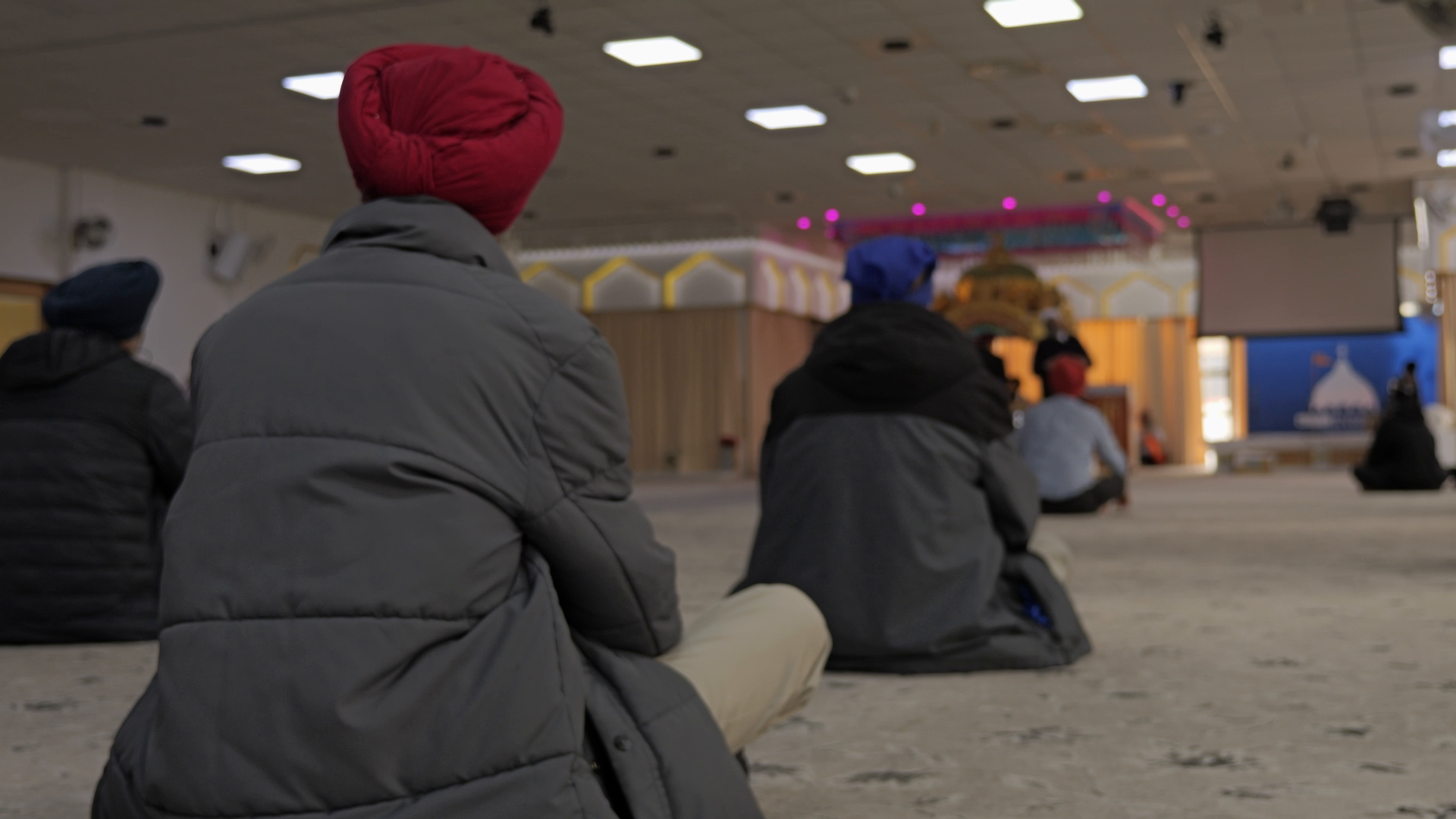
This shifting environment has practical consequences. The Gurdwara Khalsa Darbar in Southampton reported a sharp drop in attendance immediately following the trial, as fear of public spaces disrupted regular community movement. When fear restricts access to places of worship and community centers, the social cohesion and support networks of the targeted group are weakened.
Institutional Failure and the Distortion of Public Trust
The public reaction to this case cannot be separated from the actions of law enforcement at the crime scene, which were later documented in police body-worn camera footage. Upon their arrival, officers encountered Digwa, who falsely claimed that Nowak had initiated a racially motivated assault and dislodged his turban. Acting on this false report, officers handcuffed and arrested the mortally wounded teenager, dismissing his statements that he had been stabbed and was unable to breathe.
This operational failure created a dual breakdown in public institutional trust:
                  [Fatal Stabbing of Henry Nowak]
                                |
             [Perpetrator Weaponizes False Race Claim]
                                |
         [Police Operational Error: Handcuffing the Victim]
                                |
            +-------------------+-------------------+
            |                                       |
[Majority Public Outrage:                  [Minority Vulnerability:
 Institutional Distrust &                 Weaponization of Identity
 Claims of Asymmetric Policing]           & Fear of State Protection]
            +-------------------+-------------------+
                                |
                [Systemic Socio-Political Crisis]
For the majority population, the footage generated intense outrage. The spectacle of a dying student being restrained while pleading for medical assistance was interpreted by populist political actors as evidence of structural incompetence or a "two-tier" policing system. This narrative suggests that law enforcement is so paralyzed by a fear of appearing racially biased that it will accept a false accusation from a minority suspect over clear physical evidence of a violent crime.
For the Sikh community, the institutional breakdown exposed a different vulnerability. The fact that Digwa successfully used religious and racial identity markers to mislead officers at the scene created a deep sense of internal betrayal. Community leaders recognized that the perpetrator had used the language of anti-racism to shield himself from a violent crime, which directly compromised the legitimacy of genuine protections against discrimination. The resulting public anger has left the community exposed to retaliatory actions, while also raising doubts about whether the state can protect innocent citizens during periods of civil unrest.
The Semantic Confusion Over the Kirpan
A major focal point of the current political debate is the weapon used in the murder, which has led to scrutiny of the legal exemptions granted to observant Sikhs under UK law. The Criminal Justice Act 1988 permits the possession of a bladed article in a public place if it is carried for religious reasons, a provision designed to accommodate the kirpan.
The judicial findings clarified that while Digwa wore a small, compliant kirpan beneath his clothing, he also carried a 21-cm dagger, which he used to commit the crime. The court rejected the defense's attempt to classify this larger weapon as a protected religious item. However, the political and media discussion has largely ignored this distinction, viewing the crime as a direct result of the statutory exemption itself.
Sikh theologians and legal experts emphasize that the concept of the kirpan is defined by strict ethical and physical limits:
- Ethical Scope: The term is derived from kirpa (grace) and aan (dignity). It is intended as a symbolic tool for defense and the protection of others, and its use in an aggressive attack violates core tenets of the faith.
- Physical Dimension: Standard ceremonial kirpans are typically small, blunt, and worn securely under clothing. The 21-cm blade carried by Digwa was categorized by the court as an offensive weapon rather than a traditional article of faith.
The collapse of these distinctions in public debate has led to calls from political organizations, including Reform UK, to repeal the religious exemptions for bladed articles. This legislative push shows how a single criminal act can lead to policy changes that impact an entire group, turning a matter of individual criminal conduct into a broader debate over religious freedoms.
Strategic Outlook and Policy Recommendations
The friction generated by the Henry Nowak case requires structured interventions from law enforcement, political leaders, and civil society to restore public safety and institutional credibility.
1. Objective Review of Police Operational Protocols
The Independent Office for Police Conduct (IOPC) must conduct an objective, timeline-driven review of the Hampshire and Isle of Wight Constabulary’s actions at the scene. The investigation should focus on why physical triage was delayed in favor of securing a suspect based solely on verbal statements. Police training programs must ensure that visible trauma and medical emergencies take priority over unverified accusations at a crime scene, removing subjective bias from immediate medical responses.
2. Standardizing the Legal Definitions of Religious Artifacts
To prevent future legal ambiguity and protect legitimate religious freedoms, the Home Office should collaborate with the Sikh Regulatory Authorities to establish clearer guidelines for the physical dimensions of ceremonial items. Specifying acceptable limits for public carriage would allow law enforcement to differentiate between a compliant religious artifact and an unauthorized offensive weapon, preserving statutory protections while addressing public safety concerns.
3. Implementing Local De-escalation Frameworks
Local government bodies in high-density areas must set up active communication channels linking community leaders, police commanders, and neighborhood safety teams. These networks should focus on protecting vulnerable individuals, monitoring hate crimes, and ensuring secure access to public spaces and places of worship.
Shifting the public focus from collective blame back to individual legal accountability is essential for stabilizing community relations. If the public debate continues to treat this tragedy as a clash of identities rather than a specific criminal failure, the resulting polarization will continue to pose a challenge to social cohesion and public safety.