The concept of a diplomatic resolution via the Joint Comprehensive Plan of Action (JCPOA) structural framework ended permanently when its core provisions expired on October 18, 2025. The transition from managed non-proliferation to active kinetic conflict represents a systemic failure of deterrence, culminating in the outbreak of direct military hostilities on February 28, 2026. Understanding this shift requires discarding political rhetoric and analyzing the hard structural mechanics governing Middle Eastern security architecture: the breakdown of the nuclear baseline, the economic cost functions of maritime chokepoints, and the asymmetry of horizontal escalation.
The Nuclear Baseline Deficit and the Failure of Verification
The fundamental prerequisite for any arms control agreement is a verified, quantifiable baseline of the adversary's industrial capacity. Entering the current negotiation cycle, the International Atomic Energy Agency (IAEA) and Western intelligence agencies possess no such baseline for Iran's nuclear infrastructure. This knowledge deficit is the direct result of a multi-year degradation of tracking mechanisms, accelerated by the kinetic disruptions of 2025 and early 2026. Also making news in related news: Why a Naval Blockade on Iran is a Rhetorical Mirage that Wall Street and Washington Both Misunderstand.
The verification architecture established under the 2015 JCPOA relied on continuous, real-time monitoring of centrifuge component production and a tightly regulated procurement channel for dual-use imports. This continuity of knowledge fractured permanently in February 2021 when Tehran ceased implementing the agreement's Additional Protocol measures.
The physical destruction of declared infrastructure during the June 2025 twelve-day war and subsequent February 2026 joint US-Israeli strikes altered the proliferation calculation in two structural ways: Further information on this are covered by Al Jazeera.
- The Covert Enrichment Pathway: Prior to the June 2025 kinetic interventions, Iran's declared inventory at Natanz, Fordow, and Isfahan comprised approximately 20,000 installed centrifuges. Its stockpiles included 440 kg of 60% enriched uranium, 184 kg of 20% enriched uranium, and over 6,000 kg of low-enriched material. Models indicate that if Iran overproduced its centrifuge components by a margin of 10% between 2021 and 2025, it retained the unmonitored capital to supply a covert enrichment facility containing roughly 1,300 advanced centrifuges.
- Hardening and Underground Dispersion: Kinetic campaigns targeting tunnel entrances—such as the Tomahawk cruise missile strikes on the Isfahan facility—demonstrated structural limitations against deeply buried infrastructure. Because lower production tiers at sites like Pickaxe Mountain are protected by deep granite formations, ordnance like the GBU-57 Massive Ordnance Penetrator cannot reliably guarantee total structural defeat. Consequently, kinetic strikes have driven production further into hardened topologies, increasing the verification deficit.
The strategic consequence is that diplomatic engagement now occurs in an environment of total informational asymmetry. Tehran leverages this verification vacuum as a primary asset, forcing Western negotiators to price the risk of an unaccounted-for parallel program into every diplomatic concession.
The Cost Function of Maritime Chokepoints
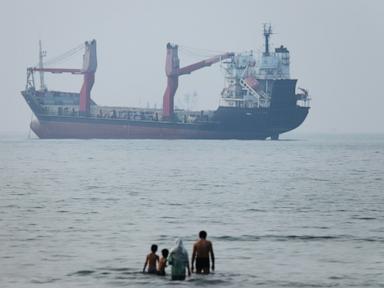
When kinetic operations degraded Iran’s conventional military command and killed top leadership on February 28, 2026, the regime initiated a strategy of horizontal escalation. This shifted the conflict away from symmetrical military engagement, where the United States and Israel hold a decisive technological advantage, and into the global macroeconomic arena. The primary mechanism for this strategy is the operational closure of the Strait of Hormuz.
The economic cost function of this maritime blockade operates on precise structural dependencies. Approximately 20% of the world's liquid petroleum consumption traverses the Strait of Hormuz daily. By restricting transit, the regime inflicts financial pain on the global economy to force Western political capitulation.
[Kinetic Strikes on Iran Core]
       │
       ▼
[Closure of Strait of Hormuz] ──► [Surge in Risk Premiums & Insurance Costs]
       │
       ▼
[Global Maritime Supply Disruption] ──► [Horizontal Political Pressure on US/Allies]
The mechanics of this chokepoint strategy rely on three operational levers:
- Selective Access Routing: Rather than executing a blunt, total blockade that would invite a unified global military response, the strategy employs selective interdiction. Vessels failing to utilize Iranian-approved transit mechanisms face targeted anti-ship missile and one-way drone strikes, as demonstrated by the July 6, 2026 attacks on Qatari and Saudi-flagged tankers.
- The Insurance Risk Premium Multiplier: The threat of kinetic interdiction causes a sharp spike in maritime insurance premiums, specifically War Risk Hull rates. When these rates increase by orders of magnitude, commercial shipping lines autonomously reroute or suspend traffic, achieving the strategic objective of a blockade without requiring a constant Iranian naval presence.
- The Omani Coast Bypass Bottleneck: In response, the United States and Gulf Cooperation Council (GCC) states have attempted to de-risk transit by routing commercial traffic strictly along the Omani territorial sea. However, this creates an operational bottleneck. The narrow navigable channels remain well within the engagement envelope of shore-based anti-ship ballistic missiles and low-signature fast attack craft, limiting the viability of alternative transit corridors.
The Islamabad Memorandum signed on June 17, 2026, attempted to resolve this economic deadlock by proposing a synchronized lifting of the US-led naval blockade and the restoration of maritime access through the strait. However, the underlying strategic reality remains: the Strait of Hormuz is not a secondary theater of the conflict; it is the primary economic engine through which Tehran offsets its conventional military vulnerability.
The Axis of Resistance Disruption Model
The regional architecture of the conflict depends heavily on the operational health of Iran's non-state proxy network, collectively structured as the Axis of Resistance. This network functions as a forward-deployed deterrence capability designed to distribute the defensive burden away from the Iranian homeland.
The ongoing kinetic campaigns since 2023 have severely degraded the primary nodes of this network, changing the strategic calculations for both sides.
The Degradation of Hezbollah
Historically, Hezbollah served as Iran's primary insurance policy against a direct attack on its nuclear program. The entry of the group into the full-scale 2026 Lebanon war following the assassination of senior Iranian leadership exposed significant vulnerabilities. Intensive counter-battery operations and targeted interdiction campaigns systematically degraded Hezbollah’s command-and-control structures and depleted its precision-guided munition stockpiles.
Domestic Accountability and Political Instability
The internal political landscape within Lebanon has shifted to directly challenge this proxy framework. The Lebanese government's initiatives to restrict unauthorized military operations reflect a broader regional fatigue. To counteract this loss of domestic legitimacy, the group has had to divert capital toward financial compensation and reconstruction programs for displaced populations, prioritizing political survival over offensive projection.
The Fragmentation of Regional Proxies
Concurrently, the operational capacity of auxiliary nodes—such as the Popular Mobilization Forces in Iraq and specialized cells in Syria—has been compromised by sustained coalition strikes. This fragmentation reduces the regime's capability to execute synchronized multi-theater strikes.
This systemic degradation means that the traditional model of forward deterrence has collapsed. Deprived of a highly functional proxy buffer, the regime is forced to rely on direct, unilateral state-on-state actions, such as long-range ballistic missile salvos launched directly from Iranian territory. This structural shift removes the layer of plausible deniability, making further direct escalation more likely.
The Strategic Path Forward
The diplomatic engagement initiated by the June 2026 Trilateral Framework Agreement does not represent a durable peace, but rather a temporary equilibrium born of mutual economic exhaustion. The United States faces a clear choice between two incompatible strategic paths, each carrying distinct operational realities.
The first option is the pursuit of a comprehensive, structurally modified arms control framework to replace the expired JCPOA. For this strategy to succeed, Western negotiators must abandon the outdated verification templates of 2015. Any future agreement must demand an intrusive, any-time-anyplace inspection protocol that specifically includes un-declared military installations and hardened underground complexes. Furthermore, sanctions relief must be rigidly tied to verifiable rollbacks in enrichment purity levels and the physical export of existing 60% and 20% stockpiles. The limitation of this strategy is its high probability of rejection by Tehran, which views its remaining nuclear infrastructure as its ultimate regime-survival asset.
The second option is the formal adoption of a containment and counter-proliferation posture. This strategy accepts the reality of a permanently unverified Iranian nuclear program and shifts the strategic objective from non-proliferation to total deterrence. Operationally, this requires the permanent forward deployment of significant US naval and aerial assets in the Persian Gulf, the institutionalization of multilateral maritime protection frameworks to safeguard the Strait of Hormuz, and the continuous expansion of integrated regional air defense networks across GCC partner states. The structural flaw in this approach is its compounding cost function, which commits deep Western military resources to a volatile theater indefinitely, leaving the international system highly sensitive to any future kinetic disruption.