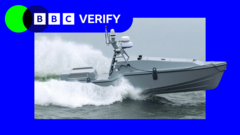
The extraction of two downed U.S. Army AH-64 Apache aviators off the coast of Oman shifts uncrewed surface vessels (USVs) from peripheral surveillance assets to core components of tactical combat search and rescue (CSAR). This deployment represents the first documented real-world execution of a Personnel Recovery (PR) mission via an autonomous surface platform. Moving beyond the speculative frameworks of defense technology marketing, this operation reveals the concrete mechanics of the Navy’s Task Force 59, the engineering design of Saronic Technologies’ Corsair platform, and the shifting economic and operational boundaries of contested maritime environments.
Traditional CSAR frameworks depend heavily on crewed rotary-wing or fast-surface craft. These choices introduce severe vulnerabilities when operating in anti-access/area-denial (A2/AD) sectors or during active kinetic escalations. Analyzing this specific operational pivot requires evaluating the precise tactical, technical, and strategic variables that enabled a 24-foot uncrewed vessel to execute a time-critical human recovery under hostile conditions.
The Operational Anatomy of the Hormuz Extraction
The timeline of the rescue operation highlights a tightly synchronized, multi-domain integration. It illustrates how uncrewed systems can bridge critical caps in situational awareness and response windows.
[00:00] Apache Impact -> [00:05] Automated Distress Signal / Last Known Position (LKP)
                                  |
                                  v
[00:15] Task Force 59 Dispatches Corsair USV (Contested Area Transit)
                                  |
                                  v
[02:00] 360-Degree Passive Sensor Acquisition -> Physical Recovery of Aviators
                                  |
                                  v
[02:30] Secondary Surface Transit -> Dynamic Manned-Unmanned Teaming (MUM-T) Hoist
Following the downing of the AH-64 Apache at approximately 7:30 PM local time, the combat search and rescue sequence faced immediate constraints: night visibility, high regional tensions, and proximity to hostile coastlines. The execution plan bypassed standard crewed surface insertion in favor of an uncrewed response model divided into four distinct phases:
- Phase 1: Localization and Dispatched Transit: Upon aircraft impact, an automated distress signal or Last Known Position (LKP) coordinate matrix was established by regional command elements. Task Force 59, operating from its forward posture in the U.S. Fleet Central Command/5th Fleet area of responsibility, redirected or dispatched a Corsair USV to the intercept grid.
- Phase 2: Sensor-Driven Target Acquisition: The primary bottleneck in night personnel recovery is localization within the water column. The vessel utilized a 360-degree passive sensing payload. This configuration relies on electro-optical/infrared (EO/IR) thermal signatures and passive radio frequency (RF) direction-finding rather than active radar, which would expose the craft's position to electronic warfare tracking.
- Phase 3: Autonomous Intercept and Physical Ingestion: The vessel closed the vector using onboard autonomous navigation software, mitigating regional GPS jamming via alternative positioning mechanisms. Upon reaching the aviators—approximately two hours post-crash—the hull design facilitated physical recovery from the water line into the vessel's payload bay.
- Phase 4: Manned-Unmanned Teaming (MUM-T) Offload: Rather than risking a long, slow transit back to a major naval base, the USV acted as an agile extraction buffer. It moved the recovered personnel out of the immediate threat envelope to a lower-risk maritime coordinate, where a crewed military helicopter executed a standard hoist operation for final medical transport.
The Engineering Profile of the Saronic Corsair
The success of the Hormuz extraction was directly tied to specific architectural trade-offs built into the Corsair platform. Developed by Austin-based Saronic Technologies, the vessel departs from conventional fiberglass leisure hull conversions, utilizing a purpose-built, diesel-powered speedboat architecture optimized for high-speed stability and significant payload capacity.
Platform Spec      Metric / Value
-----------------------------------------
Hull Length        24 Feet (7.3 Meters)
Propulsion         Diesel Internal Combustion
Top Speed          > 35 Knots
Total Range        > 1,000 Nautical Miles
Payload Capacity   1,000 Pounds (453.5 kg)
Control Topology   Hybrid (Autonomous Navigation / Remote Human Oversight)
The choice of a diesel internal combustion engine over electric propulsion is a deliberate engineering decision balancing range against energy density. Electric USVs provide low acoustic signatures but lack the high-sustained sprint speeds and long operational range required for rapid-response CSAR. The internal combustion drivetrain delivers the 35-knot capability needed to compress the rescue window down to two hours, while maintaining a 1,000-nautical-mile operational radius. This lets the craft remain on station for extended periods without immediate refueling.
The 1,000-pound payload threshold defines the platform’s multi-mission utility. In standard operations, this weight budget is allocated to modular intelligence, surveillance, and reconnaissance (ISR) suites, towed sonar arrays, or electronic warfare packages. In a personnel recovery context, this capacity allows the vessel to easily handle the weight of two fully equipped aviators, specialized medical or life-support gear, and secondary ballasting systems needed to maintain hydrodynamics when loaded.
The vessel's software architecture relies on a hybrid command-and-control framework. The platform does not rely on simple remote control, nor does it operate completely cut off from human oversight. Instead, its perception engine handles low-level obstacle avoidance, route optimization, and wave-compensation mechanics locally. This edge-computing capability keeps the vessel stable and on course even if its communication links are jammed. Higher-level tactical decisions, such as final approach alignment and the authorization to pick up personnel, are managed via encrypted satellite communication links by a remote human operator.
Tactical Advantages of Uncrewed Personnel Recovery
Deploying an autonomous asset into an active combat search and rescue scenario changes the traditional trade-offs between speed, safety, and mission success.
Flattening the Risk-Asymmetry Curve
In classic CSAR doctrine, the decision to launch a rescue asset requires balancing the value of the downed personnel against the potential loss of the rescue crew and their multi-million-dollar platform. Inserting a crewed helicopter or surface craft into an active threat envelope risks expanding the crisis if that second asset is also targeted. An uncrewed surface platform completely removes human risk from the recovery phase. If the platform is lost during transit, the cost is purely financial, preventing the political and operational complications of additional personnel capture or loss of life.
Sensor Elevation and Signature Minimization
Unlike large amphibious transport docks or guided-missile destroyers, a 24-foot low-profile hull presents a minimal radar cross-section (RCS) and a reduced visual profile. By utilizing passive sensing instead of active radiation emitters, the platform can slip through contested waters unnoticed. This allows it to search for survivors closer to shore-based anti-ship missile sites than a traditional crewed vessel would ever dare.
Logistic Efficiency and Distributed Posture
Crewed rescue vessels require ongoing life support, shift rotations, and large maintenance footprints, which limits how many can be deployed across a wide theater of operations. In contrast, autonomous platforms can be distributed across a broad geographic area at a fraction of the cost. Under the Pentagon’s Replicator initiative, these platforms are built to scale quickly. This enables a distributed defense posture where multiple low-cost autonomous hulls can keep watch over key chokepoints like the Strait of Hormuz, cutting down transit times when an aircraft goes down.
Constraints, Vulnerabilities, and Operational Limits
Autonomous personnel recovery offers clear tactical benefits, but it is not a flawless solution. System designers and theater commanders must account for several clear limitations built into current uncrewed surface technology.
The first limitation is the physical challenge of unassisted boarding in rough open water. While the Corsair successfully recovered the Apache aviators, this mission occurred under conditions where the personnel were conscious, stable, and capable of helping with their own extraction into the hull. Current autonomous systems lack the dexterous robotic arms or adaptive recovery mechanisms needed to retrieve an unconscious or severely injured person from high seas without a human swimmer in the water.
The second bottleneck is a high dependence on reliable long-range communications for command oversight. If an adversary deploys heavy, wide-spectrum electronic warfare and successfully cuts off satellite links, a human operator can no longer supervise the mission. While the onboard navigation software can safely guide the boat along a pre-programmed path or return it to base, executing a delicate, dynamic intercept of a human survivor in a changing current requires a high level of situational awareness that fully autonomous edge-AI systems cannot yet reliably deliver on their own.
Finally, the vessel's small 24-foot hull imposes clear aerodynamic and hydrodynamic limits. In sea state 5 or higher, where wave heights exceed eight feet, a small surface craft faces severe degradation in speed, sensor performance, and structural stability. Unlike large, crewed naval vessels that can plow through heavy seas, a small USV may find its transit times significantly delayed or its sensor arrays blinded by constant spray and violent hull movement.
Strategic Outlook and Production Requirements
The successful rescue near the Strait of Hormuz validates the rapid acquisition model used by the U.S. Navy. The transition of the Corsair from a startup prototype to an operational asset was accelerated by a $392 million production contract awarded in late 2025. This rapid rollout shows a clear shift away from traditional, decades-long defense procurement programs toward agile, software-defined hardware development.
To turn this successful deployment into a standard, scalable naval capability, defense planners must prioritize three clear operational steps:
- Standardize Dynamic MUM-T Hand-off Protocols: Naval commands need to formalize automated data-sharing links between airborne assets and surface USVs. This will allow a aircraft's onboard computer to automatically broadcast distress telemetry directly to the nearest uncrewed boat, cutting out human delays in the command chain.
- Develop Active Mechanical Recovery Payloads: Future hull variants must move beyond passive passenger bays. Engineering teams should design low-profile, automated ramps or semi-submersible retrieval cradles capable of securing injured or unresponsive personnel directly from the water column without requiring manual assistance.
- Deploy Mass Decoy and Escort Formations: In highly contested A2/AD zones, a lone rescue boat remains vulnerable to targeted counter-attacks. Commanders should deploy low-cost USVs in mixed groups, using decoy hulls that mimic the electronic signature of the rescue boat. This will confuse enemy tracking systems and protect the primary recovery asset during its mission.
The Hormuz Strait rescue is highly relevant to current defense strategy because it demonstrates the practical application of autonomous systems in high-stakes personnel recovery. For a deeper look into how uncrewed surface vessels and maritime AI units are changing modern naval operations, view this detailed breakdown on Task Force 59 autonomous operations.