The fluorescent lights of the supermarket aisle hum with a low, anxious frequency. Under that sterile glow, a father stands paralyzed. In one hand, he holds a box of neon-orange crackers; in the other, a bag of organic kale that costs more than his hourly wage. He isn't just shopping for snacks. He is looking for a miracle. He has heard the clips online, the charismatic voices promising that the right seed oil or the elimination of a specific dye will not only fix his daughter’s ADHD but perhaps rewind the clock on his own metabolic decline.
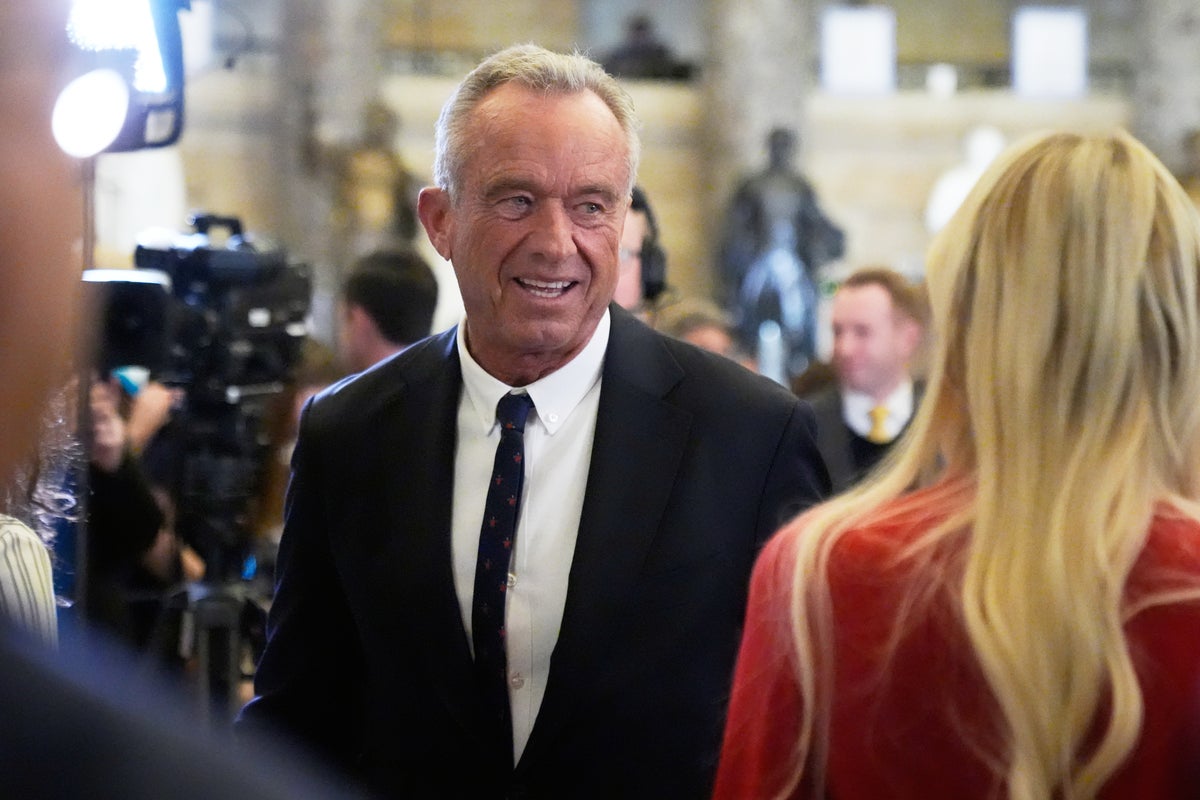
We are a nation starving for a savior, and Robert F. Kennedy Jr. has stepped into that hunger with the zeal of a prophet.
He speaks about food not as sustenance, but as a pharmaceutical intervention. He describes the American food system as a "mass poisoning." To a parent watching their child struggle, or a person feeling the sluggish weight of a Western diet, these words don't just resonate. They vibrate. They offer a clear villain—Big Food—and a seemingly simple solution: change the menu, change the world.
But science is rarely a straight line. It is a messy, sprawling web of caveats, control groups, and "maybe." When Kennedy claims that certain additives are the primary drivers of the autism epidemic or that switching to raw milk is a panacea for autoimmune disease, he is taking a grain of truth and stretching it until it snaps.
The Grain of Truth in the Field of Noise
The frustration is real because the problem is real. Our food system is broken. We are surrounded by ultra-processed calories designed by chemists to bypass our "fullness" sensors. This isn't a conspiracy theory; it’s a business model.
When a political figure stands on a stage and points to a bottle of Gatorade as if it were a vial of toxins, he is tapping into a profound, justified distrust of institutions. For decades, the food pyramid told us to load up on refined grains while the sugar industry funded studies to shift the blame for heart disease onto fat. People remember that. They feel the betrayal in their bones.
However, the leap from "processed food is suboptimal" to "food is a miracle drug that can cure incurable neurological conditions" is where the narrative shifts from advocacy to alchemy.
Consider a hypothetical woman named Elena. Elena has lived with Crohn’s disease for a decade. She is exhausted by the side effects of her biologics. When she hears a high-profile figure suggest that eliminating "poisonous" additives will put her into permanent remission, she doesn't see a scientific hypothesis. She sees an escape hatch. She might stop her medication. She might spend thousands on unverified supplements.
The stakes aren't just academic. They are biological.
The Myth of the Silver Bullet
The human body is an incredibly complex machine, governed by the laws of thermodynamics and biology. $E = mc^2$ governs the stars, but the laws of human metabolism are governed by thousands of intersecting variables.
One of the most frequent claims in this new "food as medicine" movement involves the impact of food dyes on childhood behavior. Kennedy and his allies often cite European studies as definitive proof that these chemicals are "poisoning" our children's brains. The reality? Meta-analyses of these studies show a small, statistically significant effect—but only in a subset of children who are already sensitive. It is a piece of the puzzle, not the entire picture.
By framing it as the only cause, we ignore the architectural stressors of modern life: the lack of sleep, the digital saturation, the loss of communal play. It’s easier to blame Red 40 than it is to fix a crumbling social fabric.
Then there is the crusade against seed oils. The narrative suggests that canola and soybean oils are the hidden engines of inflammation, responsible for everything from obesity to Alzheimer’s. If you spend five minutes on certain corners of the internet, you’d think a drop of seed oil was equivalent to a drop of mercury.
Yet, when you look at the longitudinal data—the boring, slow-moving studies that track thousands of people over decades—the evidence often points the other way. Linoleic acid, the primary fat in many seed oils, is frequently associated with lower risks of heart disease when it replaces saturated fats.
Why the disconnect? Because humans crave a protagonist and an antagonist. We want a "demon fat" to exorcise. We want to believe that if we just go back to tallow and butter, our arteries will clear like magic. It is a seductive story. It is also, for many, a dangerous one.
The Invisible Stakes of Certainty
When we treat food as a miracle drug, we inadvertently create a new kind of elitism. If health is purely a matter of "correct" eating, then illness becomes a moral failure. If you are sick, the logic goes, you simply haven't researched the right "clean" diet. You haven't tried hard enough to avoid the "toxins."
This ignores the brutal reality of food deserts. It ignores the fact that for a mother working two jobs, a five-dollar rotisserie chicken and a bag of frozen peas isn't a choice—it’s a survival strategy. When leaders overstate the science, they widen the gap between those who can afford "purity" and those who are left feeling like they are poisoning their families by necessity.
Science is a process of humility. It requires us to say, "The data is inclusive." Kennedy, however, speaks with the absolute certainty of a man who has found the secret key. This certainty is his greatest political asset and his greatest scientific liability.
He often speaks about the "toxic soup" of our environment. He isn't wrong that we are exposed to more synthetic compounds than our ancestors. But the dose makes the poison. This is the fundamental tenet of toxicology that often gets lost in the narrative.
$Dose = Concentration \times Exposure$
By stripping away the nuance of dosage, every chemical becomes a threat, and every meal becomes a minefield. This doesn't lead to health; it leads to orthorexia—an unhealthy obsession with healthy eating. It leads to a state of perpetual hyper-vigilance that is, ironically, incredibly inflammatory for the human nervous system.
The Lab and the Living Room
Imagine a researcher named Dr. Aris. She has spent twenty years studying the gut microbiome. She knows that fiber is crucial. She knows that polyphenols in berries can support cognitive function. She sees food as a powerful tool for prevention and management.
But when she hears a politician claim that a specific diet can "reverse" autism, she winces. She knows how hard it is to prove a single cause for a complex, polygenic condition. She knows that for every anecdote of a "miracle cure," there are thousands of families who tried the same diet and saw no change, only to be left with a sense of crushing guilt.
The danger of overstating the science isn't just that it’s factually incorrect. It’s that it erodes the very foundation of public trust. When the "miracles" don't manifest, people don't just stop believing in the politician. They stop believing in the science itself. They retreat further into silos of misinformation, convinced that everyone is lying to them.
We are living through a crisis of authority. The old gatekeepers have fallen, and in their place, we have the influencers of the "Wellness-to-Politics" pipeline. They look better than the doctors on TV. They speak with more passion than the bureaucrats at the FDA. They offer a vision of a world where you are in total control of your biology.
It is a beautiful dream. Who wouldn't want to believe that the cure for what ails us is sitting in the produce aisle?
But the truth is more demanding. Food is not a miracle drug. It is the fuel for a life that is affected by genetics, environment, stress, and luck. It is a cornerstone of health, but it is not the entire building.
When we strip away the hyperbole, we are left with a more modest, but more honest, reality. We need better regulations. We need to get the actual junk out of schools. We need to make fresh vegetables cheaper than a candy bar. These are boring, difficult, political tasks. They don't make for great 15-second clips. They don't promise a miracle.
But they are the only way we actually move the needle.
The father in the supermarket aisle finally puts the kale in his cart. He also puts in the crackers. He is doing his best in a system that makes "best" feel impossible. He doesn't need a prophet telling him his kitchen is a laboratory and his child is a chemistry experiment. He needs a world where the healthy choice is the easy choice, not a mystical one.
The hum of the lights continues. The miracles remain elusive. We keep searching, not for a drug, but for the truth—which is always quieter, and far more complex, than the slogans suggest.
Would you like me to look into the specific clinical studies regarding food additives and their documented effects on neurodiversity to see where the data actually stands?