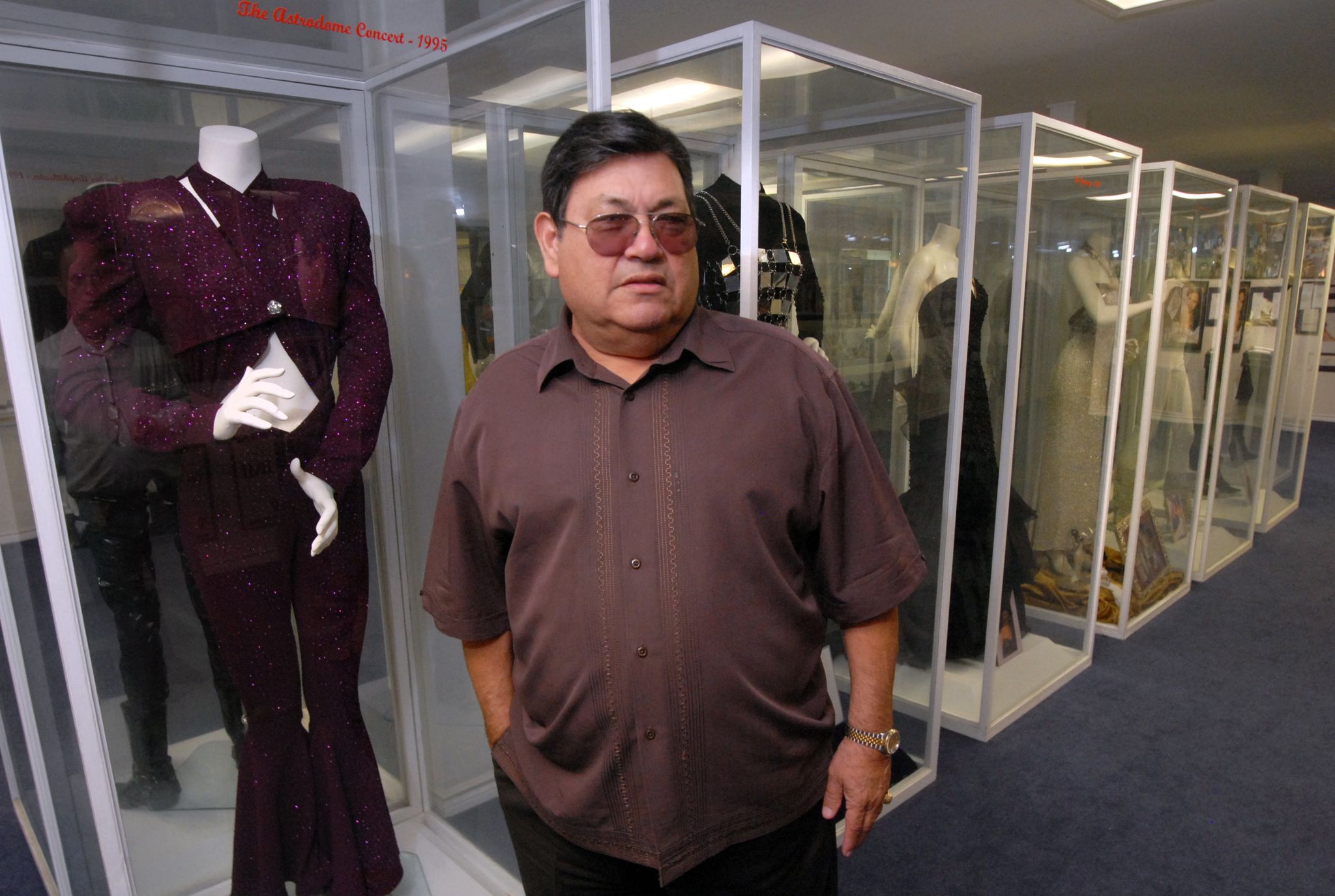
Stop checking the obituaries. Abraham Quintanilla is not dead.
The internet has a morbid obsession with burying the patriarch of the Selena empire every six months. It happens like clockwork. A poorly sourced blog posts a somber headline, a "Rest in Peace" graphic goes viral on Facebook, and suddenly the man who built a Tejano dynasty is being eulogized by people who couldn't name three songs off Entre a Mi Mundo.
This isn't just about a celebrity death hoax. It is about a fundamental failure in modern digital literacy and a desperate, parasitic need to keep the 1995 tragedy of Selena Quintanilla-Pérez on life support for clicks.
Abraham Quintanilla, at 86, remains a polarizing figure, a savvy businessman, and very much alive. To understand why the world is so eager to bury him—and why the media keeps "accidentally" doing it—we have to look at the machinery of the Selena industry and the psychological projection of a fanbase that hasn't moved on in thirty years.
The Architecture of a Death Hoax
Most people see a "Breaking News" post and react with emotion. I see a business model.
The "Abraham Quintanilla dies at 86" narrative is a masterclass in search engine manipulation. These articles aren't written by journalists; they are synthesized by scrapers designed to capture "high-intent" keywords. They bank on the fact that Abraham is of an age where his passing is statistically plausible.
By the time you realize the article is a shell of recycled biographical data from 1997, the site has already collected your ad impression.
I have seen media conglomerates burn through their credibility by chasing these "zombie stories" just to keep their traffic numbers from dipping on a slow Tuesday. It’s a race to the bottom where the prize is a 0.04% increase in click-through rate.
Why the Public Wants Him Gone (and Why They Don't)
Abraham Quintanilla is the ultimate Rorschach test for the Latino community.
To some, he is the visionary who navigated a racist music industry to put a Mexican-American girl on the global stage. To others, he is the "stage dad" archetype—controlling, litigious, and overly protective of a legacy that he treats like a corporate asset.
When a hoax goes viral, the comments section becomes a battlefield. You see the "lazy consensus" play out in real-time:
- The Mourners: People who equate Abraham with Selena and feel that losing him is losing the last physical link to her.
- The Critics: Those who have waited decades to call him out for his iron-fisted control over Chris Pérez or the constant re-releases of "new" Selena music.
The irony? Both groups are fueling the same engine. Whether you love him or hate him, you are engaged. And in the attention economy, engagement is the only currency that doesn't devalue.
Dismantling the "Greedy Father" Trope
The most common criticism leveled against Abraham—and the reason many are so quick to believe reports of his demise—is that he "exploits" his daughter’s memory.
Let's get one thing straight: Protecting an estate is not exploitation; it is fiduciary duty.
I’ve seen families lose control of their catalogs within twenty-four months of a tragedy because they were "too nice" or too disorganized to fight the labels. If Abraham Quintanilla hadn't been a litigious, stubborn, and uncompromising gatekeeper, Selena’s image would be on cheap energy drinks and third-rate NFT projects by now.
He didn’t just preserve a name. He preserved a brand's prestige.
- Fact: Abraham fought to keep the rights to Selena’s name and likeness when the industry standard was to sign them away forever.
- Fact: The Selena movie (1997) was produced specifically to prevent unauthorized biopics from tarnishing her story.
- Fact: Every legal battle with Chris Pérez or Mac Cosmetics was about maintaining a specific standard of quality and control.
Is it cold? Yes. Is it business? Absolutely.
The public wants their icons to be managed with "soul," but the music industry eats "soul" for breakfast. It only respects power. Abraham Quintanilla understood power before most of his critics were born.
The Truth About Aging in the Spotlight
When a public figure reaches their mid-80s, the media enters a "pre-need" phase.
Newsrooms have "canned" obituaries ready to go. They are sitting in content management systems, waiting for a single credible tweet to hit "Publish." The problem is that the line between "waiting for the news" and "manufacturing the news" has blurred.
Abraham has faced health scares. He has been open about his age. But the rush to pronounce him dead every few months is a symptom of a culture that values the speed of information over the veracity of it.
We are living in an era where "first" is more important than "right."
If you want to know if Abraham Quintanilla is actually dead, don't look at a trending topic. Look at Q-Productions. Look at the family’s official statements. If the people who actually own the rights to the news haven't said anything, your "source" is likely a bot in a server farm trying to sell you a VPN.
The Problem With "People Also Ask"
If you search for Abraham Quintanilla, Google will suggest: "How did Selena's dad die?"
The premise of the question is flawed. It assumes a death that hasn't happened. This is how misinformation becomes "truth" through sheer repetition. When the algorithm feeds the lie back to the user, the lie gains the authority of the machine.
We need to stop asking "How did he die?" and start asking "Why am I so eager to believe he did?"
The Cost of the Contrarian Stance
I’ll admit the downside to my perspective.
Defending a man who is often seen as the "villain" in the Selena narrative is not a path to popularity. It’s easier to join the chorus of people calling him a "money-hungry old man." It’s easy to wish for the end of an era so we can "free" the music from his grip.
But be careful what you wish for.
When the patriarch falls, the vultures circle. The "industry of eternal mourning" is currently held in check by a man who knows where every body is buried and which contracts have teeth. The moment Abraham Quintanilla actually passes, the battle for the Selena estate will make the current legal skirmishes look like a playground fight.
You think he's "exploiting" her now? Wait until a private equity firm buys the rights to her hologram.
The Reality Check
Abraham Quintanilla is 86. He is a Jehovah’s Witness. He is a musician. He is a father who buried his youngest child. He is also a human being who is currently breathing, thinking, and likely laughing at the latest round of internet trolls trying to claim his soul.
Stop participating in the death-hoax cycle.
It makes you a pawn in a low-level grift. It shows that you value the "shock" of a headline over the reality of a human life. If you want to honor Selena, listen to the music. If you want to talk about Abraham, talk about his actual impact on the music industry—not his fictionalized expiration date.
The man isn't going anywhere until he's ready. And even then, he’ll probably have a contract in place to make sure the transition is handled exactly the way he wants.
Check your sources. Verify the timestamp.
Stop burying the living just because you’re bored.