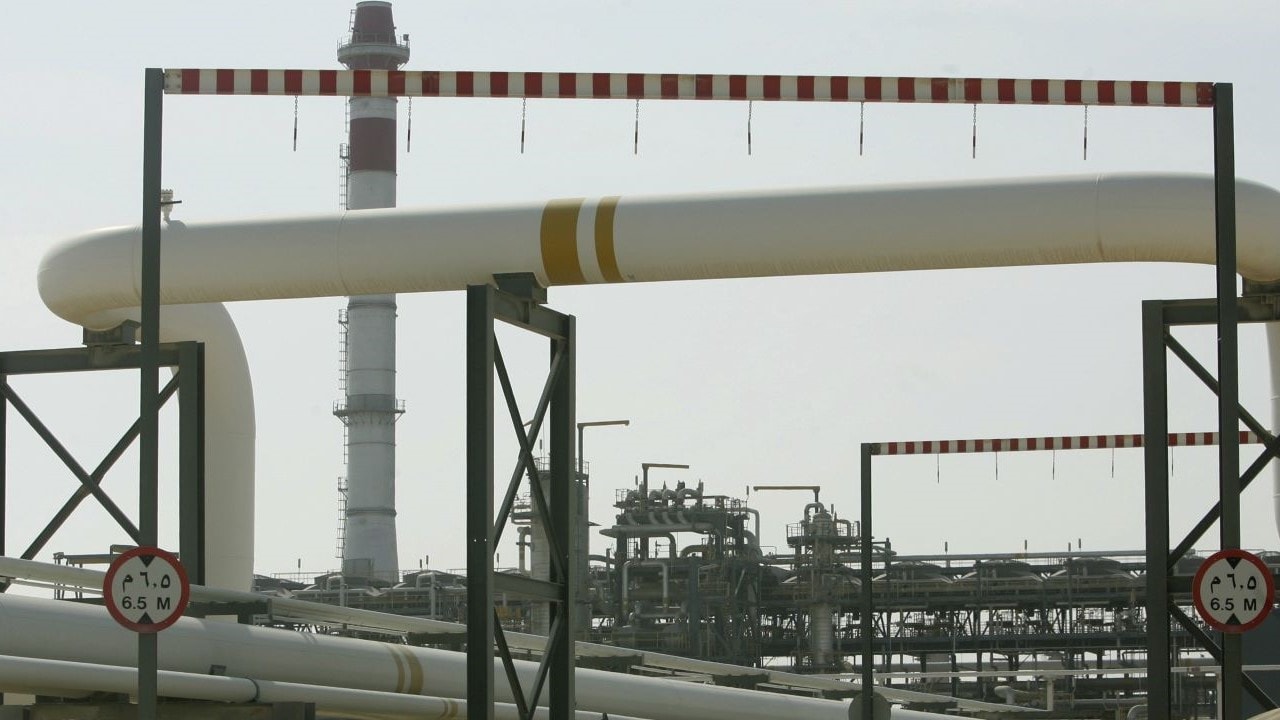
The United States Treasury Department just issued a directive to the American banking sector that fundamentally shifts the burden of national security from the Pentagon to the compliance desk. On May 11, 2026, federal regulators ordered financial institutions to dismantle what is now being called the Iranian Shadow Banking Network, a sophisticated, multi-layered financial infrastructure that processed an estimated $9 billion in illicit transactions in the last year alone. This is not a simple warning about bad actors; it is an admission that the global financial system has been effectively weaponized by Tehran to bypass the most aggressive sanctions regime in history.
The Financial Crimes Enforcement Network (FinCEN) directive targets the Islamic Revolutionary Guard Corps (IRGC) and its mastery of "Economic Fury" countermeasures. While the public focus often remains on drones and ballistic missiles, the real war is being fought through correspondent accounts and shell companies in Hong Kong, the UAE, and Singapore. The Treasury’s latest move essentially deputizes every bank clerk in America, demanding they flag specific, granular red flags that were previously the domain of intelligence agencies.
The Architecture of Evasion
To understand why the Treasury is taking this step now, one must look at the sheer scale of the bypass. Iran does not simply "sneak" money; it operates a parallel economy. This shadow system relies on exchange houses and front companies that masquerade as legitimate commercial entities.
The mechanism is deceptively simple. A shell company based in a jurisdiction like the UAE or Hong Kong opens an account with a local bank. That local bank maintains a correspondent account with a major U.S. financial institution to settle dollar-denominated transactions. The U.S. bank sees a transfer from "Sunrise Global Trading" for spare tractor parts, when in reality, that money is the proceeds from a "Malaysian blend" oil shipment destined for a private refinery in Asia.
This isn't theory. FinCEN’s latest trend analysis identified that shell companies—entities with no physical footprint or verifiable business activity—moved $5 billion in 2024 alone. Most of these funds originated from China-based non-resident accounts. By the time the money hits the U.S. system, the Iranian origin has been scrubbed through three or four layers of corporate obfuscation.
The Malaysian Blend Deception
A significant portion of the Treasury’s alert focuses on the "Shadow Fleet." These are aging, de-flagged tankers that engage in ship-to-ship (STS) transfers in the dark. To the casual observer, the oil arriving in international ports is labeled as being of Malaysian or Omani origin. In reality, it is Iranian crude that has been mixed or simply relabeled during a midnight transfer in the Malacca Strait.
Banks are now being told to look past the shipping manifest. They are expected to scrutinize:
- Missing IMO numbers: Vessels that turn off their transponders to hide their location.
- Falsified Port of Origin: Documents that claim a ship loaded in a port it never actually visited.
- New Entities, Huge Volume: Companies that were formed months ago but are suddenly processing $50 million transactions.
This level of due diligence is an enormous operational burden. Most mid-sized banks lack the maritime intelligence tools to track "dark" tankers in real-time. By demanding this level of scrutiny, the Treasury is signaling that "I didn't know" is no longer a valid legal defense.
The Crypto Impasse and Stablecoin Stability
The directive also highlights a massive spike in the use of digital assets. While Bitcoin gets the headlines, the IRGC has increasingly favored stablecoins. The reason is utility. Stablecoins provide the liquidity and exchange rate stability required for large-scale industrial procurement without the volatility of traditional cryptocurrencies.
In 2024, nearly $500 million in regime-linked cryptocurrency was frozen, yet this is likely a fraction of the total flow. The IRGC uses stablecoins to settle accounts with foreign suppliers who are too risk-averse to take Iranian Rials but are happy to accept digital dollars that can be off-ramped into local currency in a third-party jurisdiction. The Treasury is now pushing banks to monitor "nested" exchanges—smaller, often unregulated crypto platforms that use larger, regulated banks to move their fiat liquidity.
The Secondary Sanctions Threat
The most "hard-hitting" aspect of this new policy is the explicit threat of secondary sanctions. In April 2024, the Treasury sent letters to financial hubs in China, Oman, and the UAE. The message was blunt: facilitate Iranian trade and you lose access to the U.S. dollar.
This is the "nuclear option" of financial diplomacy. If a major bank in Dubai or Hong Kong is hit with secondary sanctions, it can no longer clear payments through New York. It effectively becomes a financial pariah. For these institutions, the choice is becoming binary. They can either continue to profit from the lucrative Iranian shadow trade or remain part of the global financial elite. They cannot do both.
The IRGC’s financial facilitators are not thugs in uniform; they are sophisticated accountants and lawyers. They know the Bank Secrecy Act better than many Western compliance officers. They use "smurfing"—breaking large transactions into smaller amounts to avoid triggers—and leverage complex trust structures that hide the ultimate beneficial owner (UBO).
The High Cost of Vigilance
Critics of this "Economic Fury" approach argue that it places an unsustainable burden on the private sector. When the government "deputizes" banks, it forces them to hire thousands of compliance officers and invest millions in AI-driven monitoring software. These costs are ultimately passed down to the consumer. Moreover, it risks "de-risking"—where banks simply stop doing business in entire regions (like the Middle East or Central Asia) because the compliance headache isn't worth the profit.
However, the Treasury’s position is that the risk of a nuclear-armed or militarily resurgent Iran is far more costly. The $4 billion in oil revenue disrupted last year directly translates to fewer resources for regional proxies and missile development.
Banks must now adopt a more aggressive stance, moving beyond "Know Your Customer" (KYC) to "Know Your Customer's Business" (KYCB). This involves verifying that the goods being shipped actually match the company’s stated purpose and that the price of those goods isn't being artificially inflated or deflated to hide a money transfer—a tactic known as Trade-Based Money Laundering (TBML).
The era of passive compliance is over. The Treasury has made it clear that the financial system is the primary battlefield. Banks that fail to identify the "Malaysian Blend" or the Hong Kong shell company aren't just facing a fine; they are being accused of enabling a hostile state’s military expansion. The directive is a demand for a total audit of global correspondent banking, and the fallout will likely redefine international trade for the next decade.
Financial institutions must immediately re-calibrate their automated monitoring systems to include the specific IRGC red flags outlined by FinCEN. This includes auditing all transactions involving "high-risk" maritime hubs and scrutinizing any entity that has appeared in the system only after the 2025 "Maximum Pressure" announcement. The margin for error has disappeared.