The air inside a modern kitchen is heavy with invisible ghosts. Right now, as you read this, millions of microscopic fungi are drifting past your face, settling on your countertops, and tumbling into your flour bins. They are wild yeasts, the evolutionary descendants of organisms that learned to love human starchy waste around the time we stopped wandering and started planting. We mostly ignore them. We buy neat, uniform little foil packets of tan granules from the supermarket—industrialized, monocultured Saccharomyces cerevisiae—and we expect our bread to rise on a strict, predictable schedule.
But predictability is a modern luxury. It is also a bit of a lie. Meanwhile, you can explore similar stories here: Why Michelle Obama Was Right About What Real Success Looks Like.
A few years ago, a microbiologist and an adventurous baker decided to look backward. They didn't just look back a generation or two, past the invention of commercial sliced bread. They looked back fifty centuries, straight into the frozen heart of the Alps, to find a organism that had been sleeping since before the pyramids were even a blueprint.
What they discovered wasn't just a scientific novelty. It was a living bridge to a forgotten human reality, proving that while empires crumble and glaciers melt, the simplest bonds of survival remain unbroken. To see the complete picture, we recommend the recent report by Apartment Therapy.
The Body in the Ice
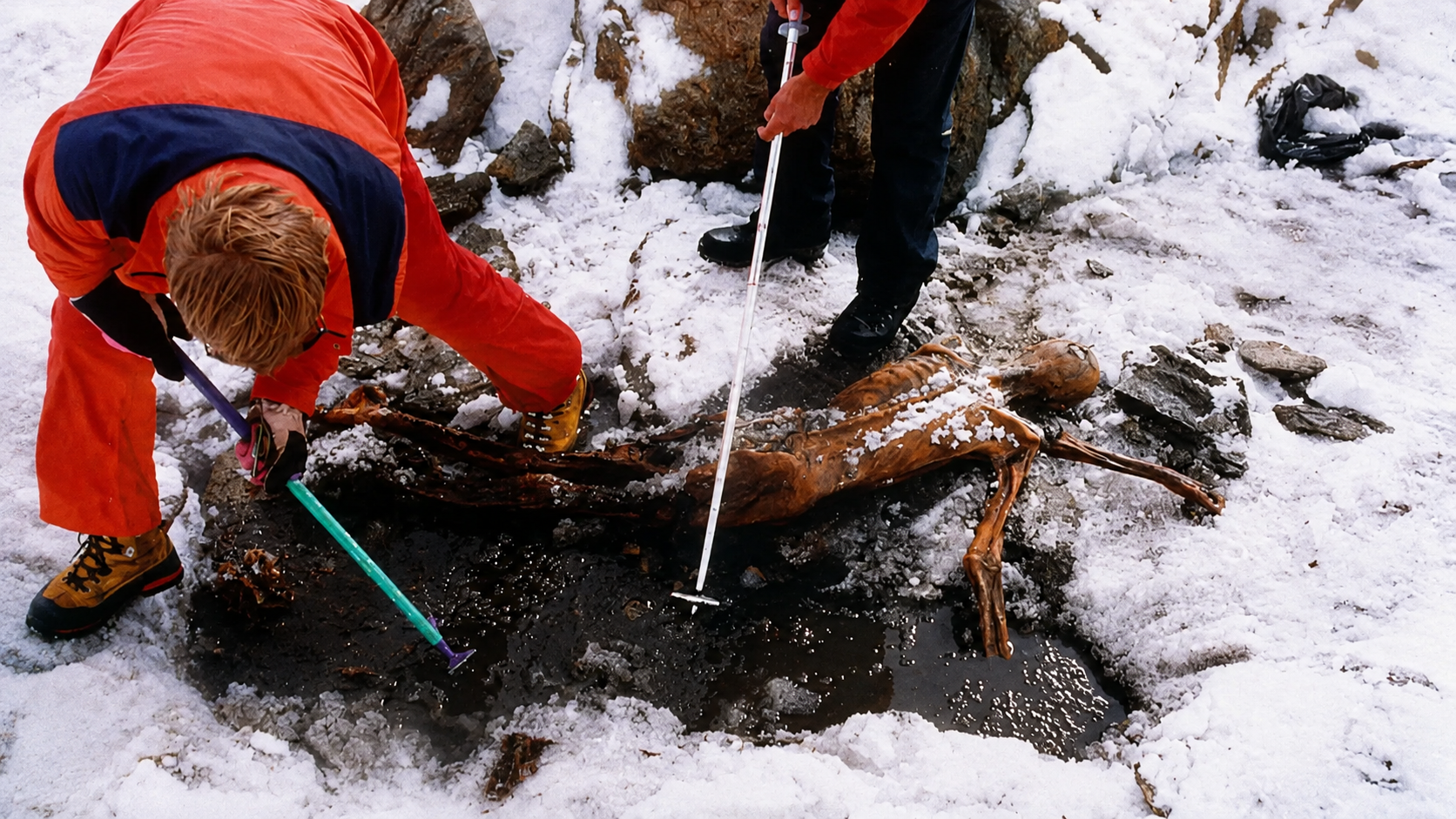
In 1991, two German tourists walking in the Ötztal Alps stumbled upon a corpse melting out of the glacier. This wasn't a recent hiker who had lost their footing in a blizzard. This was Ötzi, a man who had lived, hunted, fought, and died around 3300 BCE.
He was perfectly preserved by the cold. His leather shoes, his copper axe, his tattoos, and even the un-digested remnants of his last meal—ibex meat and ancient einkorn wheat—were intact.
To the public, Ötzi was a macabre museum exhibit. To scientists, he was a time capsule. Every square millimeter of his mummified skin and clothing held biological data from a pristine world, unmarred by industrial pollution or modern antibiotics.
And tucked away within the microscopic crevices of his gear, preserved by the same sub-zero temperatures that saved his tissues, were wild yeast spores.
Spores are nature’s ultimate survival vaults. When conditions turn hostile, certain microorganisms shut down their metabolism entirely. They dry out. They harden their outer walls. They enter a state of suspended animation so profound that the concept of time ceases to apply to them. They do not age; they merely wait.
For 5,300 years, while human history raged on—while Rome rose and fell, while the printing press was invented, while concrete highways paved over ancient forests—those specific spores sat in total darkness, encased in ice.
The Resurrection in the Lab
The process of waking something that has slept since the Bronze Age is a nerve-wracking exercise in patience and absolute sterility. You cannot simply scrape an ancient artifact, throw the dust into a bowl of warm water, and hope for the best. If you do, the aggressive, hyper-evolved yeasts of the 21st century will colonize the bowl in minutes, choking out the ancient strain before it can even blink.
Scientists working with the recovered samples had to create a hyper-isolated environment. They prepared a sterile broth, a nutrient-rich bath designed to mimic the exact sugars a primitive yeast cell would crave upon waking.
Imagine the tension in that laboratory. A researcher peers through a microscope at a tiny, shriveled speck. It looks dead. It looks like dirt.
They introduce the moisture. They raise the temperature to a gentle, welcoming warmth.
An hour passes. Then two.
Then, a miracle of biology occurs. The cell walls absorb the water. The internal machinery, dormant for millennia, begins to click back into place. Enzymes catalyze. DNA uncoils. The cell stretches, expands, and consumes its first meal in five thousand years.
It divides. One cell becomes two. Two become four.
It was alive.
But surviving in a petri dish is one thing. Doing the work it was born to do is quite another. To truly understand what this organism was, the scientists needed to hand it over to someone who spoke the ancient language of fermentation. They needed a baker.
The Tactile Truth of Flour and Water
When you bake a loaf of sourdough bread, you are not just following a recipe. You are managing an ecosystem. A traditional sourdough starter is a symbiotic community of wild yeasts and lactic acid bacteria. The yeast eats the carbohydrates in the flour and burps out carbon dioxide gas, which gets trapped in the dough’s gluten matrix and makes it rise. The bacteria eat the leftovers and produce acids, giving the bread its signature tangy flavor.
When the ancient yeast strain was delivered to the test kitchen, the atmosphere was thick with skepticism. Wild yeasts are notoriously fickle. Some produce terrible, bitter flavors. Others lack the strength to lift heavy dough, resulting in dense, brick-like loaves.
The baker mixed the thawed, revived yeast with water and an ancient grain flour—einkorn, the very same grain found in Ötzi’s stomach.
Nothing happened for hours.
The kitchen grew quiet. Anyone who has ever tried to cultivate a sourdough starter knows the specific anxiety of staring at a bowl of gray sludge, wondering if you’ve killed the magic before it even started. The modern mind wants speed. We want the rapid, explosive rise of engineered instant yeast. This ancient organism, however, operated on a different clock. It was adapted to a world that moved at the speed of walking.
But then, around the fifth hour, a tiny bubble broke the surface of the dough.
Then another.
A faint, sweet, strangely fruity aroma began to drift through the room. It didn't smell like a modern bakery. It smelled deeper, earthier, with notes of apple cider and damp earth. The dough was alive, stretching its limbs, filling the bowl with thousands of tiny pockets of ancient air.
The First Bite Across Millennia
Baking the loaf is the moment of truth. The heat of the oven expands the gas bubbles one final time before the proteins set, locking the structure in place. It is also the moment that kills the yeast. The very organisms that spent 5,300 years waiting in the ice give their lives to create the bread.
The oven door opened, and out came a dark, blistered, rustic boule.
Letting a loaf like that cool is an exercise in agony. You have to wait for the internal steam to settle, or the crumb will become gummy. When the knife finally sliced through the crust, the sound was a sharp, satisfying crack.
The interior was beautiful—open, airy, and holding its shape perfectly. The scientists and bakers gathered around, broke off pieces, and tasted it.
It wasn't just edible. It was spectacular.
The flavor profile was complex, lacking the sharp, vinegar-like bite of some aggressive modern sourdoughs, opting instead for a mellow, nutty richness with a distinct, clean sweetness. It tasted like survival. It tasted like the meals shared around open fires before written language existed.
Why the Old Ways Matter
It is easy to dismiss an experiment like this as a gimmick. After all, we have plenty of bread. We aren't hurting for yeast.
But there is a deeper vulnerability we rarely talk about in our modern food systems. By outsourcing our food creation to industrial laboratories and monocultures, we have drastically narrowed the genetic diversity of what we consume. If a disease or a sudden climate shift sweeps through our standardized crops or our industrialized yeast strains, the system shatters.
Ancient organisms carry genetic secrets. They lived through different epochs, endured different stresses, and adapted to environments we can barely comprehend. By waking them up, we aren't just playing mad scientist; we are retrieving lost data. We are diversifying our biological portfolio.
Consider what happens next: as we look forward to an uncertain future with shifting climates and unpredictable agricultural challenges, the answers might not lie in creating something entirely new. They might lie in remembering what we used to know.
The bread baked from Ötzi’s yeast is gone now, eaten by a handful of lucky researchers in a moment of profound historical connection. But the lineage remains. The spores are awake, reproducing, and eating. They remind us that our ancestors weren't primitive strangers; they were humans who figured out how to harness the invisible forces of the world to feed their children.
Next time you pull a loaf of bread from your oven, look at the bubbles in the crumb. Think of the millions of tiny lives that worked to lift that dough. And remember that somewhere, buried deep under ice or floating in the air around you, the past is always waiting for a little warmth and water to start all over again.