The headlines are bleeding with manufactured outrage. FIFA is hiking the price of its "best available" seats for the World Cup Final to $32,970, and the internet is doing exactly what it was designed to do: whine about the "death of the beautiful game." They call it greed. They call it the end of accessibility. They call it a slap in the face to the "real" fans.
They are wrong. In other news, take a look at: Why Iran just hijacked its own oil and what it means for your wallet.
In fact, they are fundamentally misunderstanding the basic mechanics of global asset valuation. If you think $33,000 for the pinnacle of human sporting achievement is a "robbery," you haven’t been paying attention to the secondary market, the cost of vanity, or the simple math of scarcity.
FIFA isn't being greedy. They’re finally becoming honest. Investopedia has provided coverage on this critical subject in great detail.
The Myth of the Everyman Final
Let’s kill the biggest lie first: the idea that the World Cup Final was ever for the "average Joe."
Since the turn of the century, the final match has been a corporate gala masquerading as a soccer game. The "true fans"—the ones who paint their faces and scream for ninety minutes in the rain—have been priced out of the premium tiers for decades. The difference is that previously, the profit went to scalpers, shady brokers, and "concierge" services.
When a ticket is artificially priced at $2,000 but carries a market value of $25,000, you haven't helped the fan. You’ve just created a $23,000 arbitrage opportunity for a middleman in a suit. FIFA’s price hike isn’t creating a barrier; it’s capturing the value that was already being spent.
Pricing for the Top of the Pyramid
We are talking about "Category 1" and high-end hospitality. These are not the nosebleeds. This is the velvet rope.
In any other industry, we accept the existence of the Veblen good—a product where high prices actually increase demand because they signal status. A Birkin bag, a Gulfstream flight, a front-row seat at the Met Gala. Why should the most-watched event on the planet be any different?
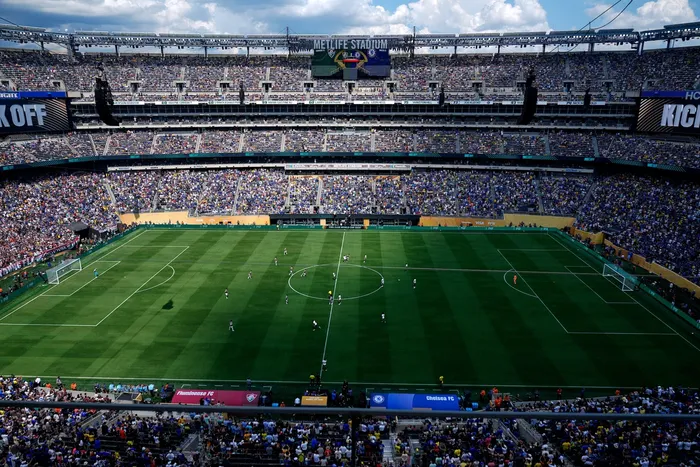
The World Cup Final happens once every four years. It is the literal definition of a finite resource. There are roughly 80,000 seats in a flagship stadium, and there are roughly 2,600 billionaires on Earth, along with 60 million millionaires.
Do the math. $32,970 is a rounding error for the target demographic. By setting the price this high, FIFA is effectively saying: "If you want to sit in the throne room, pay the royal tax."
The Subsidy Defense
Here is the part the critics ignore because it doesn’t fit the "Evil FIFA" narrative: high-end price gouging is the only way to keep the cheap seats cheap.
The revenue generated from a single $33,000 hospitality package can subsidize dozens of Category 4 tickets for local residents. In previous tournaments, Category 4 tickets were sold for as little as $11. You don't get the $11 ticket without the $33,000 ticket.
If FIFA flattened the pricing—say, making every seat $1,000—they would simultaneously make the game unaffordable for the working class and leave billions of dollars on the table that would otherwise be reinvested into global football development.
Is FIFA a flawless non-profit? Don’t be naive. But their pricing strategy follows the airline model. The guy in 1A paid for the fuel so the person in 34F could afford the flight.
The Secondary Market Shadow
If you think $32,970 is high, go look at the resale prices for the 2024 Super Bowl or the 2023 Champions League Final.
On the "black" or secondary market, prices for the World Cup Final regularly touch six figures for premium views. When the "official" price is too low, it creates a vacuum. Professional ticket-bot operations swoop in, drain the inventory, and flip the seats on platforms where the buyer has zero protection.
By raising the floor of the ceiling, FIFA is reclaiming control of the ecosystem. It’s a direct strike at the parasitic resale industry. I’ve seen sports franchises try to "fight for the fans" by keeping prices low, only to watch their season ticket holders turn into amateur scalpers the second a playoff run starts.
High primary prices ensure that the person sitting in the seat is the person who actually paid the organization for it.
The Value of the Moment
People spend $50,000 on watches that tell the same time as an iPhone. They spend $100,000 on bottles of fermented grape juice in Vegas clubs.
The World Cup Final is a cultural apex. It is a "where were you when" moment for four billion people.
To suggest that a seat at this table should cost the same as a mid-tier family vacation is an insult to the scale of the event. We are witnessing the professionalization of sporting luxury. The outrage isn't about the money; it's about the discomfort of seeing the wealth gap rendered in a seating chart.
The Logic of the Flex
Let’s look at the actual "best available" package. We aren't talking about a plastic folding chair. This is the "Match Hospitality" tier. It includes:
- Pre-match gourmet dining.
- Champagne and premium spirits.
- The best sightlines in the stadium.
- Parking and "fast-track" entry.
- Commemorative gifts.
In the context of high-end corporate entertaining, $33,000 is a bargain. To take a C-suite executive or a high-net-worth client to the World Cup Final is a power move that pays for itself in a single signed contract.
The Real Problem Nobody Mentions
If you want to be mad at FIFA, stop talking about the $33,000 tickets. Talk about the logistics. Talk about the bidding process. Talk about the fact that "Category 1" seats are often given away to sponsors who don't even show up, leaving visible empty patches in the stadium while "real fans" watch from bars outside.
The pricing isn't the scandal. The allocation is.
If FIFA actually auctioned off every single seat to the highest bidder, the price for the final would likely average $15,000 across the entire stadium. By keeping "standard" tickets at a few hundred dollars, FIFA is actually performing a massive act of price suppression.
Stop Crying and Start Counting
The $32,970 ticket is a lightning rod. It’s designed to be talked about. It gives the media something to chew on while the rest of the business machine hums along.
But from a purely clinical business perspective, FIFA is still undercharging. As long as there is a waiting list for these packages—and there is—the price is below market equilibrium.
The "beautiful game" hasn't been sold out. It’s been appraised. And it turns out, it’s worth a hell of a lot more than you’re willing to admit.
If you can’t afford the $33,000 seat, don't worry. The view from the $200 seat is almost as good, and you’ll be surrounded by people who actually care about the score, not the networking. But stop pretending that FIFA is the villain for realizing that a front-row seat to history is a luxury good.
Economics doesn't care about your nostalgia. Supply is one. Demand is eight billion. $33,000? That's a discount.