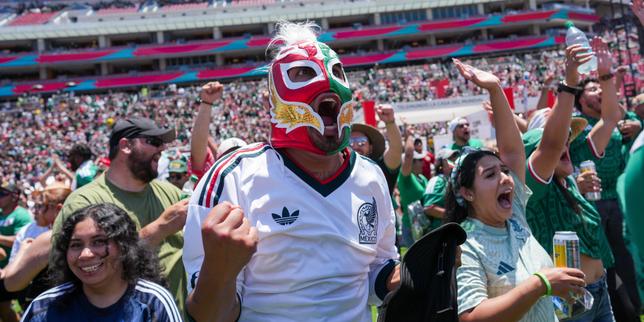
The global sports media is collectively swooning over pictures of Mexico facing South Africa to kick off the 2026 World Cup. They are selling you a beautifully packaged lie.
Look at the glossy photo galleries. Read the breathless commentary celebrating a "historic remix" of the famous 2010 opening match. The mainstream sports press wants you to believe that this fixture is a poetic, high-stakes clash dripping with football romance. It is a manufactured narrative designed to mask a structural problem.
The lazy consensus treats World Cup opening matches as sacred spectacles. In reality, they have devolved into over-hyped marketing exercises that actively damage the tactical quality of the tournament from day one. Wrapping this match in 2010 vuvuzela nostalgia ignores how vastly different the modern international game is, and how the bloated 48-team format has diluted the premium nature of the group stage.
Stop looking at the pretty pictures. Let us dismantle what is actually happening on the pitch.
The First-Match Paralysis is Real
Every tactical analyst who has spent time embedded with national teams knows the terrifying weight of the opening game. The media frames it as a springboard. The reality is a prison of risk aversion.
When you analyze opening matches across the last thirty years of international football, a definitive pattern emerges. Teams do not play to win; they play to avoid a catastrophic psychological collapse. The data shows that losing the opening match of a World Cup reduces a team's statistical probability of advancing to the knockout rounds by over 70%.
What does this mean for the viewer?
- Low-Block Suffocation: Managers deploy ultra-conservative mid-blocks, refusing to commit fullbacks forward.
- Artificial Intensity: High running stats in the first twenty minutes that mask a complete lack of progressive passing.
- Set-Piece Reliance: Teams stop trying to break opponents down through open play, playing exclusively for corners and cheap fouls.
The 2010 match that everyone views through rose-tinted glasses was actually a tense, error-strewn affair punctuated by one moment of individual brilliance from Siphiwe Tshabalala. Replaying that fixture in 2026 under the immense pressure of an expanded tournament does not guarantee a classic. It guarantees a chess match played by two grandmasters who are terrified of moving their pawns.
The Flawed Premise of Group Stage Urgency
People constantly ask how a team should approach a World Cup opener. The standard answer from talking heads is: "You must treat it like a final."
That advice is completely wrong. It is mathematically illiterate in the context of the new 48-team format.
With the introduction of twelve groups of four, where the eight best third-place teams also advance, the entire strategic framework of the group stage has shifted. You no longer need to storm out of the gates to guarantee survival. A calculated, boring draw in your opening match is structurally worth more than ever before because it denies a direct group rival three points while keeping your defensive goal differential pristine.
The New Math of Survival
Imagine a scenario where a manager instructs his team to press high and hunt for a glorious three-point statement win in the opening match, precisely what the media demands. They get caught on the counter, lose 2-0, and find their goal differential wrecked. In a 48-team tournament, that aggressive pursuit of entertainment is functionally a suicide pact.
The elite modern managers—the tacticians who actually win tournaments rather than just trending on social media—understand that the group stage is now an exercise in energy conservation and risk management. They are preparing their squads for a grueling, seven-week marathon. Expecting a high-octane, visually stunning epic in the opening game ignores the brutal physical reality of modern sporting workloads.
Nostalgia is the Ultimate Analytical Blindspot
The media relies on imagery from past tournaments because it is easy content. It evokes an emotional response that bypasses critical thinking.
Citing the spirit of Johannesburg or invoking the ghosts of previous tournaments is a lazy substitute for analyzing the actual tactical matchups on the field. Mexico and South Africa in 2026 are entirely different sporting entities compared to their 2010 incarnations.
Mexico is navigating a complex generational transition, grappling with structural shifts in Liga MX and the pressure of co-hosting. South Africa's tactical setup relies on rigid domestic club syndicates that operate on entirely different mechanical principles than the squad of a decade ago.
When an article focuses heavily on the "magic of the rematch," it is because the authors have not bothered to analyze the passing networks, the pressing triggers, or the defensive transitions of the current squads. They are selling you a ghost story.
The Cost of the Spectacle
There is a downside to taking this contrarian, analytical view. It strips away the casual joy of being a fan. It forces you to watch a match not as a festival of color and sound, but as a cold battle of space optimization and physical fatigue.
If you want to consume football as pure entertainment, stick to the photo galleries. Enjoy the pre-match ceremonies, the celebrity sightings in the luxury boxes, and the superficial statistical trivia.
But if you want to understand where international football is actually heading, you have to look past the glare of the stadium lights. The opening match of the 2026 World Cup is not the start of a beautiful footballing romance. It is the opening gambit of a cold, calculated, corporate war of attrition where the primary objective is survival at the expense of spectacle.
Stop buying the hype. Watch the spaces, not the faces.