The projection of a $200 billion price tag for a potential military engagement with Iran serves as a baseline fiscal metric, but the true analytical challenge lies in the decomposition of that figure into operational sustainment, munitions depletion rates, and the systemic risk to global energy logistics. A conflict of this scale is not a static budgetary event; it is a dynamic resource consumption model where the primary drivers of cost are determined by the density of the adversary’s anti-access/area denial (A2/AD) capabilities and the subsequent requirement for high-end precision-guided munitions.
The Architecture of Escalation Costs
The fiscal requirements of a major theater operation (MTO) in the Middle East are dictated by three primary cost centers: initial suppression of enemy air defenses (SEAD), sustained maritime security in the Strait of Hormuz, and the long-term replacement of expended capital assets. Traditional "boots on the ground" calculations are secondary to the initial expenditure of high-cost standoff weaponry. For an alternative perspective, see: this related article.
- Precision-Guided Munition (PGM) Attrition: Modern conflict requires an immediate and massive expenditure of Tomahawk Land Attack Missiles (TLAMs) and Joint Direct Attack Munitions (JDAMs). At a unit cost exceeding $2 million for certain cruise missile variants, a week of intensive strikes can deplete a significant percentage of annual procurement budgets.
- The Carrier Strike Group (CSG) Burn Rate: Operating a single CSG in a high-threat environment involves not just the $7 million daily operational cost of the carrier itself, but the massive logistical tail required to keep the escort destroyers and cruisers armed and fueled.
- Cyber and Electromagnetic Spectrum Operations: Iran’s asymmetric capabilities require a continuous defensive posture in the digital realm. Hardening regional infrastructure against retaliatory cyber strikes represents a hidden, non-kinetic cost that often bypasses traditional defense appropriations but remains essential for domestic stability.
The Strait of Hormuz Bottleneck and Energy Arbitrage
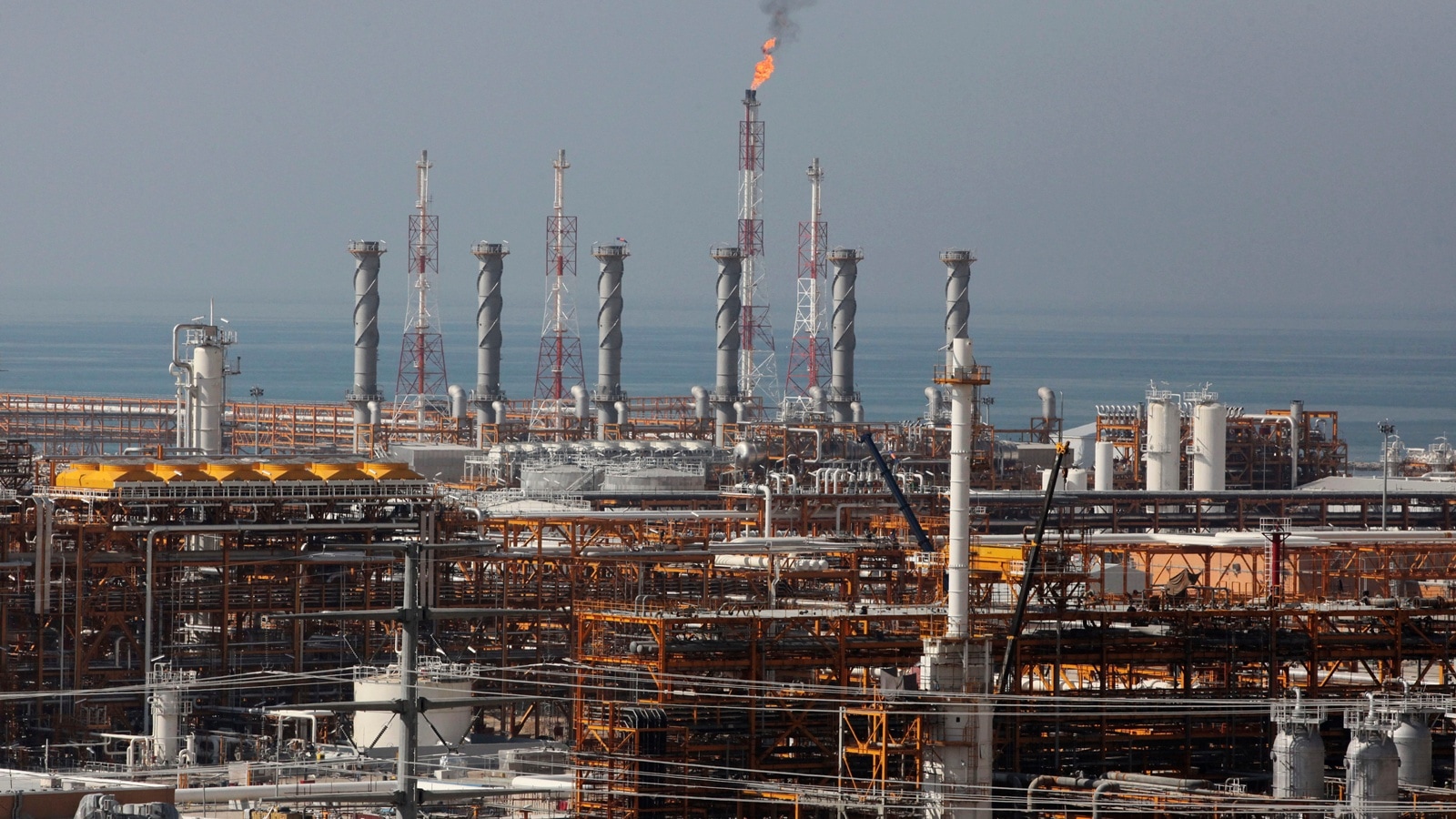
Economic warfare is the primary multiplier of the $200 billion estimate. Because approximately 20% of the world’s petroleum liquids pass through the Strait of Hormuz, any kinetic activity in the Persian Gulf triggers an immediate spike in insurance premiums for commercial shipping and a subsequent volatility in global oil prices.
The cost of the war is therefore not limited to the Department of Defense budget. It extends to the global GDP impact of a sustained $150+ per barrel oil price. The strategic logic of the adversary relies on this "pain threshold." By threatening the flow of energy, they shift the cost-benefit analysis of the Western coalition from a military problem to a political and macroeconomic crisis. Similar reporting on the subject has been provided by USA Today.
Asymmetric Defense and the Cost-Exchange Ratio
A fundamental flaw in large-scale military budgeting is the failure to account for the unfavorable cost-exchange ratio in modern asymmetric warfare. A $2 million interceptor missile (such as the SM-2 or SM-6) is frequently used to down a "one-way attack" (OWA) drone that costs less than $30,000 to manufacture.
- Financial Disparity: If the adversary launches 500 low-cost drones, the defensive expenditure exceeds $1 billion in interceptors alone.
- Production Latency: Unlike the adversary’s ability to mass-produce simple suicide drones, the lead time for sophisticated air defense missiles is often measured in years. This creates a "kinetic bankruptcy" where the defending force runs out of ammunition long before the attacking force runs out of targets.
- Asset Degradation: Continuous high-tempo operations accelerate the maintenance cycles of airframes and naval vessels. The $200 billion figure rarely accounts for the accelerated "death spiral" of aging equipment that will require premature retirement or billion-dollar overhauls following the conflict.
The Logic of Preemptive Deterrence
The argument for a massive upfront investment—the "money to kill bad guys" philosophy—rests on the premise that overwhelming force at the outset reduces the duration of the conflict, thereby lowering the total lifecycle cost. This is the "Force Multiplexer" hypothesis. If $200 billion buys a decisive, three-week campaign that disables the adversary's command and control (C2), it is technically "cheaper" than a $50 billion-per-year insurgency that lasts a decade.
However, this logic assumes a conventional end-state. The risk in the Iranian theater is the transition from a conventional state-on-state engagement to a distributed, regional proxy conflict. In this scenario, the $200 billion becomes a down payment on a permanent increase in regional security spending.
Strategic Realignment of the Defense Industrial Base
The necessity for such a massive appropriation highlights a systemic bottleneck in the Western defense industrial base (DIB). The current "just-in-time" manufacturing model for munitions is incompatible with a high-intensity conflict against a peer or near-peer adversary.
- Surge Capacity: Current production lines for critical components like solid rocket motors and specialized semiconductors are operating at near-maximum capacity during peacetime.
- Workforce Constraints: Expanding production requires a highly skilled labor force that cannot be mobilized overnight.
- Rare Earth and Material Dependency: The supply chains for the very weapons needed to secure the theater are often dependent on global markets that are the first to be disrupted during an escalation.
This creates a paradox: to successfully execute a $200 billion war plan, the industrial infrastructure must have been subsidized and expanded years prior. The appropriation request is often a reactive attempt to solve a decade-long procurement deficit in a single fiscal cycle.
Tactical Reality vs. Fiscal Theory
While the $200 billion figure captures the public's attention, the operational reality is governed by "Time on Station" and "Magazines Per Platform." A fleet of F-35s or B-21s is only as effective as the number of sorties they can fly and the proximity of their refueling tankers.
- Airfield Vulnerability: Regional bases are within range of tactical ballistic missiles. If the $200 billion does not include hardened shelters and advanced point defense (like Patriot or THAAD batteries) for every major hub, the aircraft become "expensive paperweights" on the ground.
- Logistics Under Fire: The "Iron Mountain" of supplies required for an MTO must be moved through contested waters and airspace. The protection of the supply chain itself consumes a significant portion of the requested funds.
The shift toward unmanned systems and "loitering munitions" offers a potential path to rebalance the cost-exchange ratio. By shifting the mission profile from high-cost manned platforms to attritable autonomous systems, the military can achieve mass without the prohibitive life-cycle costs of traditional hardware.
The strategic play is not merely the procurement of more munitions, but a radical overhaul of the procurement process to favor rapid-reconstitution capabilities. The objective must be to create a defensive posture where the cost of attacking is higher than the cost of defending. Until the cost-exchange ratio is inverted, any large-scale appropriation remains a temporary fix for a structural vulnerability. The focus must shift from "spending to win" to "architecting to endure," ensuring that the industrial base can sustain the expenditure rate without collapsing the domestic economy.